Tracy Tara E, Gan Li
Gladstone Institute of Neurological Disease, San Francisco, CA, USA.
Department of Neurology, University of California, San Francisco, CA, USA.
Bioessays. 2017 Apr;39(4). doi: 10.1002/bies.201600224. Epub 2017 Jan 13.
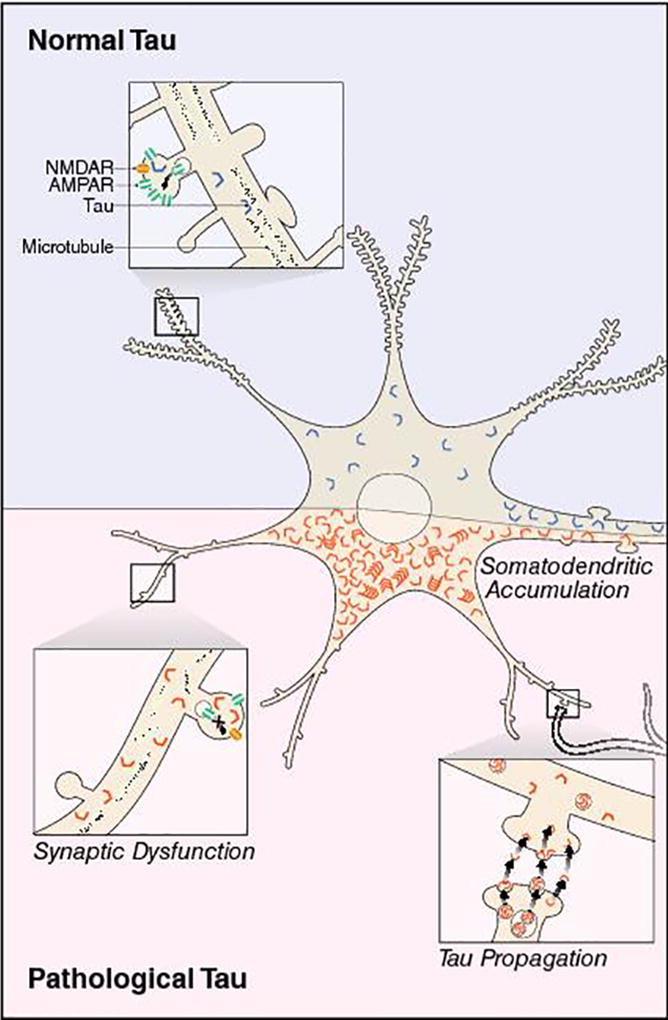
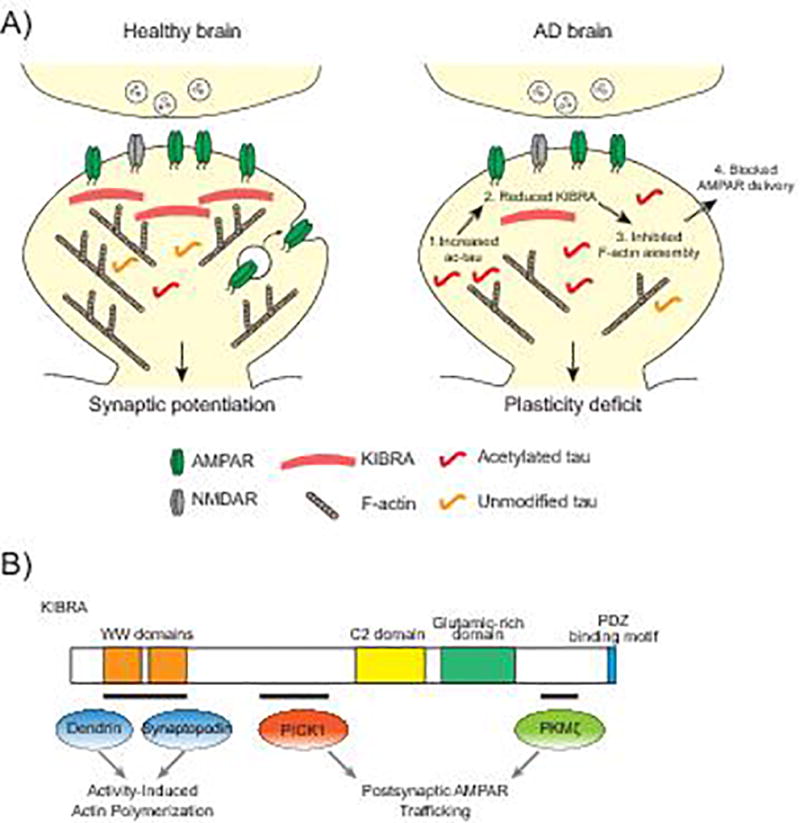
Pathogenesis in tauopathies involves the accumulation of tau in the brain and progressive synapse loss accompanied by cognitive decline. Pathological tau is found at synapses, and it promotes synaptic dysfunction and memory deficits. The specific role of toxic tau in disrupting the molecular networks that regulate synaptic strength has been elusive. A novel mechanistic link between tau toxicity and synaptic plasticity involves the acetylation of two lysines on tau, K274, and K281, which are associated with dementia in Alzheimer's disease (AD). We propose that an increase in tau acetylated on these lysines blocks the expression of long-term potentiation at hippocampal synapses leading to impaired memory in AD. Acetylated tau could inhibit the activity-dependent recruitment of postsynaptic AMPA-type glutamate receptors required for plasticity by interfering with the postsynaptic localization of KIBRA, a memory-associated protein. Strategies that reduce the acetylation of tau may lead to effective treatments for cognitive decline in AD.
tau蛋白病的发病机制涉及tau蛋白在大脑中的积累以及伴随着认知衰退的渐进性突触丧失。病理性tau蛋白存在于突触中,它会促进突触功能障碍和记忆缺陷。毒性tau蛋白在破坏调节突触强度的分子网络中所起的具体作用一直难以捉摸。tau蛋白毒性与突触可塑性之间的一种新的机制联系涉及tau蛋白上两个赖氨酸(K274和K281)的乙酰化,这两个赖氨酸与阿尔茨海默病(AD)中的痴呆症有关。我们提出,这些赖氨酸乙酰化的tau蛋白增加会阻断海马突触处长期增强的表达,导致AD患者记忆受损。乙酰化tau蛋白可能通过干扰记忆相关蛋白KIBRA的突触后定位,抑制可塑性所需的突触后AMPA型谷氨酸受体的活性依赖性募集。减少tau蛋白乙酰化的策略可能会为AD患者的认知衰退带来有效的治疗方法。