Gorsky Marianna Karina, Burnouf Sylvie, Dols Jacqueline, Mandelkow Eckhard, Partridge Linda
Max Planck Institute for Biology of Ageing, Joseph-Stelzmann-Strasse 9b, 50931 Cologne, Germany; CECAD Cologne Excellence Cluster on Cellular Stress Responses in Aging Associated Diseases, 50931 Cologne, Germany.
German Center for Neurodegenerative Diseases (DZNE), 53175 Bonn, Germany; CAESAR Research Center, Ludwig-Erhard-Allee 2, 53175 Bonn, Germany.
Sci Rep. 2016 Mar 4;6:22685. doi: 10.1038/srep22685.
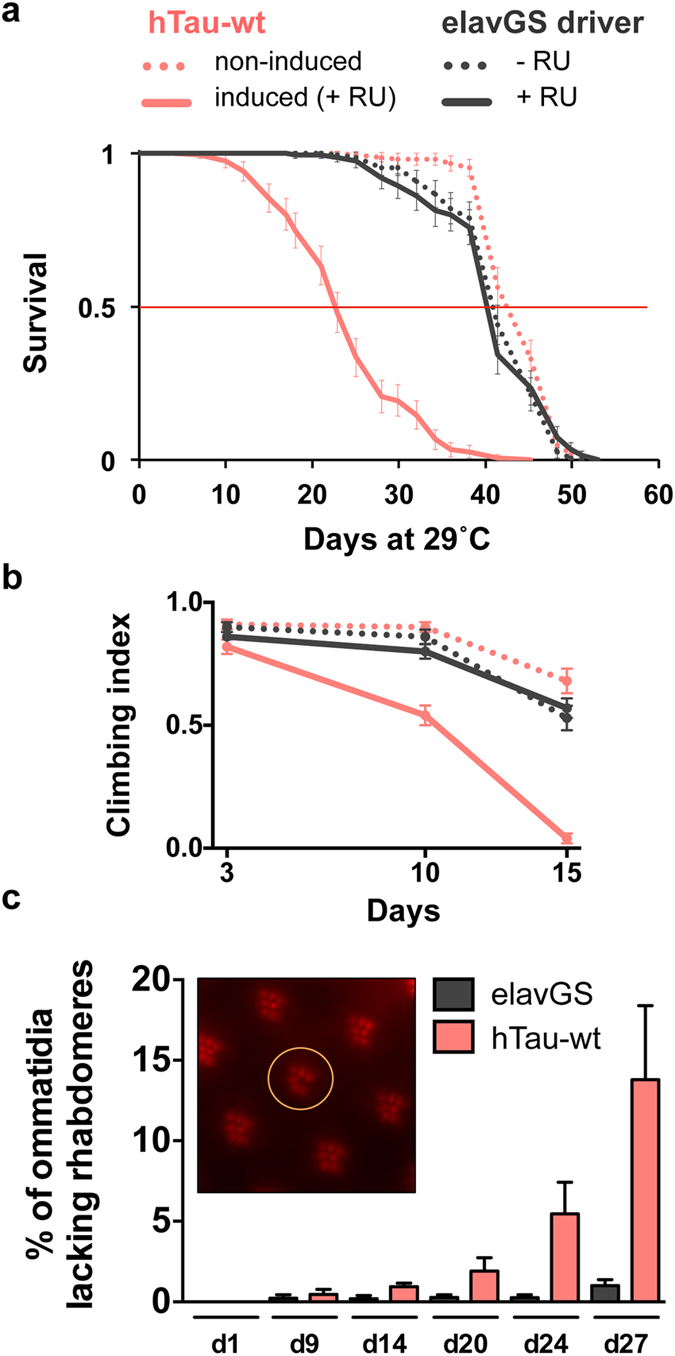
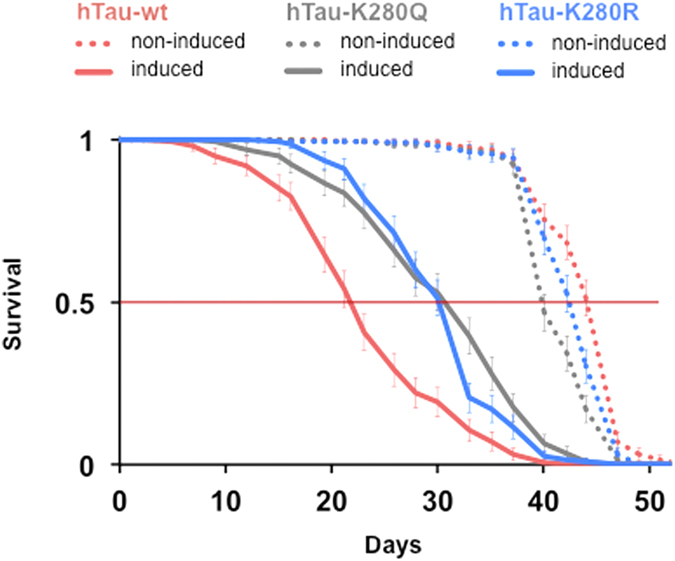
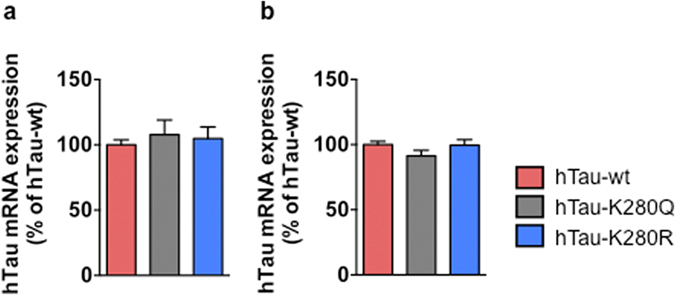
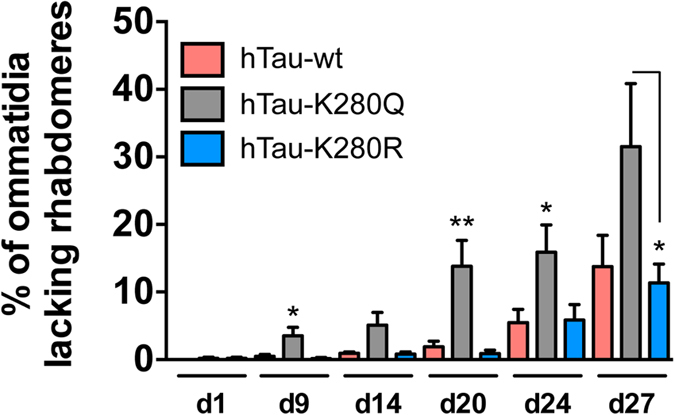
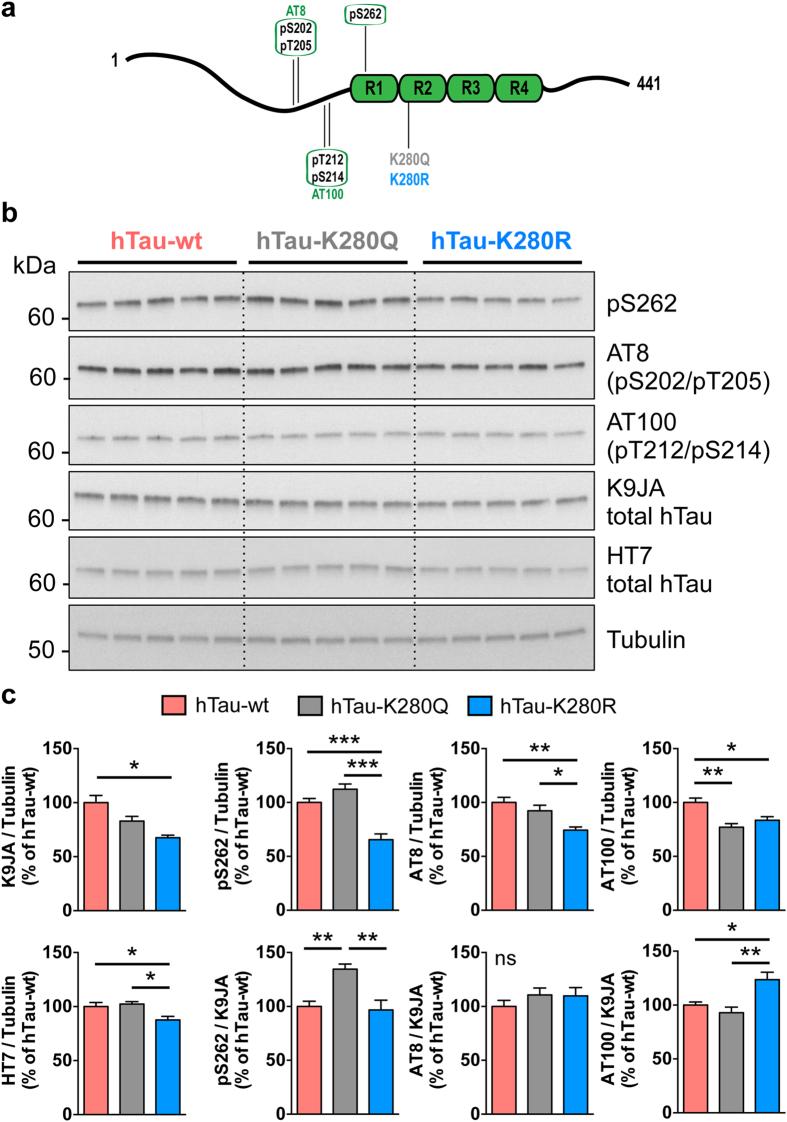
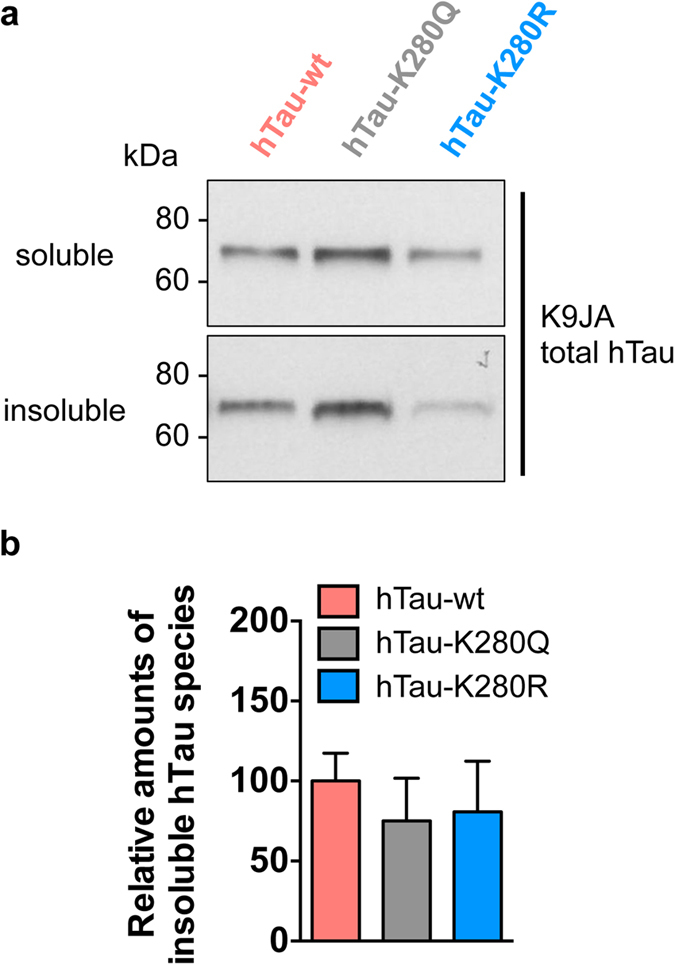
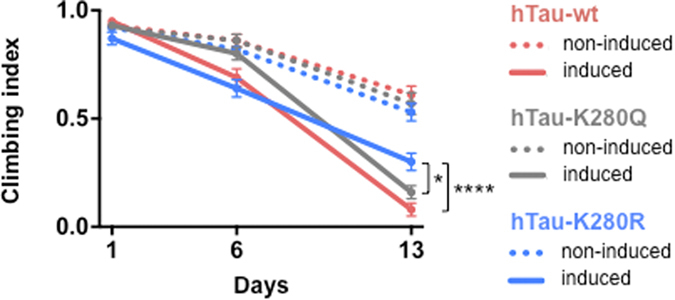
Dysfunction and accumulation of the microtubule-associated human Tau (hTau) protein into intraneuronal aggregates is observed in many neurodegenerative disorders including Alzheimer's disease (AD). Reversible lysine acetylation has recently emerged as a post-translational modification that may play an important role in the modulation of hTau pathology. Acetylated hTau species have been observed within hTau aggregates in human AD brains and multi-acetylation of hTau in vitro regulates its propensity to aggregate. However, whether lysine acetylation at position 280 (K280) modulates hTau-induced toxicity in vivo is unknown. We generated new Drosophila transgenic models of hTau pathology to evaluate the contribution of K280 acetylation to hTau toxicity, by analysing the respective toxicity of pseudo-acetylated (K280Q) and pseudo-de-acetylated (K280R) mutant forms of hTau. We observed that mis-expression of pseudo-acetylated K280Q-hTau in the adult fly nervous system potently exacerbated fly locomotion defects and photoreceptor neurodegeneration. In addition, modulation of K280 influenced total hTau levels and phosphorylation without changing hTau solubility. Altogether, our results indicate that pseudo-acetylation of the single K280 residue is sufficient to exacerbate hTau neurotoxicity in vivo, suggesting that acetylated K280-hTau species contribute to the pathological events leading to neurodegeneration in AD.
在包括阿尔茨海默病(AD)在内的许多神经退行性疾病中,都观察到微管相关的人类 Tau(hTau)蛋白功能障碍并积聚为神经元内聚集体。可逆的赖氨酸乙酰化最近作为一种翻译后修饰出现,可能在调节 hTau 病理学中起重要作用。在人类 AD 大脑的 hTau 聚集体中已观察到乙酰化的 hTau 物种,并且 hTau 在体外的多乙酰化调节其聚集倾向。然而,280 位赖氨酸(K280)的乙酰化是否在体内调节 hTau 诱导的毒性尚不清楚。我们通过分析 hTau 的假乙酰化(K280Q)和假去乙酰化(K280R)突变形式的各自毒性,生成了新的 hTau 病理学果蝇转基因模型,以评估 K280 乙酰化对 hTau 毒性的贡献。我们观察到,在成年果蝇神经系统中假乙酰化的 K280Q-hTau 的错误表达强烈加剧了果蝇的运动缺陷和光感受器神经变性。此外,K280 的调节影响了总 hTau 水平和磷酸化,而不改变 hTau 的溶解度。总之,我们的结果表明,单个 K280 残基的假乙酰化足以在体内加剧 hTau 神经毒性,这表明乙酰化的 K280-hTau 物种促成了导致 AD 神经退行性变的病理事件。