Genchi Giuseppe, Sinicropi Maria Stefania, Carocci Alessia, Lauria Graziantonio, Catalano Alessia
Dipartimento di Farmacia e Scienze della Salute e della Nutrizione, Università della Calabria, 87036 Arcavacata di Rende (Cosenza), Italy.
Dipartimento di Farmacia-Scienze del Farmaco, Università degli Studi di Bari "A. Moro", 70125 Bari, Italy.
Int J Environ Res Public Health. 2017 Jan 12;14(1):74. doi: 10.3390/ijerph14010074.
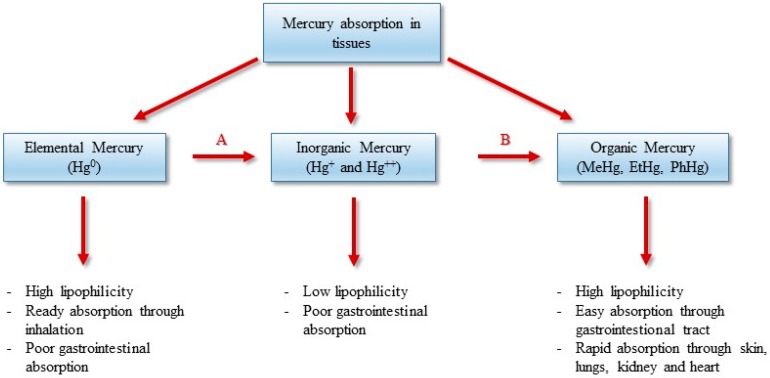
Environmental contamination has exposed humans to various metal agents, including mercury. It has been determined that mercury is not only harmful to the health of vulnerable populations such as pregnant women and children, but is also toxic to ordinary adults in various ways. For many years, mercury was used in a wide variety of human activities. Nowadays, the exposure to this metal from both natural and artificial sources is significantly increasing. Recent studies suggest that chronic exposure, even to low concentration levels of mercury, can cause cardiovascular, reproductive, and developmental toxicity, neurotoxicity, nephrotoxicity, immunotoxicity, and carcinogenicity. Possible biological effects of mercury, including the relationship between mercury toxicity and diseases of the cardiovascular system, such as hypertension, coronary heart disease, and myocardial infarction, are being studied. As heart rhythm and function are under autonomic nervous system control, it has been hypothesized that the neurotoxic effects of mercury might also impact cardiac autonomic function. Mercury exposure could have a long-lasting effect on cardiac parasympathetic activity and some evidence has shown that mercury exposure might affect heart rate variability, particularly early exposures in children. The mechanism by which mercury produces toxic effects on the cardiovascular system is not fully elucidated, but this mechanism is believed to involve an increase in oxidative stress. The exposure to mercury increases the production of free radicals, potentially because of the role of mercury in the Fenton reaction and a reduction in the activity of antioxidant enzymes, such as glutathione peroxidase. In this review we report an overview on the toxicity of mercury and focus our attention on the toxic effects on the cardiovascular system.
环境污染使人类接触到包括汞在内的各种金属制剂。现已确定,汞不仅对孕妇和儿童等弱势群体的健康有害,而且对普通成年人也有多种毒性。多年来,汞被广泛用于各种人类活动。如今,来自天然和人为来源的这种金属暴露量正在显著增加。最近的研究表明,长期接触,即使是低浓度的汞,也会导致心血管、生殖和发育毒性、神经毒性、肾毒性、免疫毒性和致癌性。汞可能产生的生物学效应,包括汞毒性与心血管系统疾病(如高血压、冠心病和心肌梗死)之间的关系,正在研究中。由于心律和功能受自主神经系统控制,因此有人推测汞的神经毒性可能也会影响心脏自主功能。汞暴露可能对心脏副交感神经活动产生持久影响,并且一些证据表明汞暴露可能会影响心率变异性,尤其是儿童早期暴露。汞对心血管系统产生毒性作用的机制尚未完全阐明,但据信该机制涉及氧化应激的增加。汞暴露会增加自由基的产生,这可能是由于汞在芬顿反应中的作用以及抗氧化酶(如谷胱甘肽过氧化物酶)活性的降低。在本综述中,我们报告了汞毒性的概述,并将注意力集中在对心血管系统的毒性作用上。