Malde Ketil, Seliussen Bjørghild B, Quintela María, Dahle Geir, Besnier Francois, Skaug Hans J, Øien Nils, Solvang Hiroko K, Haug Tore, Skern-Mauritzen Rasmus, Kanda Naohisa, Pastene Luis A, Jonassen Inge, Glover Kevin A
Institute of Marine Research, PO box 1870, Nordnes, N-5817, Bergen, Norway.
Department of Informatics, University of Bergen, N-5020, Bergen, Norway.
BMC Genomics. 2017 Jan 13;18(1):76. doi: 10.1186/s12864-016-3416-5.
In the marine environment, where there are few absolute physical barriers, contemporary contact between previously isolated species can occur across great distances, and in some cases, may be inter-oceanic. An example of this can be seen in the minke whale species complex. Antarctic minke whales are genetically and morphologically distinct from the common minke found in the north Atlantic and Pacific oceans, and the two species are estimated to have been isolated from each other for 5 million years or more. Recent atypical migrations from the southern to the northern hemisphere have been documented and fertile hybrids and back-crossed individuals between both species have also been identified. However, it is not known whether this represents a contemporary event, potentially driven by ecosystem changes in the Antarctic, or a sporadic occurrence happening over an evolutionary time-scale. We successfully used whole genome resequencing to identify a panel of diagnostic SNPs which now enable us address this evolutionary question.
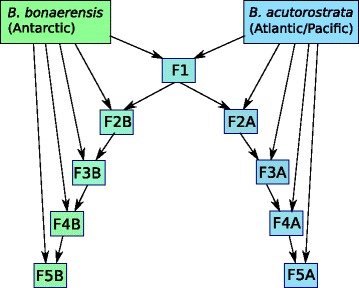
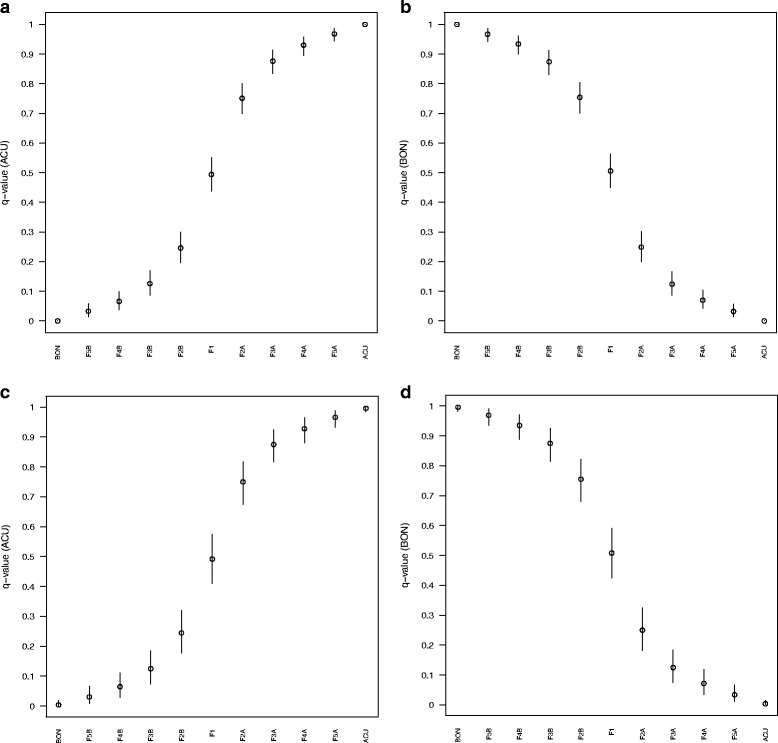
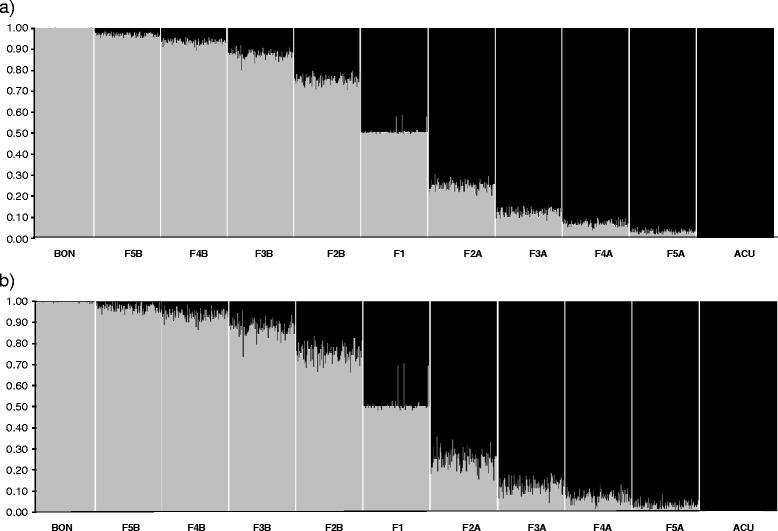
A large number of SNPs displaying fixed or nearly fixed allele frequency differences among the minke whale species were identified from the sequence data. Five panels of putatively diagnostic markers were established on a genotyping platform for validation of allele frequencies; two panels (26 and 24 SNPs) separating the two species of minke whale, and three panels (22, 23, and 24 SNPs) differentiating the three subspecies of common minke whale. The panels were validated against a set of reference samples, demonstrating the ability to accurately identify back-crossed whales up to three generations.
This work has resulted in the development of a panel of novel diagnostic genetic markers to address inter-oceanic and global contact among the genetically isolated minke whale species and sub-species. These markers, including a globally relevant genetic reference data set for this species complex, are now openly available for researchers interested in identifying other potential whale hybrids in the world's oceans. The approach used here, combining whole genome resequencing and high-throughput genotyping, represents a universal approach to develop similar tools for other species and population complexes.
在海洋环境中,由于几乎不存在绝对的物理屏障,先前隔离的物种之间如今能够跨越遥远的距离进行接触,在某些情况下,甚至可能是跨洋接触。小须鲸物种复合体就是一个例子。南极小须鲸在基因和形态上与北大西洋和太平洋的普通小须鲸不同,据估计这两个物种已经彼此隔离了500万年或更久。最近有记录显示出现了从南半球到北半球的非典型迁徙,并且还发现了这两个物种之间的可育杂种和回交个体。然而,目前尚不清楚这是一个由南极生态系统变化潜在驱动的当代事件,还是在进化时间尺度上偶尔发生的情况。我们成功地利用全基因组重测序鉴定出了一组诊断性单核苷酸多态性(SNP),现在能够借此解决这个进化问题。
从序列数据中鉴定出大量在小须鲸物种之间显示出固定或近乎固定等位基因频率差异的SNP。在基因分型平台上建立了五组假定的诊断标记,用于验证等位基因频率;两组(26个和24个SNP)用于区分两种小须鲸,三组(22个、23个和24个SNP)用于区分普通小须鲸的三个亚种。这些标记组针对一组参考样本进行了验证,证明能够准确识别多达三代的回交鲸鱼。
这项工作开发出了一组新的诊断性遗传标记,以解决基因隔离的小须鲸物种和亚种之间的跨洋及全球接触问题。这些标记,包括该物种复合体的全球相关遗传参考数据集,现在已向有兴趣在世界海洋中识别其他潜在鲸鱼杂种的研究人员公开提供。这里使用的方法,即结合全基因组重测序和高通量基因分型,代表了一种为其他物种和种群复合体开发类似工具的通用方法。