Diefenbach-Elstob Tanya, Plummer David, Dowi Robert, Wamagi Sinba, Gula Bisato, Siwaeya Keyanato, Pelowa Daniel, Siba Peter, Warner Jeffrey
College of Public Health, Medical & Veterinary Sciences, James Cook University, Townsville, QLD, 4811, Australia.
Australian Institute of Tropical Health and Medicine, James Cook University, Townsville, QLD, 4811, Australia.
BMC Public Health. 2017 Jan 13;17(1):70. doi: 10.1186/s12889-016-3935-7.
Papua New Guinea (PNG) is a diverse and culturally-rich country with severe infrastructural and health problems. Tuberculosis (TB) is widespread, and the number of cases with drug resistance is rising. Treatment adherence is known to be important for both effective treatment and limiting the emergence of drug resistance. The aim of this study was to construct a matrix of the factors that act as facilitators or barriers to TB treatment adherence in a remote region of PNG.
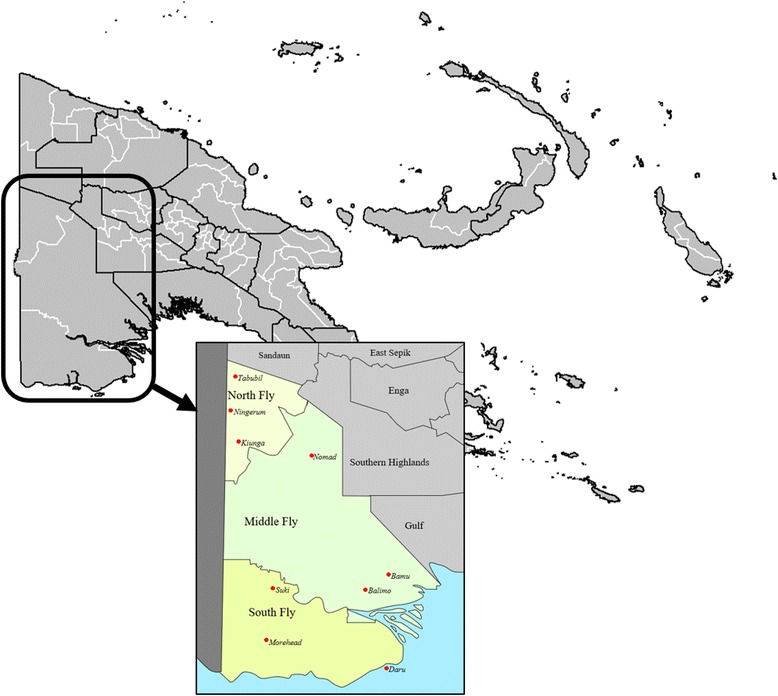
The study was based in the Balimo region of the Western Province. People known to have undergone TB treatment, as well as staff involved in managing people with TB, were asked to participate in an in-depth interview about their experiences. Purposive sampling was used to identify a diverse range of participants, from different geographic locations, social backgrounds, and with successful and unsuccessful treatment outcomes. The interview data was analysed based on grounded theory methodology.
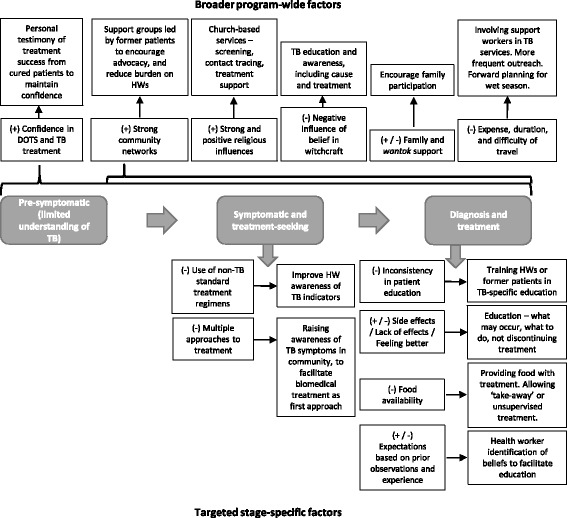
The study identified a range of factors that influence TB treatment adherence, with these being classified as personal, systems, and sociocultural. These factors are presented along with suggested recommendations for adaptations to DOTS-based treatment in this region. Barriers included the challenges associated with travel to treatment sites, and the difficulties of undertaking treatment alongside the daily need to maintain subsistence food production. However, facilitators were also identified, including the positive influence of religious beliefs, and high confidence in the ability of DOTS-based treatment to cure TB.
Documenting the wide range of factors that influence treatment adherence in a severely affected remote population will assist in improving TB control. These results provide impetus for further community-based efforts aimed at improving access to TB diagnosis and treatment, and maintaining successful treatment outcomes in the face of emerging drug resistance.
巴布亚新几内亚(PNG)是一个多样化且文化丰富的国家,但面临严重的基础设施和健康问题。结核病(TB)广泛流行,耐药病例数量不断上升。众所周知,治疗依从性对于有效治疗和限制耐药性的出现都很重要。本研究的目的是构建一个矩阵,列出在巴布亚新几内亚一个偏远地区影响结核病治疗依从性的促进因素或阻碍因素。
该研究以西部省的巴利莫地区为基础。已知接受过结核病治疗的人以及参与管理结核病患者的工作人员被要求参与关于他们经历的深入访谈。采用目的抽样法从不同地理位置、社会背景以及治疗结果成功与否的人群中确定了一系列不同的参与者。访谈数据基于扎根理论方法进行分析。
该研究确定了一系列影响结核病治疗依从性的因素,这些因素分为个人、系统和社会文化因素。同时还提出了针对该地区基于直接观察短程疗法(DOTS)的治疗进行调整的建议。阻碍因素包括前往治疗地点的困难,以及在日常需要维持自给自足粮食生产的同时进行治疗的困难。然而,也确定了促进因素,包括宗教信仰的积极影响,以及对基于DOTS的治疗治愈结核病能力的高度信心。
记录在受严重影响的偏远人群中影响治疗依从性的广泛因素将有助于改善结核病控制。这些结果为进一步开展基于社区的努力提供了动力,旨在改善结核病诊断和治疗的可及性,并在面对新出现的耐药性时维持成功的治疗结果。