Palanisamy Navaneethan, Osman Nathan, Ohnona Frédéric, Xu Hong-Tao, Brenner Bluma, Mesplède Thibault, Wainberg Mark A
McGill University AIDS Centre, Lady Davis Institute for Medical Research, Jewish General Hospital, 3755, Ch. Cote-Ste-Catherine, Montréal, QC, Canada.
Department of Microbiology and Immunology, Faculty of Medicine, McGill University, Montréal, QC, Canada.
AIDS Res Ther. 2017 Jan 7;14(1):2. doi: 10.1186/s12981-016-0130-y.
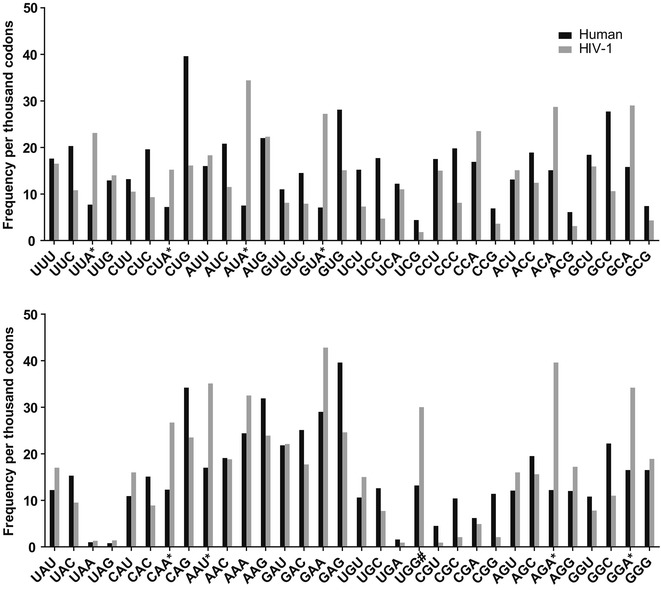
Codon usage bias has been described for various organisms and is thought to contribute to the regulation of numerous biological processes including viral infections. HIV-1 codon usage has been previously shown to be different from that of other viruses and man. It is evident that the antiretroviral drugs used to restrict HIV-1 replication also select for resistance variants. We wanted to test whether codon frequencies in HIV-1 sequences from treatment-experienced patients differ from those of treatment-naive individuals due to drug pressure affecting codon usage bias.
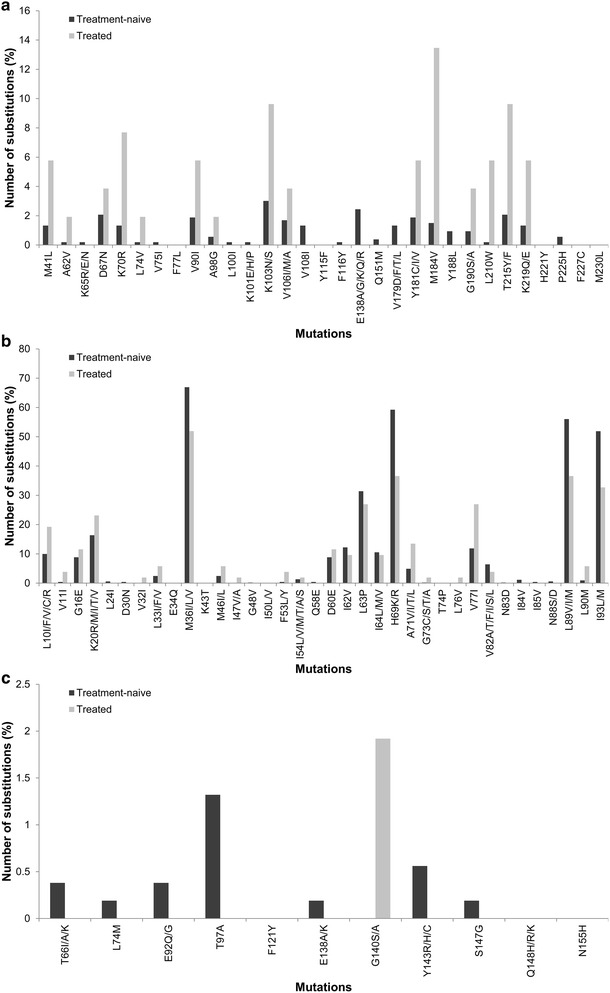
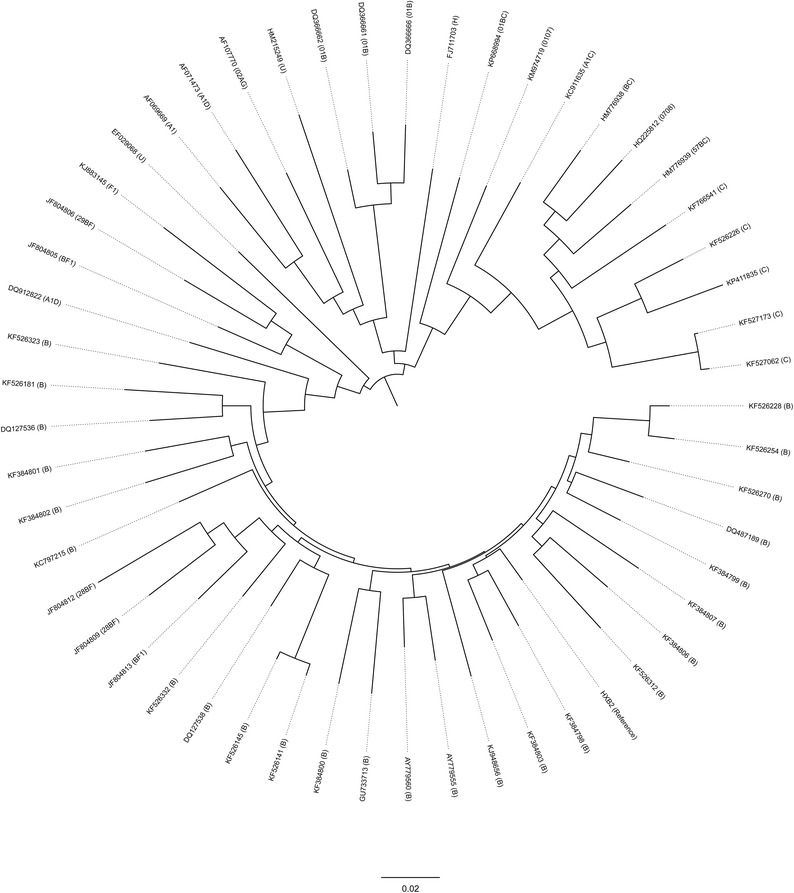
We developed a JavaScript to determine the codon frequencies of aligned nucleotide sequences. Irrespective of subtypes, using HIV-1 pol sequences from 532 treatment-naive and 52 treatment-experienced individuals, we found that pol sequences from treatment-experienced patients had significantly increased AGA (arginine; p = 0.0002***) and GGU (glycine; p = 0.0001***), and decreased AGG (arginine; p = 0.0001***) codon frequencies. The same pattern was not observed when subtypes B and C sequences were analyzed separately. Additionally, irrespective of subtypes, using HIV-1 gag sequences from 524 treatment-naive and 54 treatment-experienced individuals, gag sequences from treatment-experienced patients had significantly increased CUA (leucine; p < 0.0001***), CAG (glutamine; p = 0.0006***), AUC (isoleucine; p < 0.0001***) and UCU (serine; p = 0.0005***), and decreased AUA (isoleucine; p = 0.0003***) and CAA (glutamine; p = 0.0006***) codon frequencies.
Using pol and gag genes derived from the same HIV-1 genome, we show that antiretroviral therapy changed certain HIV-1 codon frequencies in a subtype specific way.
密码子使用偏好已在多种生物体中被描述,并且被认为有助于调节包括病毒感染在内的众多生物过程。先前已表明,HIV-1的密码子使用情况与其他病毒及人类不同。显然,用于限制HIV-1复制的抗逆转录病毒药物也会选择出耐药变异体。我们想测试由于药物压力影响密码子使用偏好,接受过治疗的患者的HIV-1序列中的密码子频率是否与未接受过治疗的个体不同。
我们开发了一个JavaScript程序来确定比对后的核苷酸序列的密码子频率。无论亚型如何,使用来自532名未接受过治疗和52名接受过治疗的个体的HIV-1 pol序列,我们发现接受过治疗的患者的pol序列中AGA(精氨酸;p = 0.0002***)和GGU(甘氨酸;p = 0.0001***)的密码子频率显著增加,而AGG(精氨酸;p = 0.0001***)的密码子频率降低。当分别分析B亚型和C亚型序列时,未观察到相同模式。此外,无论亚型如何,使用来自524名未接受过治疗和54名接受过治疗的个体的HIV-1 gag序列,接受过治疗的患者的gag序列中CUA(亮氨酸;p < 0.0001***)、CAG(谷氨酰胺;p = 0.0006***)、AUC(异亮氨酸;p < 0.0001***)和UCU(丝氨酸;p = 0.0005***)的密码子频率显著增加,而AUA(异亮氨酸;p = 0.0003***)和CAA(谷氨酰胺;p = 0.0006***)的密码子频率降低。
使用源自同一HIV-1基因组的pol和gag基因,我们表明抗逆转录病毒疗法以亚型特异性方式改变了某些HIV-1密码子频率。