Lee Suehyun, Choi Jiyeob, Kim Hun-Sung, Kim Grace Juyun, Lee Kye Hwa, Park Chan Hee, Han Jongsoo, Yoon Dukyong, Park Man Young, Park Rae Woong, Kang Hye-Ryun, Kim Ju Han
Division of Biomedical Informatics, Seoul National University College of Medicine, Seoul, Korea.
Department of Biomedical Sciences, Seoul National University Graduate School, Seoul, Korea.
J Am Med Inform Assoc. 2017 Jul 1;24(4):697-708. doi: 10.1093/jamia/ocw168.
We propose 2 Medical Dictionary for Regulatory Activities-enabled pharmacovigilance algorithms, MetaLAB and MetaNurse, powered by a per-year meta-analysis technique and improved subject sampling strategy.
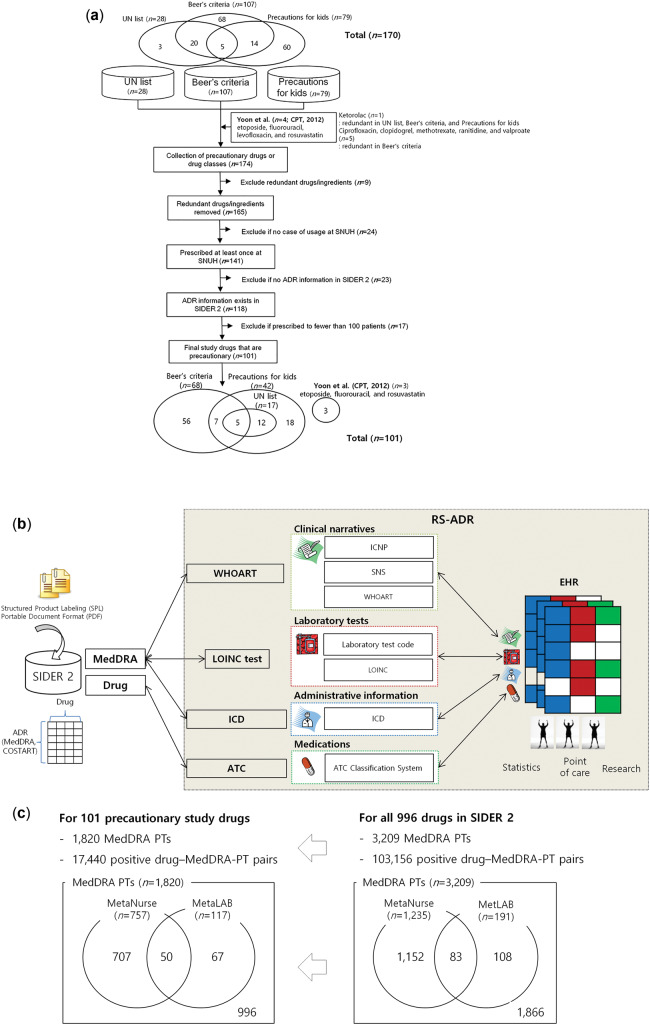
This study developed 2 novel algorithms, MetaLAB for laboratory abnormalities and MetaNurse for standard nursing statements, as significantly improved versions of our previous electronic health record (EHR)-based pharmacovigilance method, called CLEAR. Adverse drug reaction (ADR) signals from 117 laboratory abnormalities and 1357 standard nursing statements for all precautionary drugs ( n = 101) were comprehensively detected and validated against SIDER (Side Effect Resource) by MetaLAB and MetaNurse against 11 817 and 76 457 drug-ADR pairs, respectively.
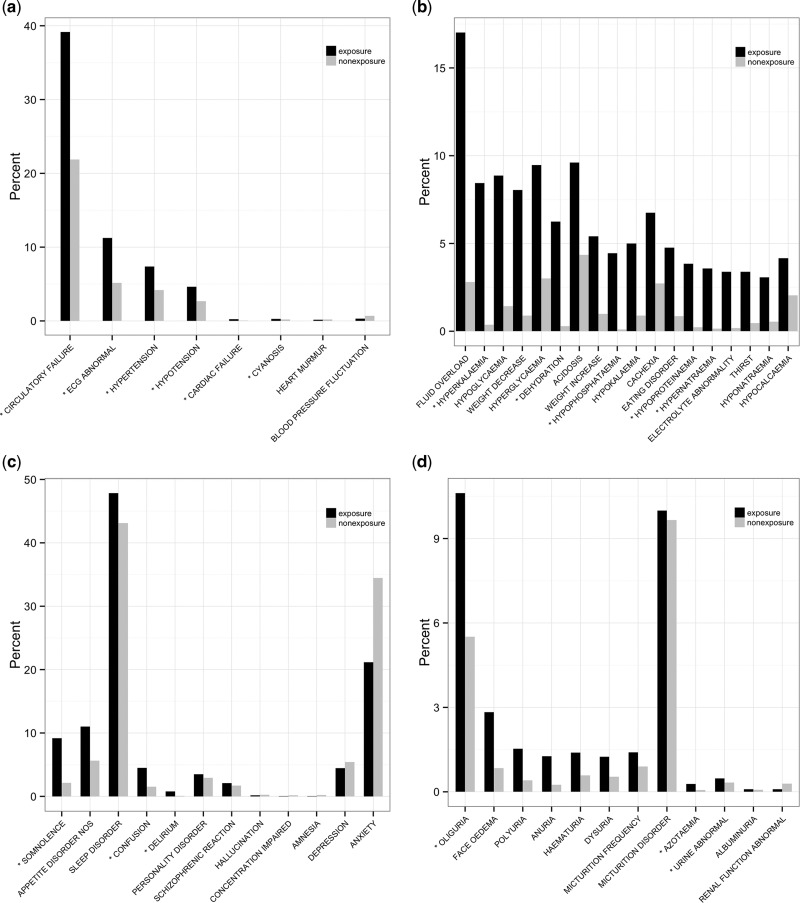
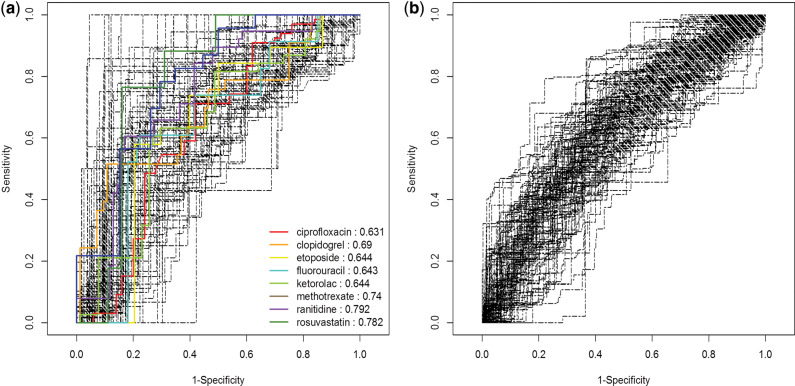
We demonstrate that MetaLAB (area under the curve, AUC = 0.61 ± 0.18) outperformed CLEAR (AUC = 0.55 ± 0.06) when we applied the same 470 drug-event pairs as the gold standard, as in our previous research. Receiver operating characteristic curves for 101 precautionary terms in the Medical Dictionary for Regulatory Activities Preferred Terms were obtained for MetaLAB and MetaNurse (0.69 ± 0.11; 0.62 ± 0.07), which complemented each other in terms of ADR signal coverage. Novel ADR signals discovered by MetaLAB and MetaNurse were successfully validated against spontaneous reports in the US Food and Drug Administration Adverse Event Reporting System database.
The present study demonstrates the symbiosis of laboratory test results and nursing statements for ADR signal detection in terms of their system organ class coverage and performance profiles.
Systematic discovery and evaluation of the wide spectrum of ADR signals using standard-based observational electronic health record data across many institutions will affect drug development and use, as well as postmarketing surveillance and regulation.
我们提出了两种由《药物警戒活动医学词典》支持的药物警戒算法,即MetaLAB和MetaNurse,采用年度荟萃分析技术和改进的受试者抽样策略。
本研究开发了两种新算法,用于实验室异常情况的MetaLAB和用于标准护理声明的MetaNurse,作为我们之前基于电子健康记录(EHR)的药物警戒方法CLEAR的显著改进版本。MetaLAB和MetaNurse分别针对11817对和76457对药物-不良反应对,全面检测并对照SIDER(副作用资源)验证了101种预防性药物的117项实验室异常和1357项标准护理声明中的药物不良反应(ADR)信号。
当我们应用与之前研究相同的470对药物-事件对作为金标准时,我们证明MetaLAB(曲线下面积,AUC = 0.61±0.18)优于CLEAR(AUC = 0.55±0.06)。获得了MetaLAB和MetaNurse针对《药物警戒活动医学词典》首选术语中101个预防术语的受试者操作特征曲线(0.69±0.11;0.62±0.07),它们在ADR信号覆盖方面相互补充。MetaLAB和MetaNurse发现的新ADR信号已成功对照美国食品药品监督管理局不良事件报告系统数据库中的自发报告进行了验证。
本研究证明了实验室检测结果和护理声明在ADR信号检测方面在系统器官类别覆盖和性能概况上的共生关系。
使用跨多个机构的基于标准的观察性电子健康记录数据对广泛的ADR信号进行系统发现和评估,将影响药物开发和使用,以及上市后监测和监管。