Raja Ramadoss Bharathi, Agasimani Somanath, Jaiswal Sarita, Thiruvengadam Venkatesan, Sabariappan Robin, Chibbar Ravindra N, Ram Sundaram Ganesh
Centre for Plant Breeding and Genetics, Tamil Nadu Agricultural University, Coimbatore, 641 003, Tamil Nadu, India.
Department of Plant Sciences, University of Saskatchewan, Saskatoon, SK, S7N 5A8, Canada.
BMC Plant Biol. 2017 Jan 14;17(1):13. doi: 10.1186/s12870-016-0968-0.
Glycemic response, a trait that is tedious to be assayed in cereal staples, has been identified as a factor correlated with alarmingly increasing prevalence of Type II diabetes. Reverse genetics based discovery of allelic variants associated with this nutritional trait gains significance as they can provide scope for genetic improvement of this factor which is otherwise difficult to target through routine screening methods.
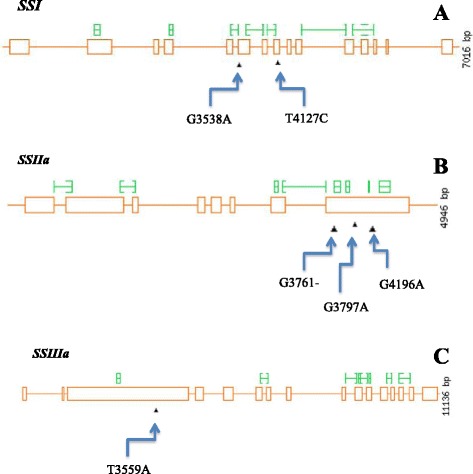
Through EcoTILLING by sequencing in 512 rice accessions, we report the discovery of six deleterious variants in the genes with potential to increase Resistant Starch (RS) and reduce Hydrolysis Index (HI) of starch. By deconvolution of the variant harbouring EcoTILLING DNA pools, we discovered accessions with a minimum of one to a maximum of three deleterious allelic variants in the candidate genes.
Through biochemical assays, we confirmed the potential role of the discovered alleles alone or in combinations in increasing RS the key factor for reduction in glycemic response.
血糖反应是谷物主食中一项难以测定的特性,现已被确定为与II型糖尿病患病率惊人上升相关的一个因素。基于反向遗传学发现与这种营养特性相关的等位基因变异具有重要意义,因为它们可为该因素的遗传改良提供空间,而通过常规筛选方法很难针对这一因素。
通过对512份水稻种质进行测序的生态靶向切割(EcoTILLING),我们报告了在可能增加抗性淀粉(RS)并降低淀粉水解指数(HI)的基因中发现了六个有害变异。通过对含有EcoTILLING DNA池的变异进行反卷积分析,我们发现候选基因中存在最少一个至最多三个有害等位基因变异的种质。
通过生化分析,我们证实了所发现的等位基因单独或组合在增加RS(降低血糖反应的关键因素)方面的潜在作用。