Gao Yanpan, Chen Yanyu, Zhan Shaohua, Zhang Wenhao, Xiong Feng, Ge Wei
Department of Immunology, National Key Laboratory of Medical Molecular Biology, Institute of Basic Medical Sciences, Chinese Academy of Medical Sciences, Dongcheng, Beijing, China.
MOE Key Laboratory of Bioinformatics, School of Life Sciences, Tsinghua University, Beijing, China.
Oncotarget. 2017 Jan 31;8(5):7420-7440. doi: 10.18632/oncotarget.14558.
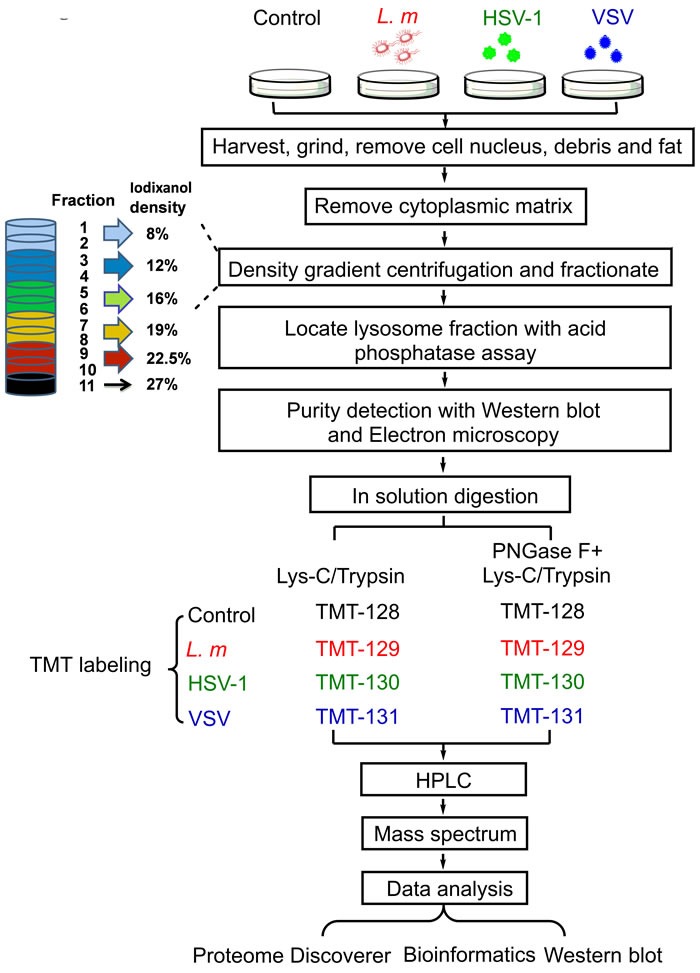
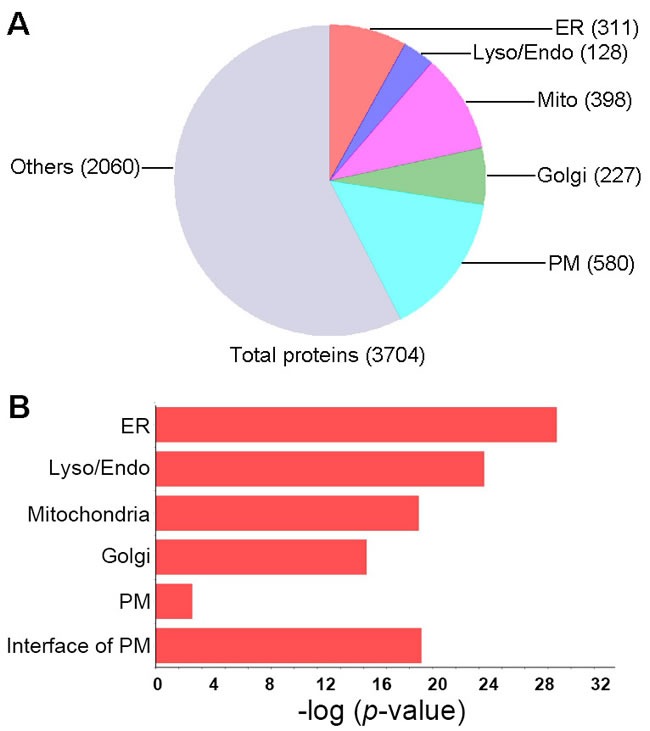
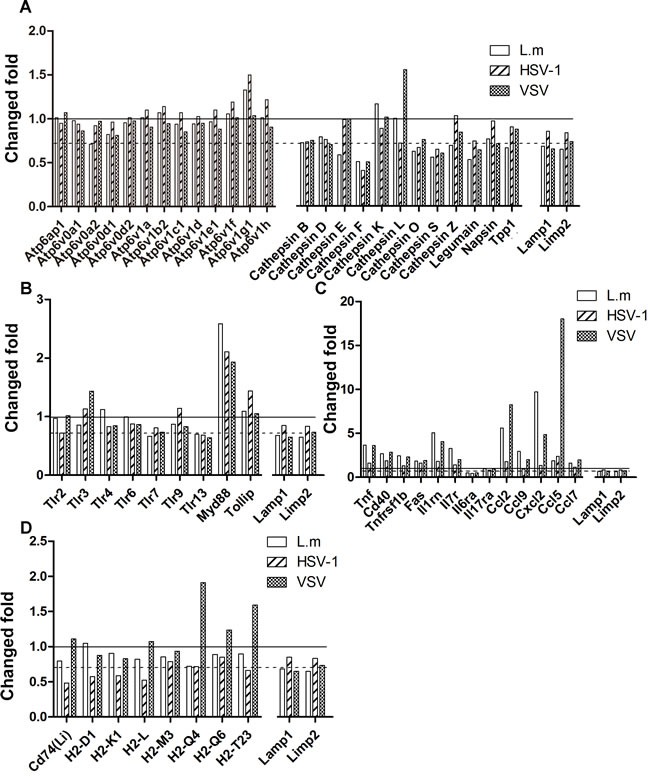
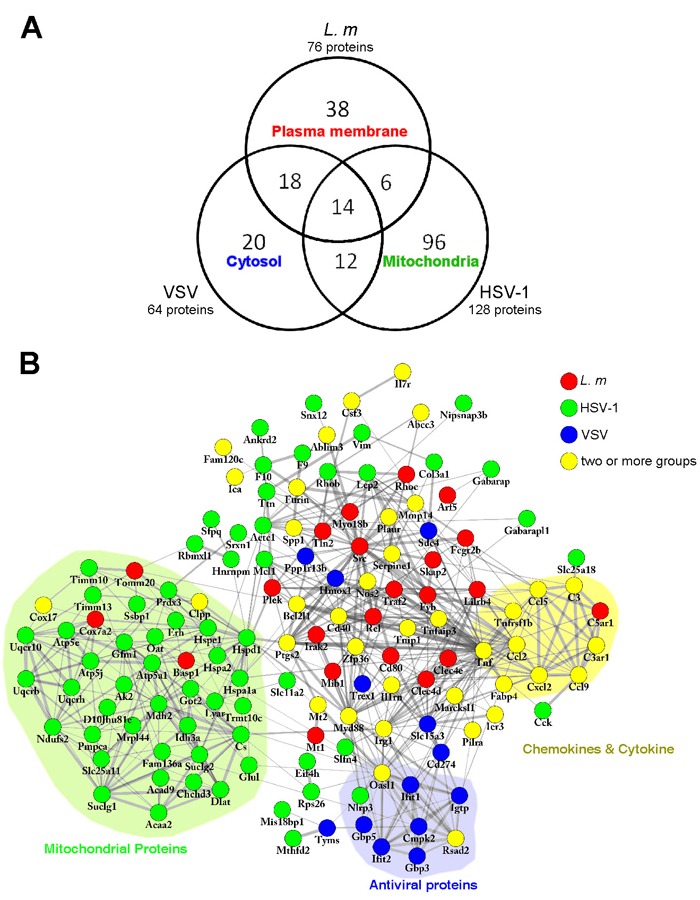
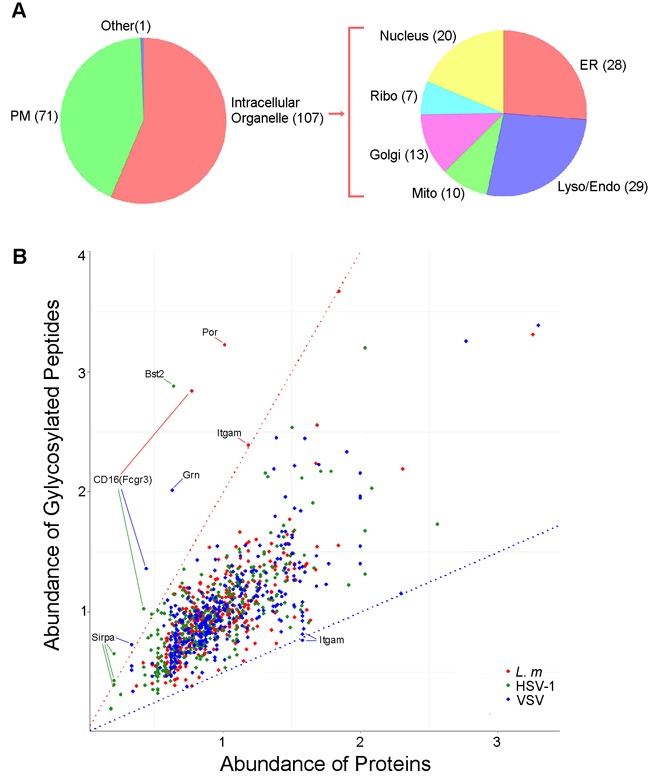
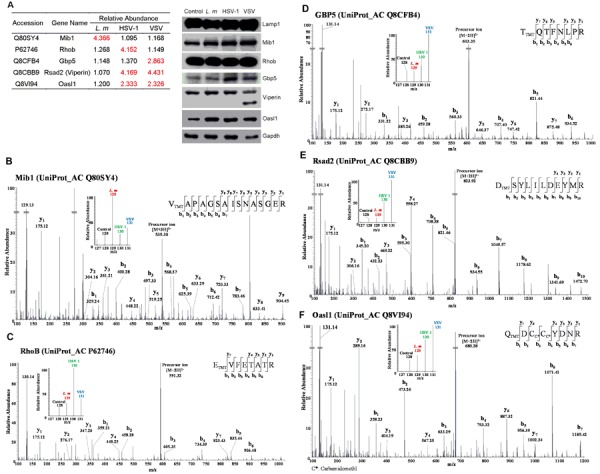
Phagocytosis and autophagy in macrophages have been shown to be essential to both innate and adaptive immunity. Lysosomes are the main catabolic subcellular organelles responsible for degradation and recycling of both extracellular and intracellular material, which are the final steps in phagocytosis and autophagy. However, the molecular mechanisms underlying lysosomal functions after infection remain obscure. In this study, we conducted a quantitative proteomics analysis of the changes in constitution and glycosylation of proteins in lysosomes derived from murine RAW 264.7 macrophage cells treated with different types of pathogens comprising examples of bacteria (Listeria monocytogenes, L. m), DNA viruses (herpes simplex virus type-1, HSV-1) and RNA viruses (vesicular stomatitis virus, VSV). In total, 3,704 lysosome-related proteins and 300 potential glycosylation sites on 193 proteins were identified. Comparative analysis showed that the aforementioned pathogens induced distinct alterations in the proteome of the lysosome, which is closely associated with the immune functions of macrophages, such as toll-like receptor activation, inflammation and antigen-presentation. The most significant changes in proteins and fluctuations in glycosylation were also determined. Furthermore, Western blot analysis showed that the changes in expression of these proteins were undetectable at the whole cell level. Thus, our study provides unique insights into the function of lysosomes in macrophage activation and immune responses.
巨噬细胞中的吞噬作用和自噬作用已被证明对先天免疫和适应性免疫都至关重要。溶酶体是主要的分解代谢亚细胞器,负责细胞外和细胞内物质的降解和再循环,而这是吞噬作用和自噬作用的最后步骤。然而,感染后溶酶体功能的分子机制仍不清楚。在本研究中,我们对用不同类型病原体处理的小鼠RAW 264.7巨噬细胞来源的溶酶体中蛋白质的组成和糖基化变化进行了定量蛋白质组学分析,这些病原体包括细菌(单核细胞增生李斯特菌,L. m)、DNA病毒(单纯疱疹病毒1型,HSV-1)和RNA病毒(水泡性口炎病毒,VSV)的实例。总共鉴定出3704种溶酶体相关蛋白和193种蛋白上的300个潜在糖基化位点。比较分析表明,上述病原体在溶酶体蛋白质组中诱导了明显的变化,这与巨噬细胞的免疫功能密切相关,如Toll样受体激活、炎症和抗原呈递。还确定了蛋白质的最显著变化和糖基化的波动。此外,蛋白质印迹分析表明,这些蛋白质的表达变化在全细胞水平上无法检测到。因此,我们的研究为溶酶体在巨噬细胞激活和免疫反应中的功能提供了独特的见解。