Department of Pharmacology, University of Cambridge, Cambridge, UK.
Department of Chemistry and Biochemistry, University of Bern, Bern, Switzerland.
Neuropharmacology. 2017 Apr;116:421-428. doi: 10.1016/j.neuropharm.2017.01.008. Epub 2017 Jan 12.
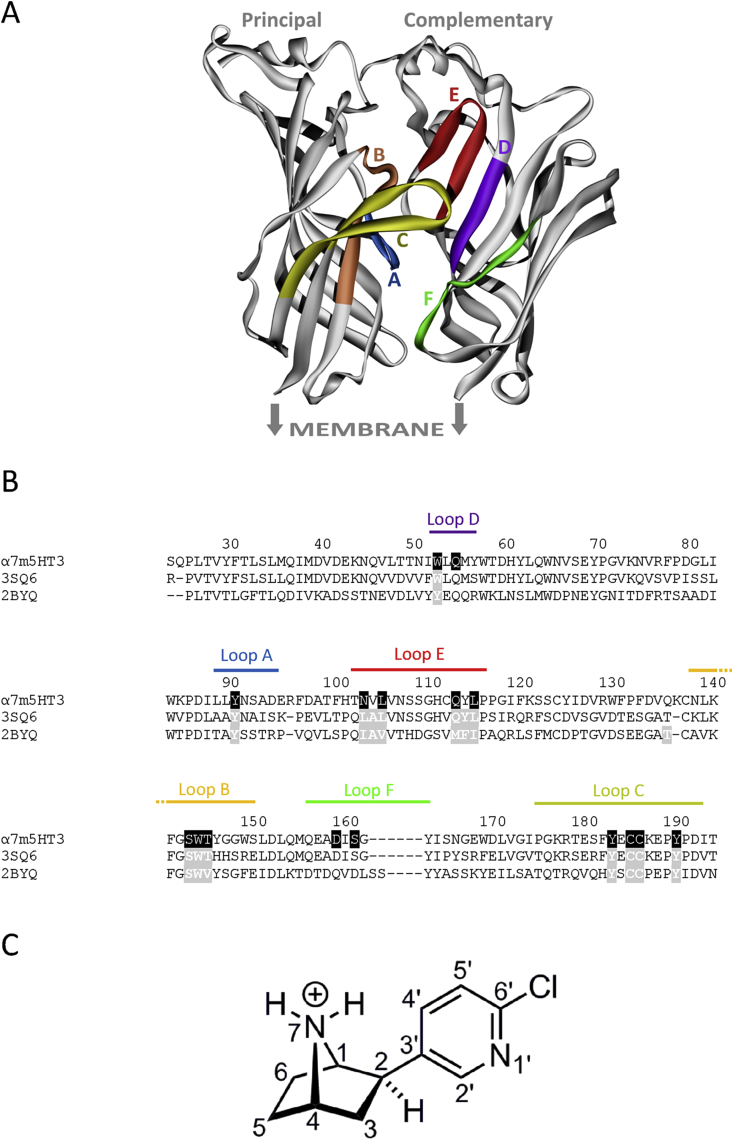
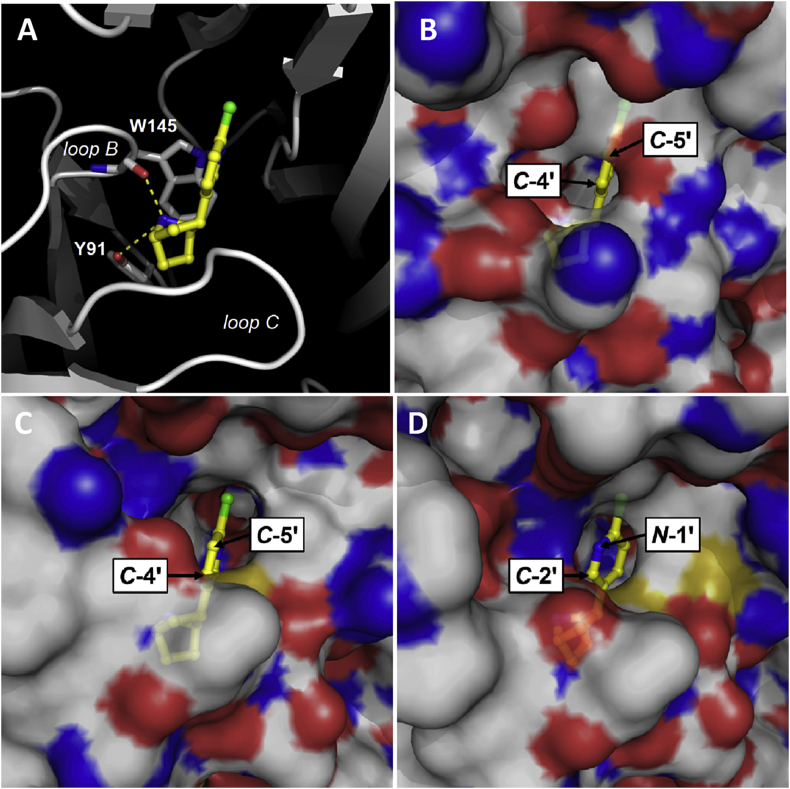
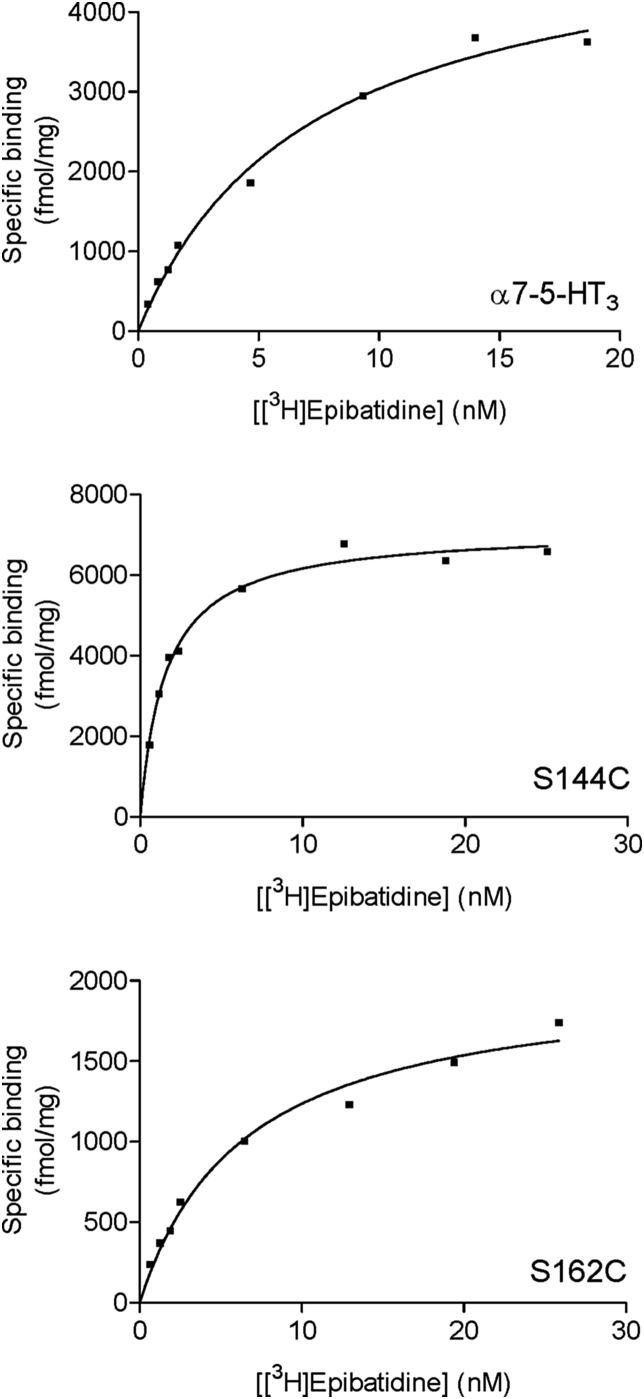
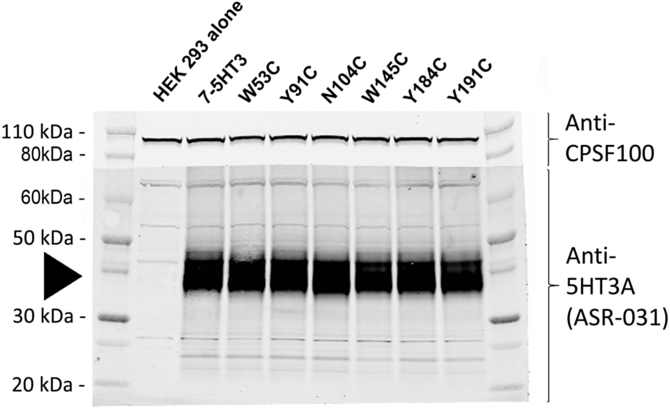
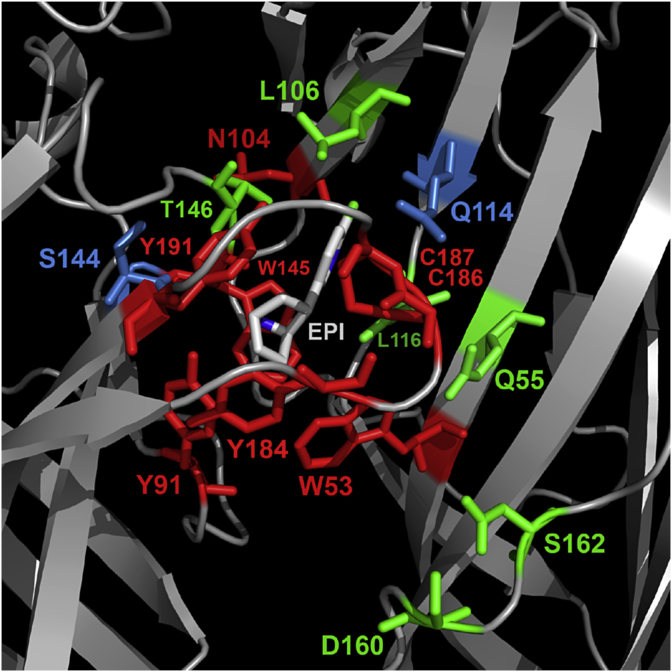
Epibatidine is an alkaloid toxin that binds with high affinity to nicotinic and muscarinic acetylcholine receptors, and has been extensively used as a research tool. To examine binding interactions at the nicotinic receptor, it has been co-crystallised with the structural homologue acetylcholine binding protein (AChBP; PDB ID 2BYQ), and with an AChBP chimaera (3SQ6) that shares 64% sequence identity with the α7 nACh receptor. However, the binding orientations revealed by AChBP co-crystal structures may not precisely represent their receptor homologues and experimental evidence is needed to verify the ligand poses. Here we identify potential binding site interactions between epibatidine and AChBP residues, and substitute equivalent positions in the α7 nACh receptor. The effects of these are probed by [H]epibatidine binding following the expression α7 nACh receptor cysteine mutants in HEK 293 cells. Of the sixteen mutants created, the affinity of epibatidine was unaffected by the substitutions Q55C, L106C, L116C, T146C, D160C and S162C, reduced by C186A and C187A, increased by Q114C and S144C, and abolished by W53C, Y91C, N104C, W145C, Y184C and Y191C. These results are consistent with the predicted orientations in AChBP and suggest that epibatidine is likely to occupy a similar location at α7 nACh receptors. We speculate that steric constraints placed upon the C-5 position of the pyridine ring in 3SQ6 may account for the relatively poor affinities of epibatidine derivatives that are substituted at this position.
依匹巴林是一种生物碱毒素,它与烟碱型和毒蕈碱型乙酰胆碱受体具有高亲和力结合,并被广泛用作研究工具。为了研究烟碱型受体的结合相互作用,它与结构同源的乙酰胆碱结合蛋白(AChBP;PDB ID 2BYQ)以及与 α7 nACh 受体具有 64%序列同一性的 AChBP 嵌合体(3SQ6)共结晶。然而,AChBP 共晶结构揭示的结合取向可能无法准确代表其受体同源物,需要实验证据来验证配体构象。在这里,我们确定了依匹巴林与 AChBP 残基之间的潜在结合位点相互作用,并取代了 α7 nACh 受体中的等效位置。通过在 HEK 293 细胞中表达 α7 nACh 受体半胱氨酸突变体,研究了这些取代对 [H]依匹巴林结合的影响。在所创建的 16 个突变体中,依匹巴林的亲和力不受 Q55C、L106C、L116C、T146C、D160C 和 S162C 取代的影响,被 C186A 和 C187A 降低,被 Q114C 和 S144C 增加,被 W53C、Y91C、N104C、W145C、Y184C 和 Y191C 完全消除。这些结果与 AChBP 中的预测取向一致,表明依匹巴林可能占据 α7 nACh 受体的相似位置。我们推测,在 3SQ6 中吡啶环的 C-5 位置上的空间位阻可能是取代该位置的依匹巴林衍生物亲和力较差的原因。