Neurobiology of Vocal Communication, Werner Reichardt Centre for Integrative Neuroscience, University of Tübingen, Otfried-Müller-Str. 25, Tübingen 72076, Germany.
Nat Commun. 2017 Jan 16;8:14046. doi: 10.1038/ncomms14046.
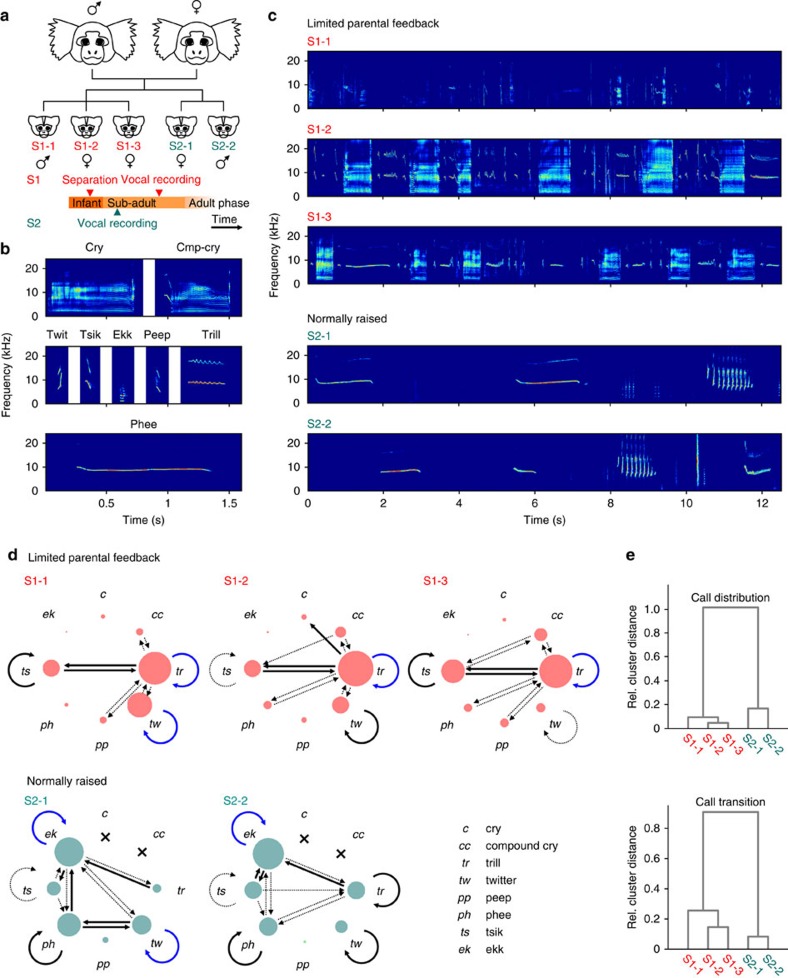
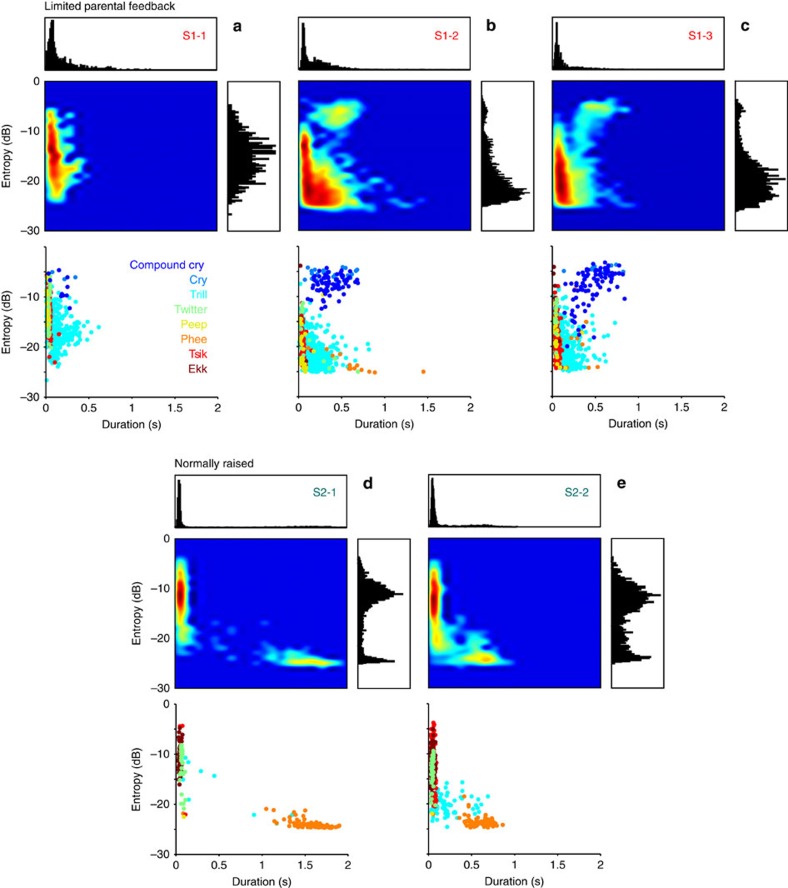
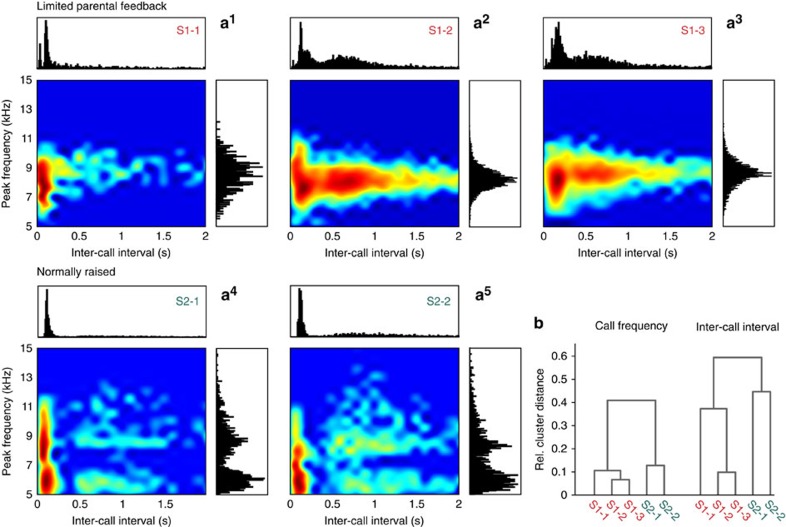
Vocalizations of human infants undergo dramatic changes across the first year by becoming increasingly mature and speech-like. Human vocal development is partially dependent on learning by imitation through social feedback between infants and caregivers. Recent studies revealed similar developmental processes being influenced by parental feedback in marmoset monkeys for apparently innate vocalizations. Marmosets produce infant-specific vocalizations that disappear after the first postnatal months. However, it is yet unclear whether parental feedback is an obligate requirement for proper vocal development. Using quantitative measures to compare call parameters and vocal sequence structure we show that, in contrast to normally raised marmosets, marmosets that were separated from parents after the third postnatal month still produced infant-specific vocal behaviour at subadult stages. These findings suggest a significant role of social feedback on primate vocal development until the subadult stages and further show that marmoset monkeys are a compelling model system for early human vocal development.
人类婴儿的发声在第一年经历了巨大的变化,变得越来越成熟和像说话一样。人类的发声发展部分依赖于通过婴儿和照顾者之间的社会反馈进行模仿学习。最近的研究表明,在狨猴中,类似的发育过程也受到父母反馈的影响,而这些狨猴的发声是先天的。狨猴会发出特定于婴儿的叫声,这些叫声在出生后的头几个月后就消失了。然而,目前尚不清楚父母的反馈是否是适当发声发育的必要条件。使用定量测量来比较叫声参数和发声序列结构,我们发现,与正常饲养的狨猴相比,在出生后第三个月后与父母分离的狨猴在亚成体阶段仍然会产生特定于婴儿的发声行为。这些发现表明,社会反馈在灵长类动物发声发育中直到亚成体阶段都起着重要作用,进一步表明狨猴是研究早期人类发声发育的理想模型系统。