Universidade Federal de Minas Gerais, Laboratório de Imunologia e Genômica de Parasitos, Instituto de Ciências Biológicas, Belo Horizonte, Brazil.
Centro de Investigaciones Tecnológicas, Biomédicas y Medioambientales, Peru.
Sci Rep. 2017 Jan 16;7:40804. doi: 10.1038/srep40804.
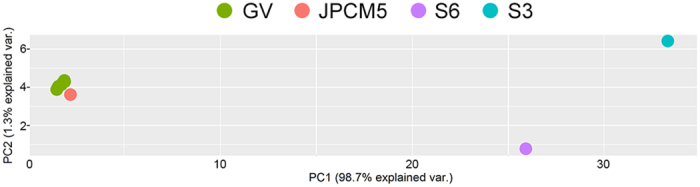
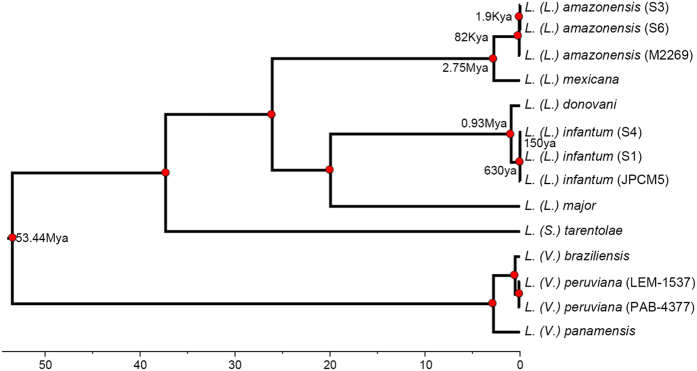
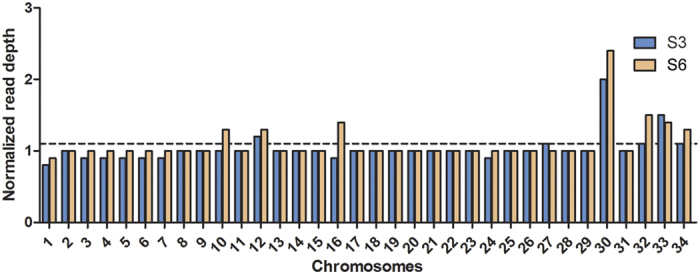
Leishmaniasis is a highly diverse group of diseases caused by kinetoplastid of the genus Leishmania. These parasites are taxonomically diverse, with human pathogenic species separated into two subgenera according to their development site inside the alimentary tract of the sand fly insect vector. The disease encompasses a variable spectrum of clinical manifestations with tegumentary or visceral symptoms. Among the causative species in Brazil, Leishmania (Leishmania) amazonensis is an important etiological agent of human cutaneous leishmaniasis that accounts for more than 8% of all cases in endemic regions. L. (L.) amazonensis is generally found in the north and northeast regions of Brazil. Here, we report the first isolation of L. (L.) amazonensis from dogs with clinical manifestations of visceral leishmaniasis in Governador Valadares, an endemic focus in the southeastern Brazilian State of Minas Gerais where L. (L.) infantum is also endemic. These isolates were characterized in terms of SNPs, chromosome and gene copy number variations, confirming that they are closely related to a previously sequenced isolate obtained in 1973 from the typical Northern range of this species. The results presented in this article will increase our knowledge of L. (L.) amazonensis-specific adaptations to infection, parasite survival and the transmission of this Amazonian species in a new endemic area of Brazil.
利什曼病是一组由动基体目利什曼原虫引起的高度多样化的疾病。这些寄生虫在分类上具有多样性,根据其在沙蝇昆虫媒介的消化道内的发育部位,人类致病性物种被分为两个亚属。该疾病具有不同的临床表现,包括皮肤或内脏症状。在巴西的致病物种中,莱什曼原虫(Leishmania)亚马逊亚种是人类皮肤利什曼病的重要病因,在流行地区占所有病例的 8%以上。L.(L.)亚马逊亚种通常存在于巴西的北部和东北部地区。在这里,我们报告了首例在瓦尔达雷斯州长地区从患有内脏利什曼病临床症状的狗中分离出 L.(L.)亚马逊亚种的病例,该地区是巴西东南部米纳斯吉拉斯州的一个流行焦点,该州也存在 L.(L.)婴儿。这些分离株在 SNP、染色体和基因拷贝数变异方面的特征表明,它们与 1973 年从该物种典型北方范围获得的一个已测序分离株密切相关。本文的研究结果将增加我们对 L.(L.)亚马逊亚种对感染、寄生虫存活和这种亚马逊物种在巴西新流行地区传播的特定适应的了解。