Fatone Stefania, Caldwell Ryan
1 Northwestern University Prosthetics-Orthotics Center, Chicago, IL, USA.
2 Scheck & Siress, Schaumburg, IL, USA.
Prosthet Orthot Int. 2017 Jun;41(3):237-245. doi: 10.1177/0309364616685229. Epub 2017 Jan 17.
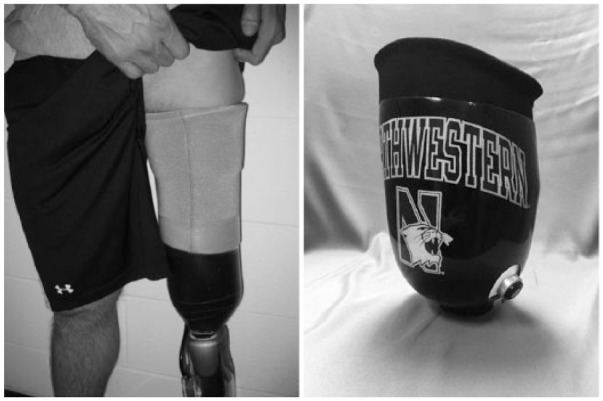
Current transfemoral prosthetic sockets restrict function, lack comfort, and cause residual limb problems. Lower proximal trim lines are an appealing way to address this problem. Development of a more comfortable and possibly functional subischial socket may contribute to improving quality of life of persons with transfemoral amputation.
The purpose of this study was to (1) describe the design and fabrication of a new subischial socket and (2) describe efforts to teach this technique.
Development project.
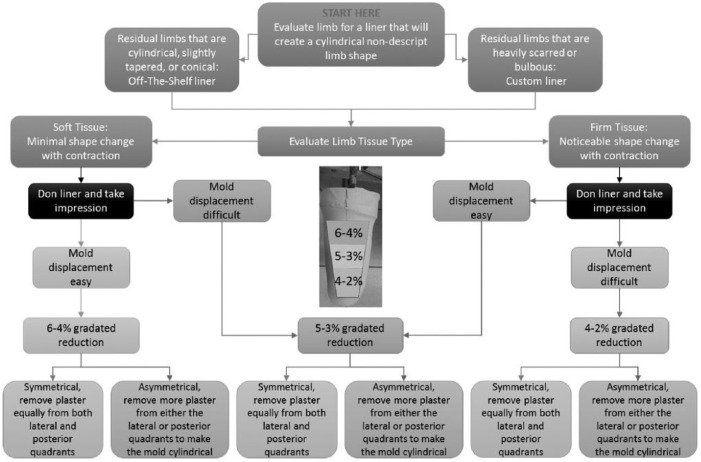
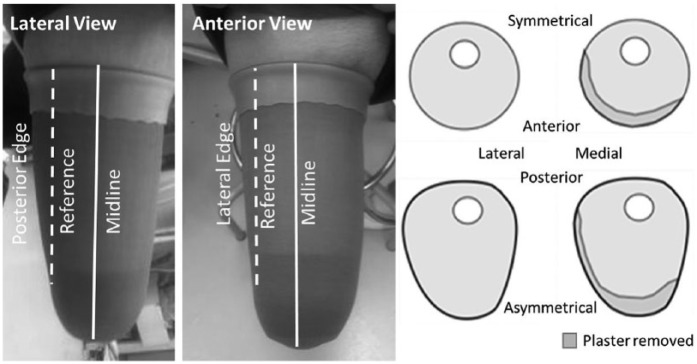
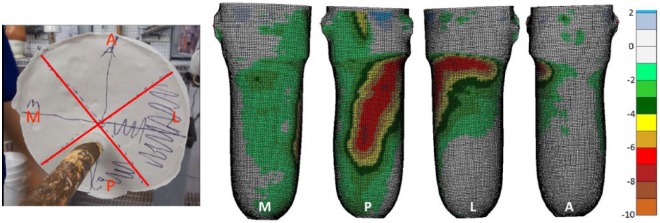
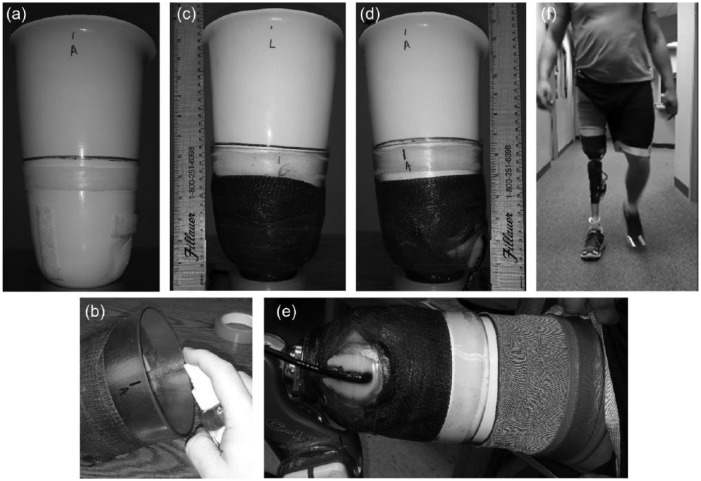
Socket development involved defining the following: subject and liner selection, residual limb evaluation, casting, positive mold rectification, check socket fitting, definitive socket fabrication, and troubleshooting of socket fit. Three hands-on workshops to teach the socket were piloted and attended by 30 certified prosthetists and their patient models.
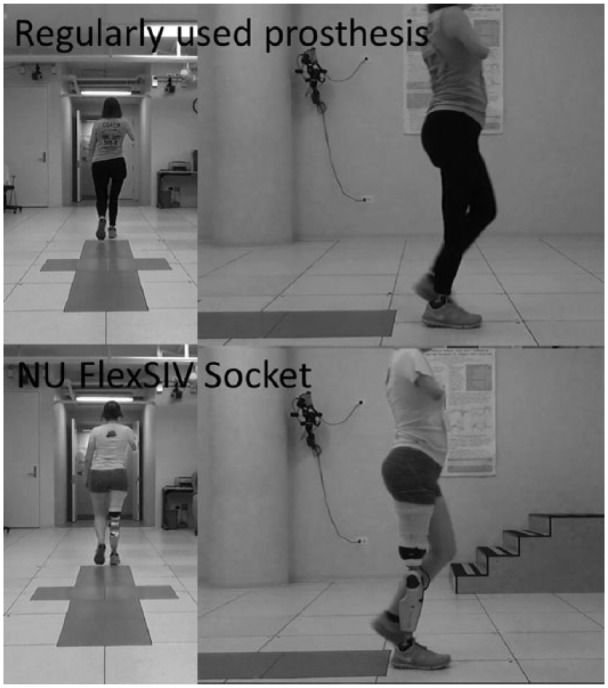
Patient models responded positively to the comfort, range of motion, and stability of the new socket while prosthetists described the technique as "straight forward, reproducible."
To our knowledge, this is the first attempt to create a teachable subischial socket, and while it appears promising, more definitive evaluation is needed. Clinical relevance We developed the Northwestern University Flexible Subischial Vacuum (NU-FlexSIV) Socket as a more comfortable alternative to current transfemoral sockets and demonstrated that it could be taught successfully to prosthetists.
目前的经股假肢接受腔限制功能、缺乏舒适度并导致残肢问题。较低的近端修剪线是解决这一问题的一种有吸引力的方法。开发一种更舒适且可能更具功能性的坐骨下接受腔可能有助于提高经股截肢者的生活质量。
本研究的目的是(1)描述一种新型坐骨下接受腔的设计与制造,以及(2)描述传授该技术的努力。
开发项目。
接受腔开发包括确定以下内容:受试者和内衬选择、残肢评估、取模、阳模矫正、检查接受腔适配、定制接受腔制造以及接受腔适配故障排除。开展了三次实践工作坊来传授接受腔技术,30名认证假肢师及其患者模型参加了这些工作坊。
患者模型对新接受腔的舒适度、活动范围和稳定性给予了积极反馈,而假肢师将该技术描述为“直接、可重复”。
据我们所知,这是首次尝试创建一种可传授的坐骨下接受腔,虽然看起来很有前景,但还需要更确切的评估。临床意义我们开发了西北大学柔性坐骨下真空(NU-FlexSIV)接受腔,作为当前经股接受腔更舒适的替代品,并证明可以成功地向假肢师传授该技术。