de Vlaming Ronald, Okbay Aysu, Rietveld Cornelius A, Johannesson Magnus, Magnusson Patrik K E, Uitterlinden André G, van Rooij Frank J A, Hofman Albert, Groenen Patrick J F, Thurik A Roy, Koellinger Philipp D
Erasmus University Rotterdam Institute for Behavior and Biology, Erasmus School of Economics, Rotterdam, the Netherlands.
Department of Applied Economics, Erasmus School of Economics, Rotterdam, the Netherlands.
PLoS Genet. 2017 Jan 17;13(1):e1006495. doi: 10.1371/journal.pgen.1006495. eCollection 2017 Jan.
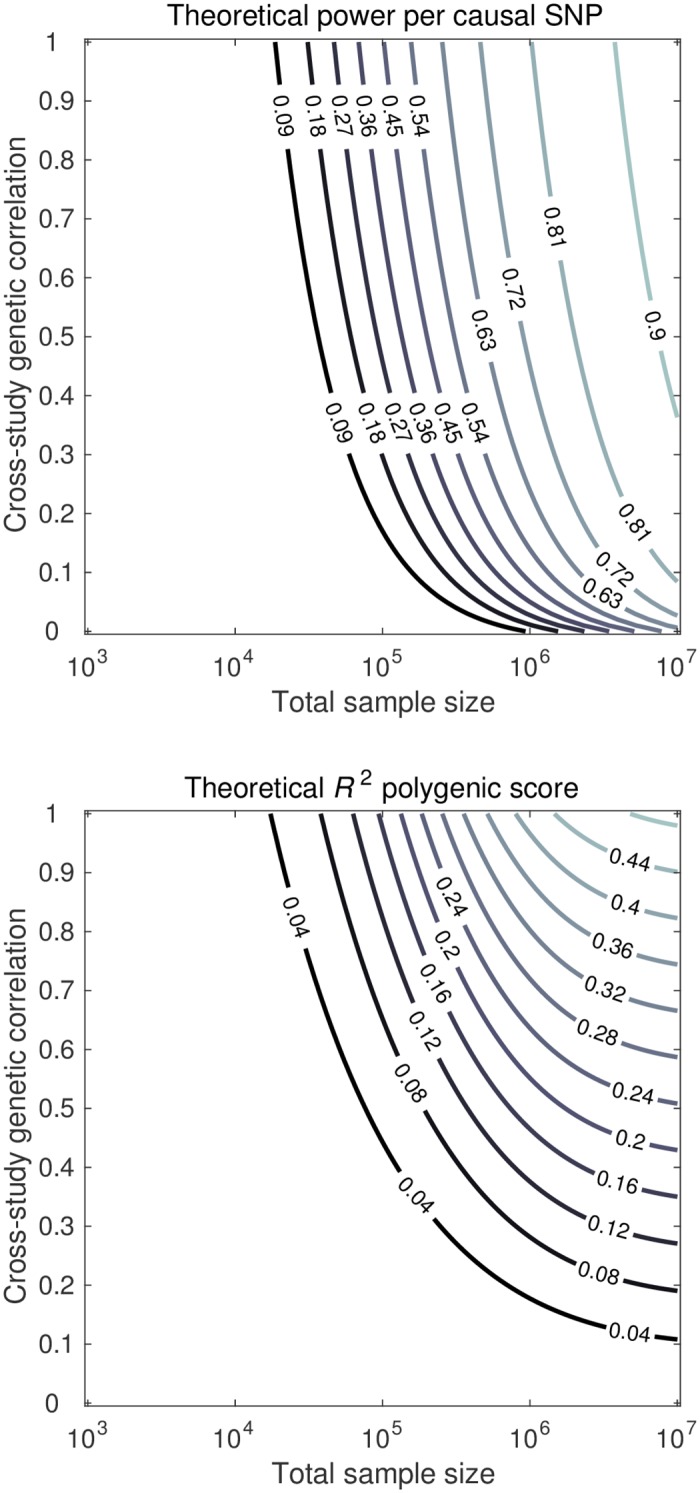
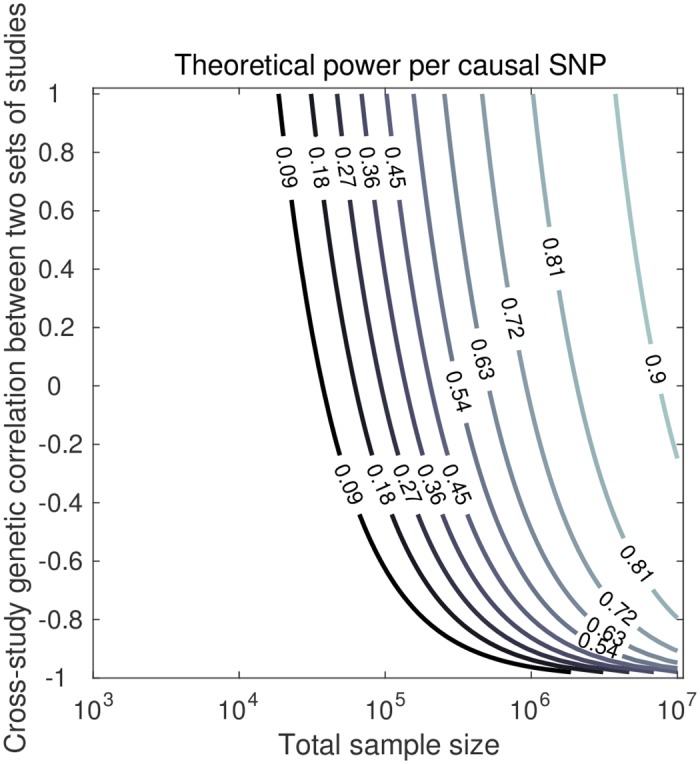
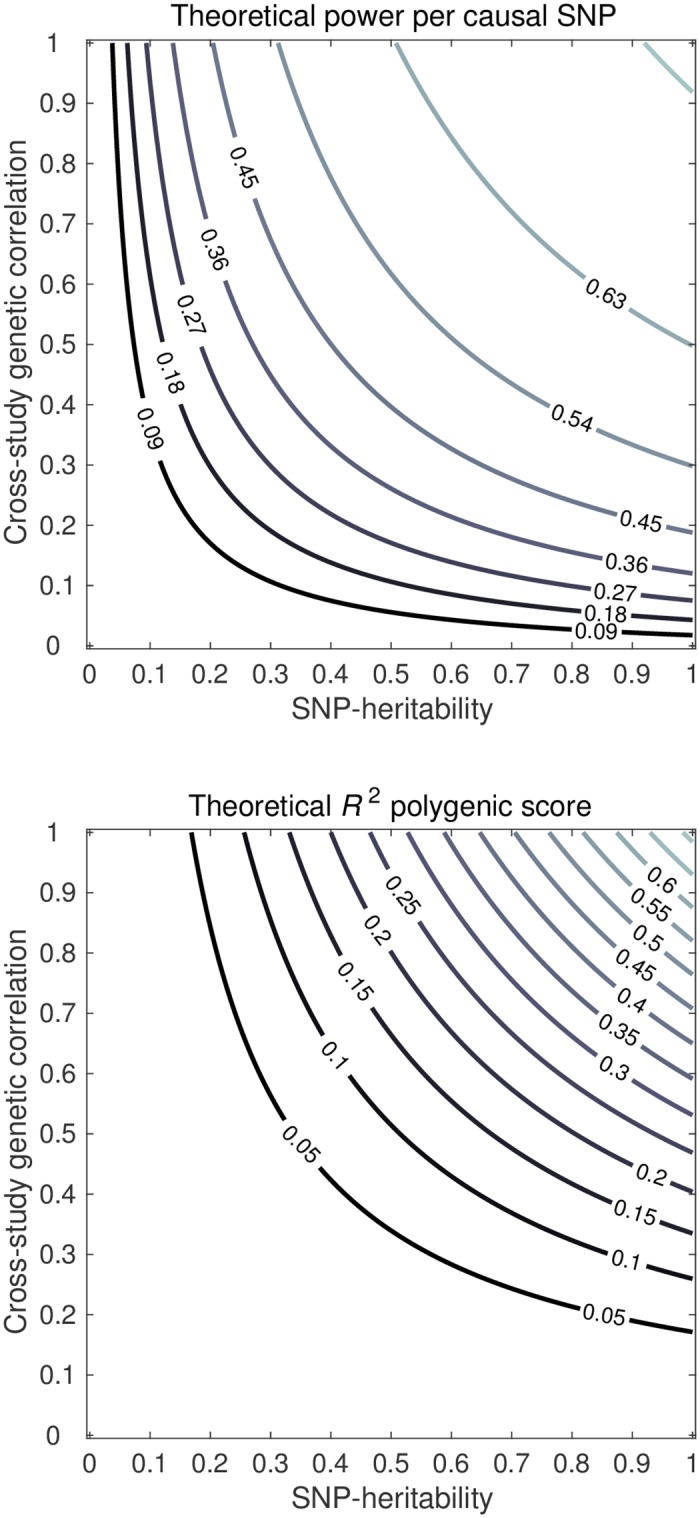
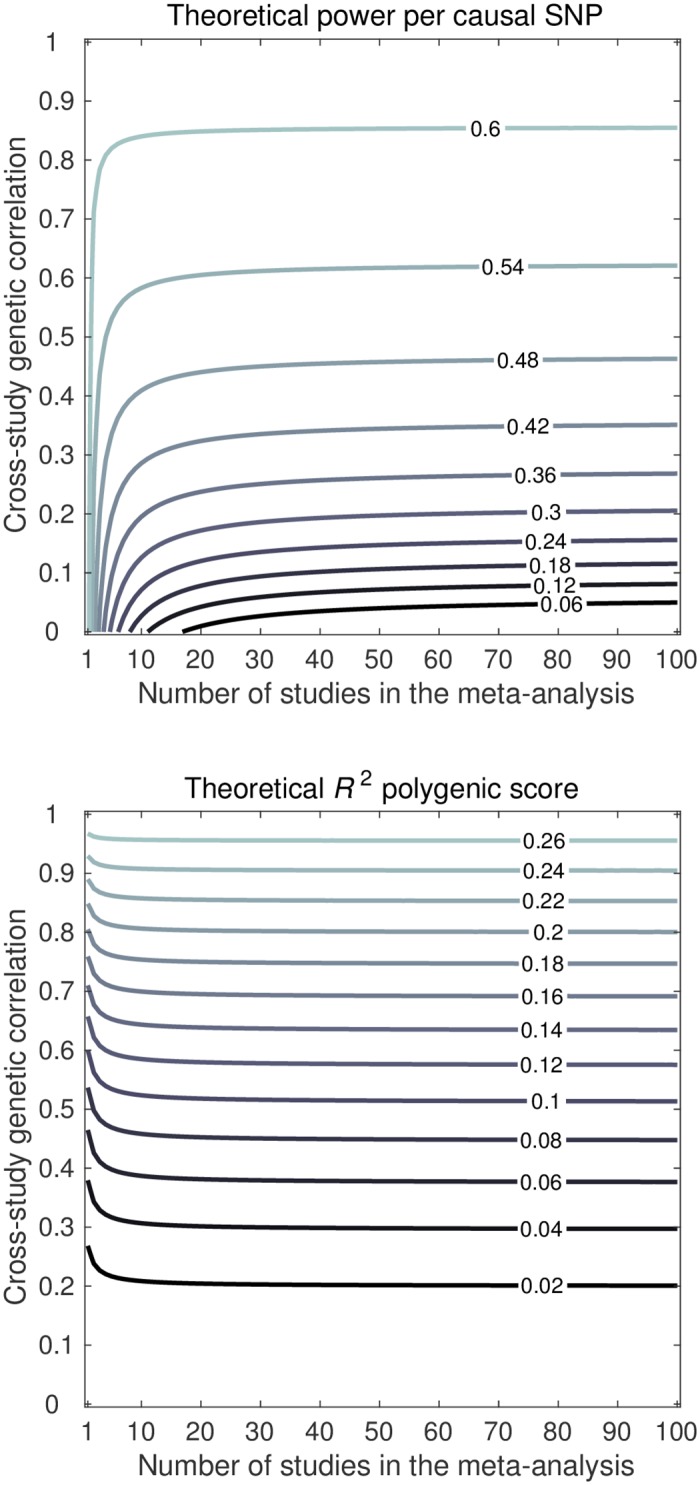
Large-scale genome-wide association results are typically obtained from a fixed-effects meta-analysis of GWAS summary statistics from multiple studies spanning different regions and/or time periods. This approach averages the estimated effects of genetic variants across studies. In case genetic effects are heterogeneous across studies, the statistical power of a GWAS and the predictive accuracy of polygenic scores are attenuated, contributing to the so-called 'missing heritability'. Here, we describe the online Meta-GWAS Accuracy and Power (MetaGAP) calculator (available at www.devlaming.eu) which quantifies this attenuation based on a novel multi-study framework. By means of simulation studies, we show that under a wide range of genetic architectures, the statistical power and predictive accuracy provided by this calculator are accurate. We compare the predictions from the MetaGAP calculator with actual results obtained in the GWAS literature. Specifically, we use genomic-relatedness-matrix restricted maximum likelihood to estimate the SNP heritability and cross-study genetic correlation of height, BMI, years of education, and self-rated health in three large samples. These estimates are used as input parameters for the MetaGAP calculator. Results from the calculator suggest that cross-study heterogeneity has led to attenuation of statistical power and predictive accuracy in recent large-scale GWAS efforts on these traits (e.g., for years of education, we estimate a relative loss of 51-62% in the number of genome-wide significant loci and a relative loss in polygenic score R2 of 36-38%). Hence, cross-study heterogeneity contributes to the missing heritability.
大规模全基因组关联研究结果通常来自对跨越不同地区和/或时间段的多项研究的GWAS汇总统计数据进行固定效应荟萃分析。这种方法对各研究中遗传变异的估计效应进行平均。如果各研究间的遗传效应存在异质性,GWAS的统计效力和多基因评分的预测准确性就会减弱,导致所谓的“遗传力缺失”。在此,我们描述了在线Meta-GWAS准确性和效力(MetaGAP)计算器(可在www.devlaming.eu获取),它基于一个新颖的多研究框架对这种减弱进行量化。通过模拟研究,我们表明在广泛的遗传结构下,该计算器提供的统计效力和预测准确性是准确的。我们将MetaGAP计算器的预测结果与GWAS文献中的实际结果进行比较。具体而言,我们使用基因组相关性矩阵限制最大似然法来估计三个大样本中身高、体重指数、受教育年限和自评健康状况的单核苷酸多态性遗传力和跨研究遗传相关性。这些估计值用作MetaGAP计算器的输入参数。计算器的结果表明,跨研究异质性导致了近期针对这些性状的大规模GWAS研究中统计效力和预测准确性的减弱(例如,对于受教育年限,我们估计全基因组显著位点数量相对损失51%-62%,多基因评分R2相对损失36%-38%)。因此,跨研究异质性导致了遗传力缺失。