Dembowski Jill A, Dremel Sarah E, DeLuca Neal A
Department of Microbiology and Molecular Genetics, University of Pittsburgh School of Medicine, Pittsburgh, Pennsylvania, United States of America.
PLoS Pathog. 2017 Jan 17;13(1):e1006166. doi: 10.1371/journal.ppat.1006166. eCollection 2017 Jan.
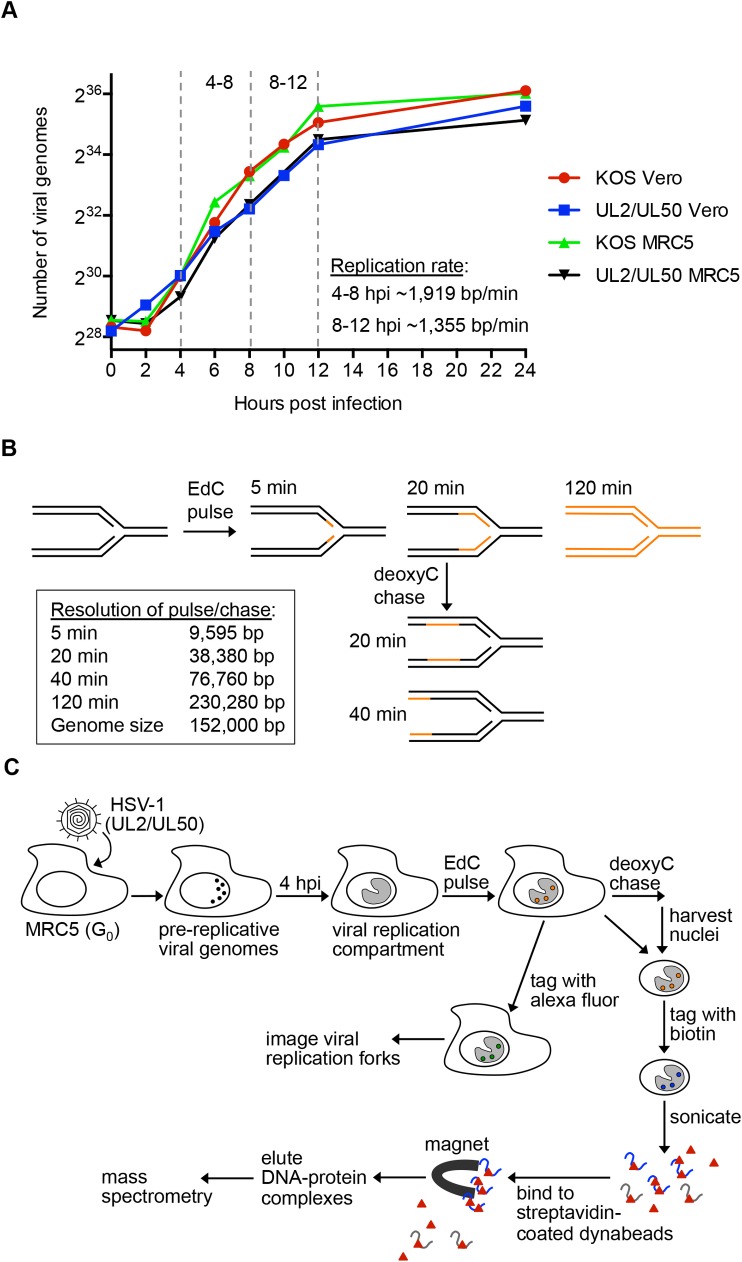
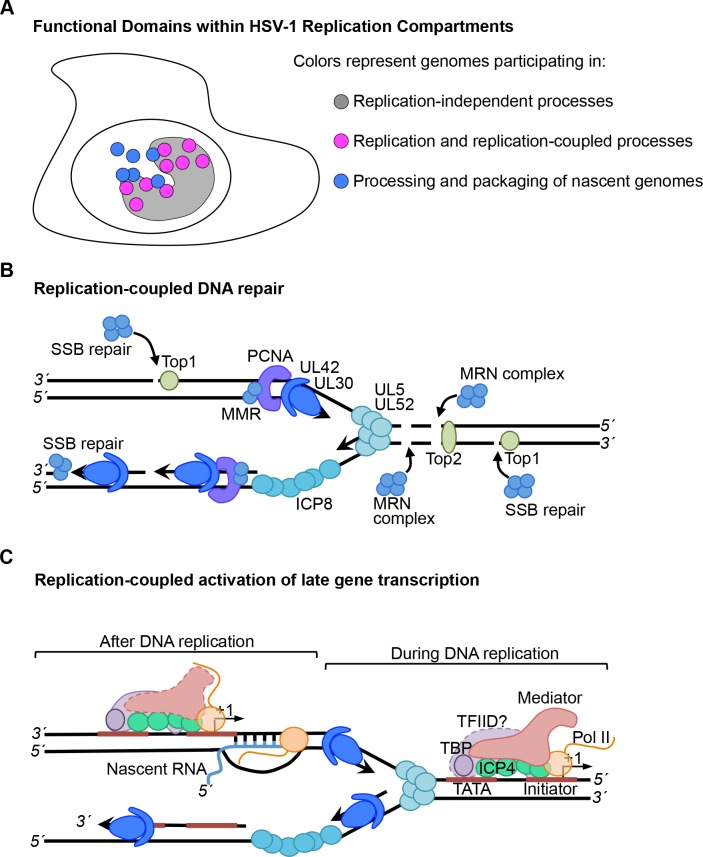
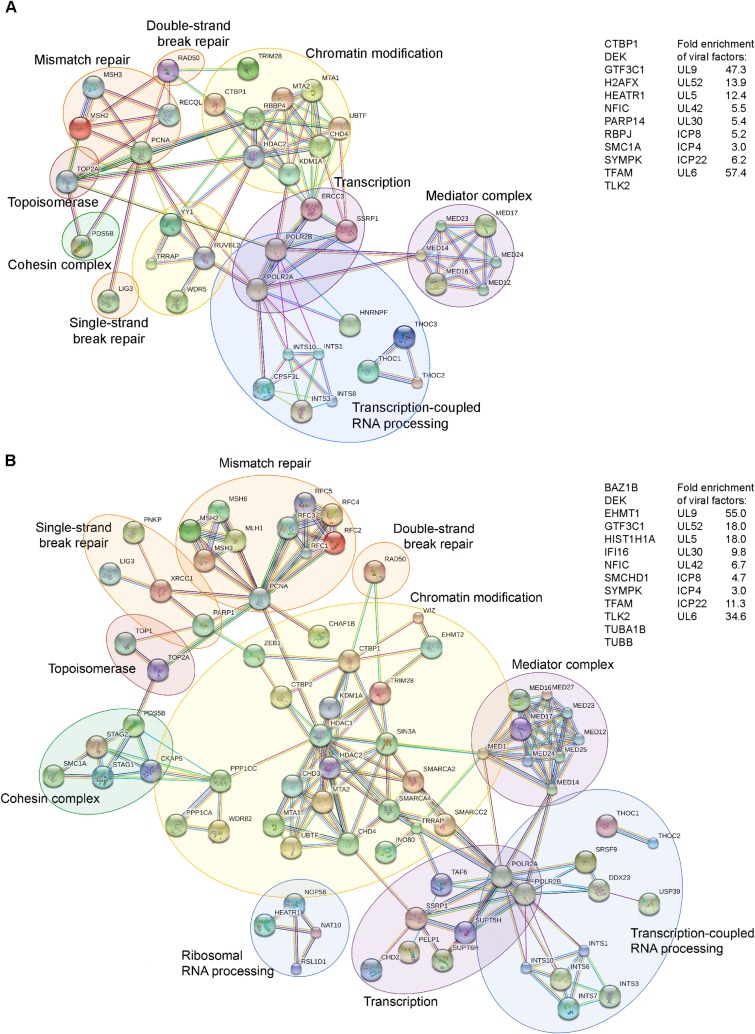
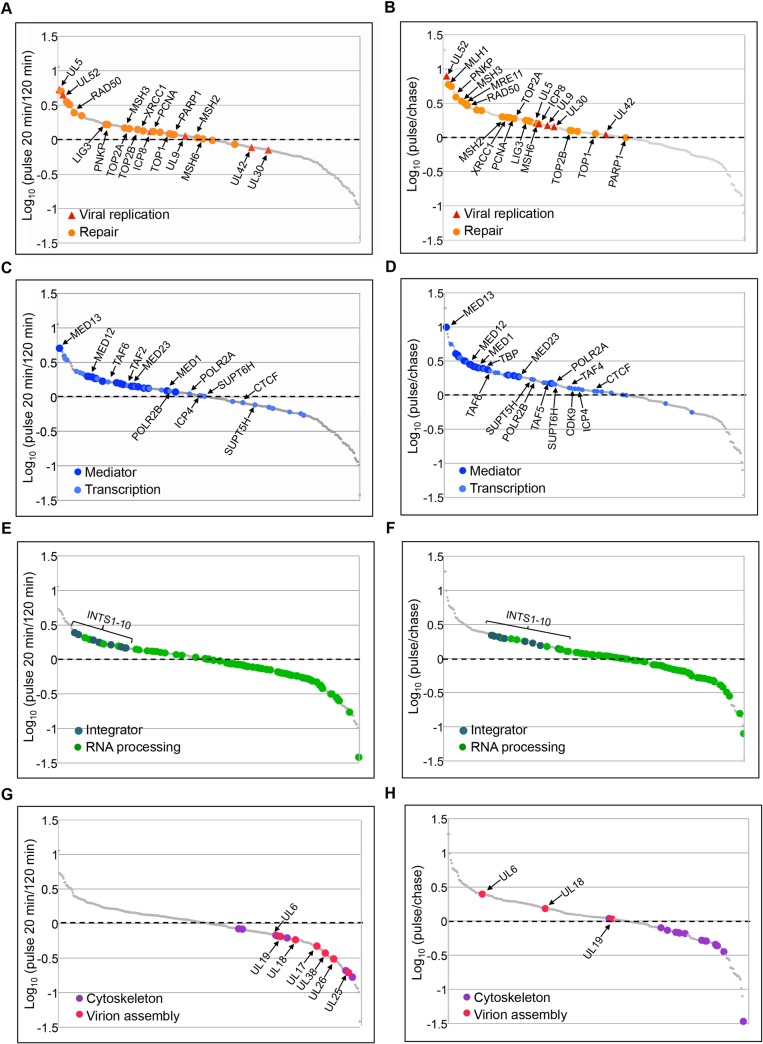
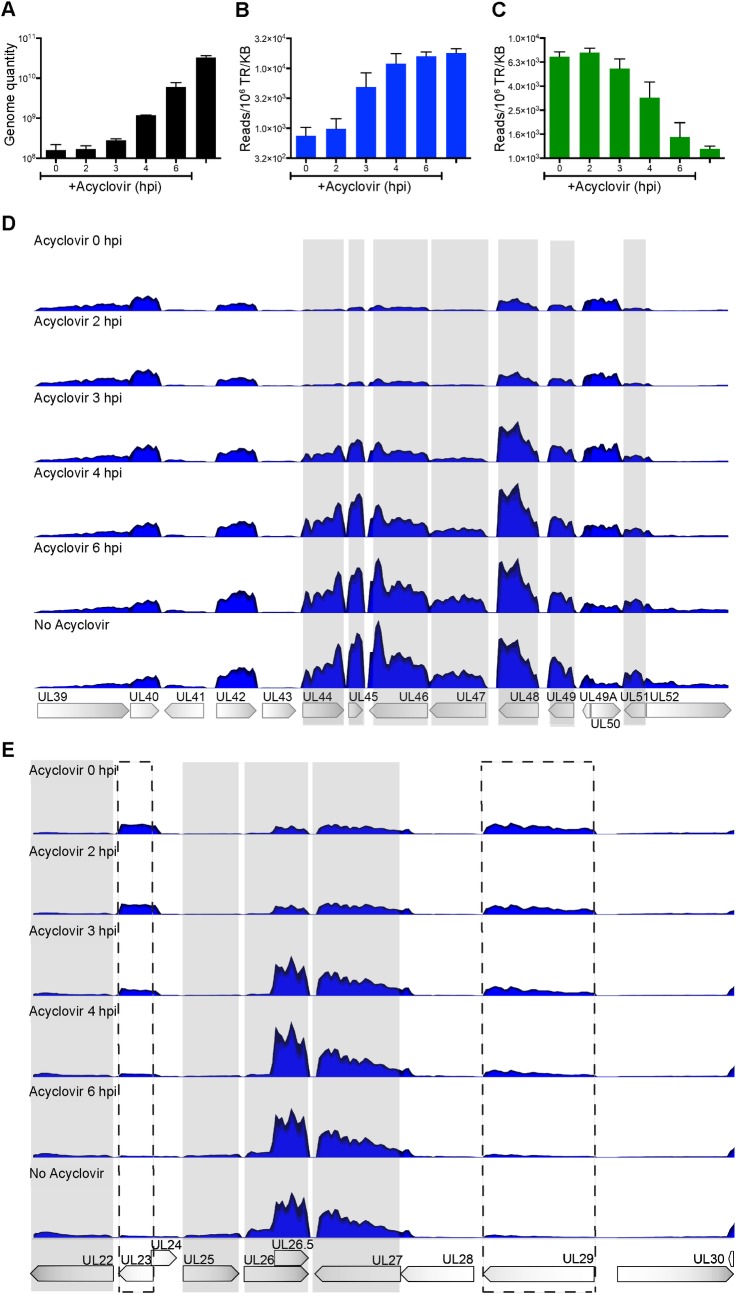
Herpes simplex virus type 1 (HSV-1) infects over half the human population. Much of the infectious cycle occurs in the nucleus of cells where the virus has evolved mechanisms to manipulate host processes for the production of virus. The genome of HSV-1 is coordinately expressed, maintained, and replicated such that progeny virions are produced within 4-6 hours post infection. In this study, we selectively purify HSV-1 replication forks and associated proteins from virus-infected cells and identify select viral and cellular replication, repair, and transcription factors that associate with viral replication forks. Pulse chase analyses and imaging studies reveal temporal and spatial dynamics between viral replication forks and associated proteins and demonstrate that several DNA repair complexes and key transcription factors are recruited to or near replication forks. Consistent with these observations we show that the initiation of viral DNA replication is sufficient to license late gene transcription. These data provide insight into mechanisms that couple HSV-1 DNA replication with transcription and repair for the coordinated expression and maintenance of the viral genome.
1型单纯疱疹病毒(HSV-1)感染了超过一半的人类。病毒感染周期的大部分时间发生在细胞核中,在那里病毒已经进化出操纵宿主过程以产生病毒的机制。HSV-1的基因组被协调表达、维持和复制,从而在感染后4至6小时内产生子代病毒颗粒。在本研究中,我们从病毒感染的细胞中选择性地纯化HSV-1复制叉及相关蛋白,并鉴定与病毒复制叉相关的特定病毒和细胞复制、修复及转录因子。脉冲追踪分析和成像研究揭示了病毒复制叉与相关蛋白之间的时空动态,并证明几种DNA修复复合物和关键转录因子被招募到复制叉或其附近。与这些观察结果一致,我们表明病毒DNA复制的起始足以许可晚期基因转录。这些数据为将HSV-1 DNA复制与转录和修复相结合以协调病毒基因组的表达和维持的机制提供了见解。