Zhao Gui-Hua, Yin Kun, Zhong Wei-Xia, Xiao Ting, Wei Qing-Kuan, Cui Yong, Liu Gong-Zhen, Xu Chao, Wang Hong-Fa
Shandong Institute of Parasitic Diseases, Shandong Academy of Medical Sciences, Jining, 272033, P. R. China.
Korean J Parasitol. 2016 Dec;54(6):797-801. doi: 10.3347/kjp.2016.54.6.797. Epub 2016 Dec 31.
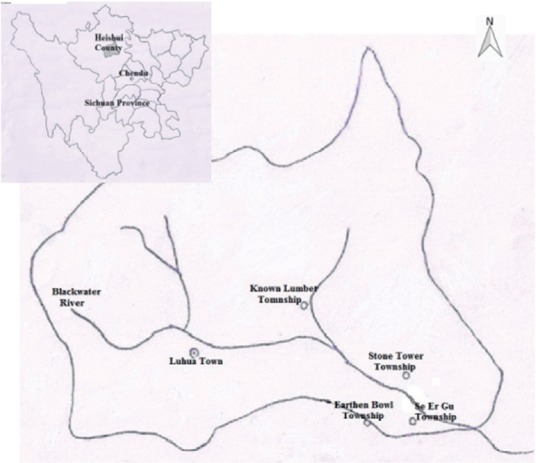
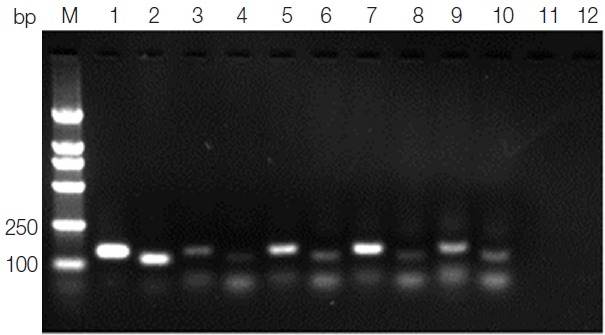
Heishui county, located in northwest Sichuan province, southwestern China, is an endemic area of zoonotic visceral leishmaniasis (VL) and is the most intractable area. VL is never destroyed in it. Asymptomatic dogs ( parasites have been diagnosed but clinically healthy) are considered to be a potential reservoir host in zoonotic VL area, and most can lead to infection of individuals, that is a new challenge for controlling VL in humans. The present study aimed to assess the infection rate of asymptomatic dogs in Heishui county. Total 105 asymptomatic domestic dogs were gathered from 4 districts in Heishui county to investigate the infection rate with serological and molecular methods based on ELISA and kinetoplast minicircle DNA(kDNA) PCR, respectively. Out of 105 dogs, 44 (41.9%) were positive by more than 1 method; 21 (20.0%) were positive by ELISA, and 30 (28.6%) were positive by kDNA-PCR. Our study showed that infection of domestic dogs which is clinically healthy is prevalent in the studied district, and the asymptomatic dogs infected by may be the primary reason for the prevalence of visceral leishmaniasis in the area.
黑水县位于中国西南部四川省西北部,是动物源性内脏利什曼病(VL)的流行区,也是最难以控制的地区,VL在该地区从未被消灭。无症状犬(已诊断出寄生虫但临床健康)被认为是动物源性VL流行区的潜在储存宿主,且大多数可导致个体感染,这对控制人类VL构成了新挑战。本研究旨在评估黑水县无症状犬的感染率。从黑水县4个地区共收集了105只无症状家犬,分别采用基于ELISA的血清学方法和基于动基体小环DNA(kDNA)PCR的分子方法调查感染率。105只犬中,44只(41.9%)通过1种以上方法检测为阳性;21只(20.0%)ELISA检测呈阳性,30只(28.6%)kDNA-PCR检测呈阳性。我们的研究表明,在所研究地区,临床健康的家犬感染情况普遍,无症状犬感染可能是该地区内脏利什曼病流行的主要原因。