Li Yue, Wang Xiaomeng, Ren Juan, Lan Xi, Li Jing, Yi Jing, Liu Li, Han Yan, Zhang Sanqi, Li Dongmin, Lu Shemin
Department of Biochemistry and Molecular Biology, School of Basic Medical Sciences, Xi'an Jiaotong University Health Science Centre, Xi'an, Shaanxi, 710061, People's Republic of China.
Key Laboratory of Environment and Genes Related to Diseases (Xi'an Jiaotong University), Ministry of Education of China, Xi'an, Shaanxi, 710061, People's Republic of China.
BMC Pharmacol Toxicol. 2017 Jan 18;18(1):5. doi: 10.1186/s40360-016-0113-6.
NF-κB is one of the key transcription factors in the inflammatory response, transactivates a series of pro-inflammatory genes and is therefore regarded as an important target for anti-inflammatory drug screening.
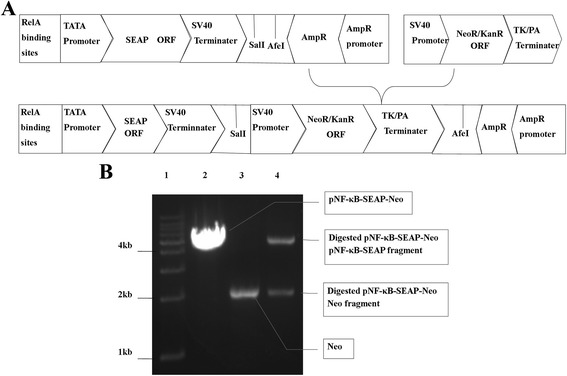
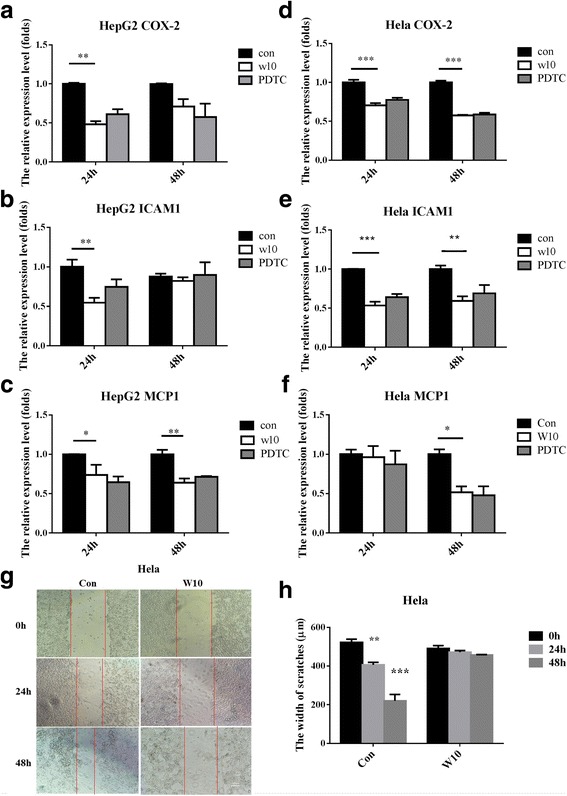
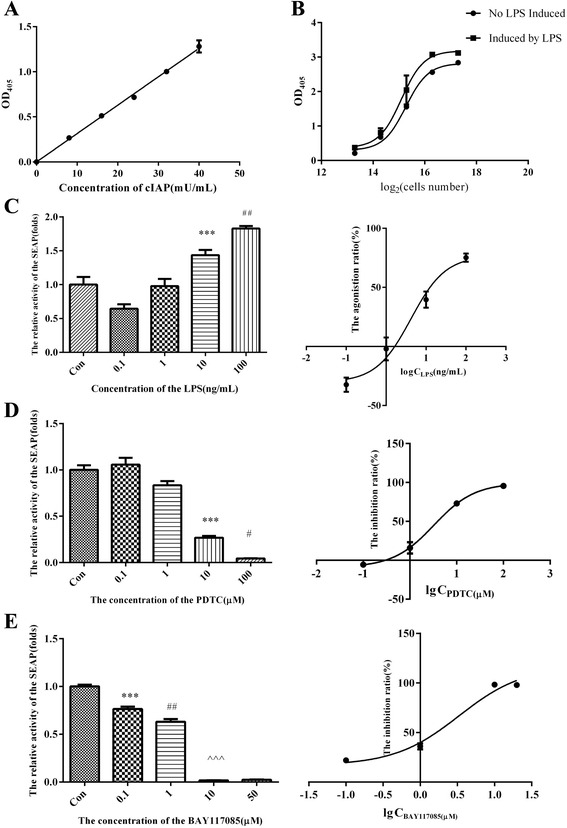
We recombined the reporter gene vector with inserting the "neo" transcript into the vector pNF-κB-SEAP, made the reporter gene vector stable in a eukaryotic cell line. The recombinant reporter gene vector we named pNF-κB-SEAP-Neo was transfected into RAW264.7. We selected the transfected RAW264.7 cell line with G418 for 15 days and then get RAW264.7 cells stably expressing NF-κB-dependent SEAP named as RAW264.7-pNF-κB-SEAP cells. We treated the RAW264.7-pNF-κB-SEAP cells with NF-κB agonists as LPS, PolyI:C and TNF-α, NF-κB inhibitor as PDTC and BAY117085, in different concentrations and time points and tested the expression of the SEAP, constructed the drug screening system on the base of the RAW264.7-pNF-κB-SEAP cell line. 130 chemicals were screened with the drug screening system we constructed and one of these chemicals numbered w10 was found could inhibit the NF-κB significantly. At last, we verified the inhibition of w10 to expression of genes promoted with NF-κB in HepG2 and Hela, and to migration of Hela.
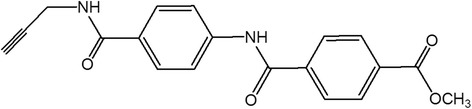
In this study, we established a drug screening system based on RAW264.7 cells that stably expressed the NF-κB-dependent, SEAP reporter gene. To develop a standard method for drug screening using this reporter-gene cell line, the test approach of SEAP was optimized and basic conditions for drug screening were chosen. This included the initial cell number inoculated in a 96-well plate, the optimum agonist, inhibitor of NF-κB pathway and their concentrations during screening. Subsequently, 130 newly synthesized compounds were screened using the stable reporter-gene cell line. The anti-inflammatory effects of the candidate compounds obtained were further verified in 2 cancer cell lines. The results indicated that compound W10 (methyl 4-(4-(prop-2-yn-1-ylcarbamoyl) phenylcarbamoyl) benzoate) significantly inhibited SEAP production under the screening conditions. Further results confirmed that the precursor compound significantly inhibited the transcription of NF-κB target genes.
In conclusion, RAW264.7 cells, stably expressing the NF-κB-dependent SEAP-reporter gene, may provide a new, feasible, and efficient cellular drug-screening system.
核因子κB(NF-κB)是炎症反应中的关键转录因子之一,可反式激活一系列促炎基因,因此被视为抗炎药物筛选的重要靶点。
我们将报告基因载体进行重组,将“neo”转录本插入载体pNF-κB-SEAP中,使报告基因载体在真核细胞系中稳定存在。我们将重组后的报告基因载体命名为pNF-κB-SEAP-Neo,并转染至RAW264.7细胞中。用G418对转染后的RAW264.7细胞系进行15天的筛选,从而获得稳定表达NF-κB依赖性分泌型碱性磷酸酶(SEAP)的RAW264.7细胞,命名为RAW264.7-pNF-κB-SEAP细胞。我们用不同浓度和时间点的NF-κB激动剂如脂多糖(LPS)、聚肌胞苷酸(PolyI:C)和肿瘤坏死因子-α(TNF-α),以及NF-κB抑制剂如吡咯烷二硫代氨基甲酸盐(PDTC)和BAY117085处理RAW264.7-pNF-κB-SEAP细胞,并检测SEAP的表达,基于RAW264.7-pNF-κB-SEAP细胞系构建药物筛选系统。用我们构建的药物筛选系统对130种化学物质进行筛选,发现其中一种编号为w10的化学物质能显著抑制NF-κB。最后,我们验证了w10对HepG2和Hela细胞中由NF-κB促进的基因表达以及对Hela细胞迁移的抑制作用。
在本研究中,我们建立了基于稳定表达NF-κB依赖性SEAP报告基因的RAW264.7细胞的药物筛选系统。为开发使用该报告基因细胞系进行药物筛选的标准方法,对SEAP的检测方法进行了优化,并选择了药物筛选的基本条件。这包括接种于96孔板中的初始细胞数量、最佳激动剂、NF-κB信号通路抑制剂及其筛选过程中的浓度。随后,使用稳定的报告基因细胞系对130种新合成的化合物进行筛选。在2种癌细胞系中进一步验证了获得的候选化合物的抗炎作用。结果表明,化合物W10(4-(4-(丙-2-炔-1-基氨基甲酰基)苯基氨基甲酰基)苯甲酸甲酯)在筛选条件下显著抑制SEAP的产生。进一步的结果证实该前体化合物显著抑制NF-κB靶基因的转录。
总之,稳定表达NF-κB依赖性SEAP报告基因的RAW264.7细胞可能提供一种新的、可行且高效的细胞药物筛选系统。