Department of Pathology and Immunology, Washington University School of Medicine, St. Louis, MO 63110, USA.
Immunity. 2013 Apr 18;38(4):633-43. doi: 10.1016/j.immuni.2013.04.005.
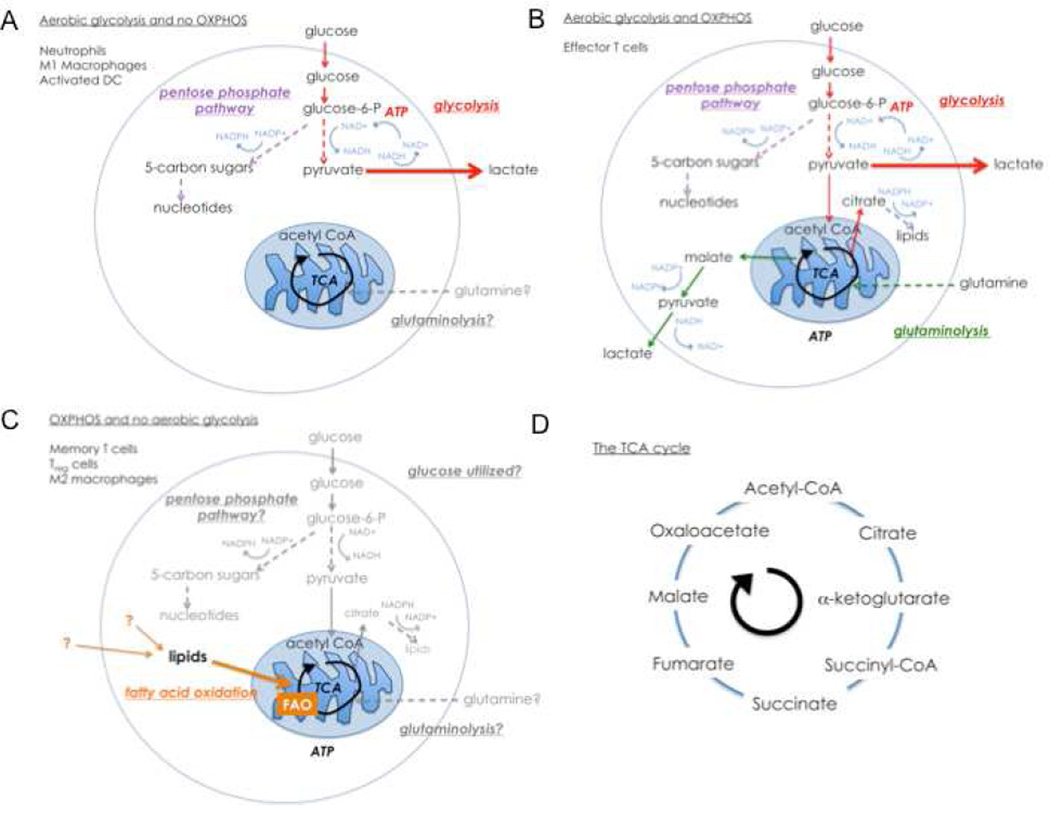
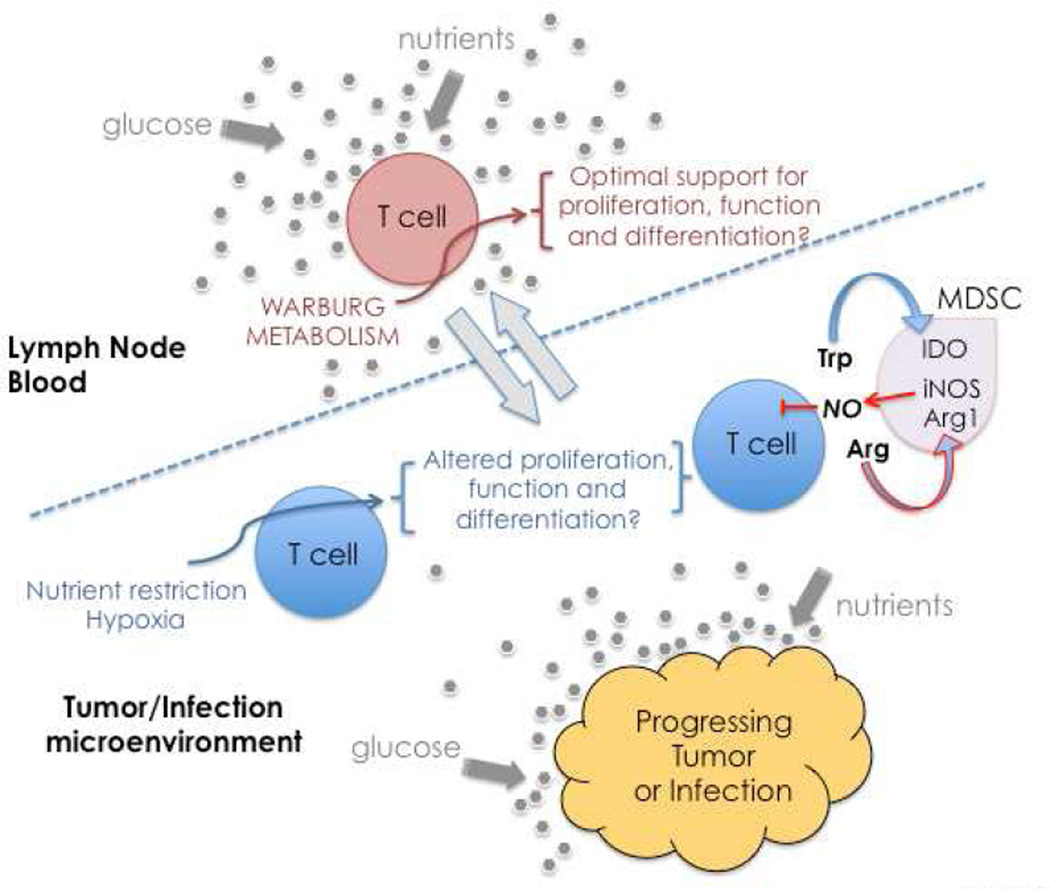
Studies of immune system metabolism ("immunometabolism") segregate along two paths. The first investigates the effects of immune cells on organs that regulate whole-body metabolism, such as adipose tissue and liver. The second explores the role of metabolic pathways within immune cells and how this regulates immune response outcome. Distinct metabolic pathways diverge and converge at many levels, and, therefore, cells face choices as to how to achieve their metabolic goals. There is interest in fully understanding how and why immune cells commit to particular metabolic fates and in elucidating the immunologic consequences of reaching a metabolic endpoint by one pathway versus another. This is particularly intriguing, given that metabolic commitment is influenced not only by substrate availability but also by signaling pathways elicited by metabolites. Thus, metabolic choices in cells enforce fate and function, and this area will be the subject of this review.
免疫代谢的研究沿着两条路径分道扬镳。第一条路径研究免疫细胞对调节全身代谢的器官(如脂肪组织和肝脏)的影响。第二条路径探索免疫细胞内代谢途径及其如何调节免疫反应结果。不同的代谢途径在许多层面上既分化又汇聚,因此细胞需要做出选择,以实现其代谢目标。人们有兴趣充分了解免疫细胞如何以及为何选择特定的代谢命运,并阐明通过一条途径而非另一条途径达到代谢终点的免疫学后果。这一点尤其有趣,因为代谢的决定不仅受底物可用性的影响,还受代谢物引发的信号通路的影响。因此,细胞中的代谢选择决定了命运和功能,这将是本综述的主题。