Jaszke-Psonka Magdalena, Piegza Magdalena, Ścisło Piotr, Pudlo Robert, Piegza Jacek, Badura-Brzoza Karina, Leksowska Aleksandra, Hese Robert T, Gorczyca Piotr W
Mental Health Center - Phoenix, Katowice, Poland.
Department and Clinic of Psychiatry in Tarnowskie Góry, SMDZ in Zabrze, Medical University of Silesia in Katowice, Poland.
Kardiochir Torakochirurgia Pol. 2016 Dec;13(4):393-398. doi: 10.5114/kitp.2016.64893. Epub 2016 Dec 30.
To evaluate the incidence and severity of the impairment of selected cognitive functions in patients after sudden cardiac arrest (SCA) in comparison to patients after myocardial infarction without SCA and healthy subjects and to analyze the influence of sociodemographic and clinical parameters and the duration of cardiac arrest on the presence and severity of the described disorders.
The study group comprised 30 cardiac arrest survivors, the reference group comprised 31 survivors of myocardial infarction without cardiac arrest, and the control group comprised 30 healthy subjects. The Mini-Mental State Examination (MMSE), the Digit Span test from the Wechsler Adult Intelligence Scale, Lauretta Bender's Visual-Motor Gestalt Test, and the Benton Visual Retention Test (BVRT) were used to assess the presence of cognitive impairment. An original questionnaire developed by the author was used for overall mental state assessment.
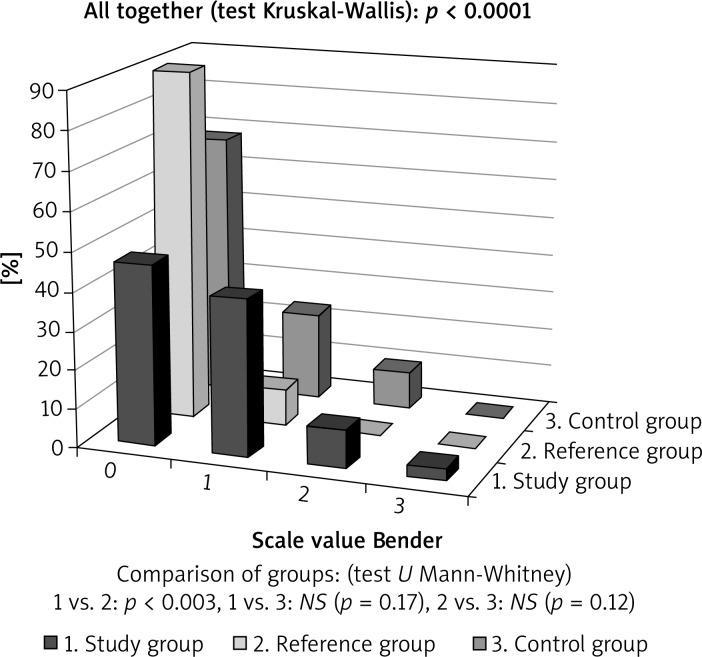
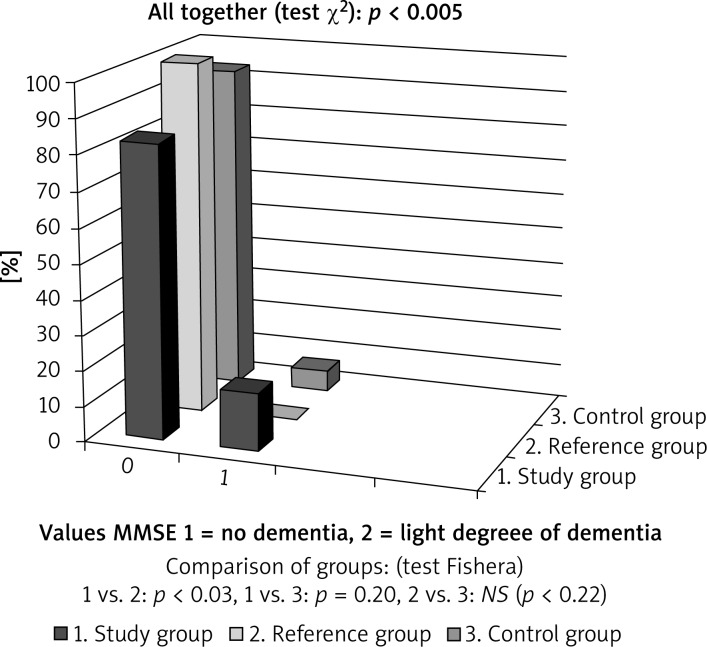
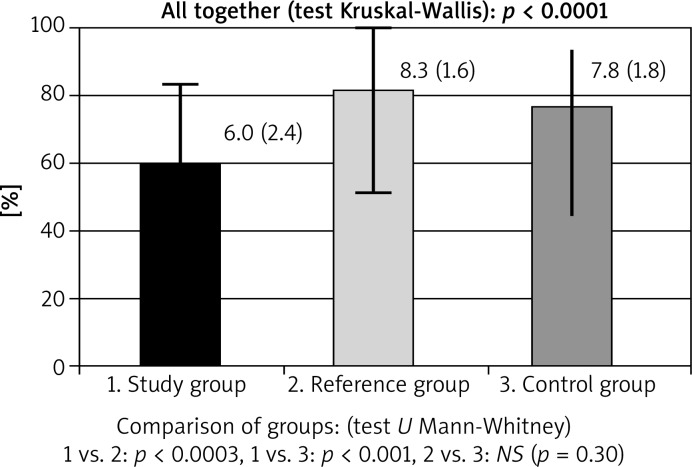
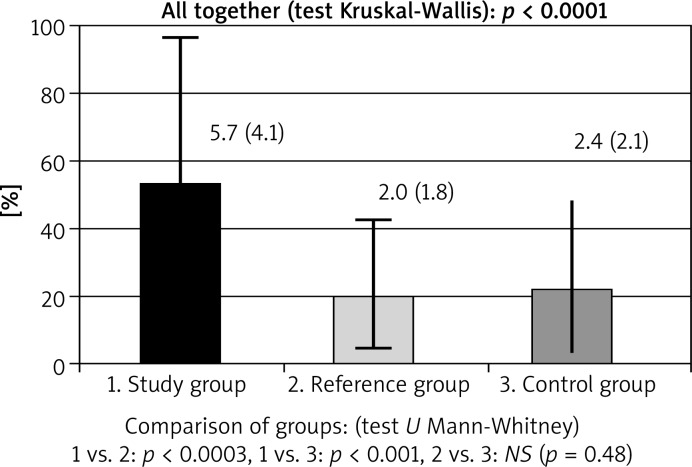
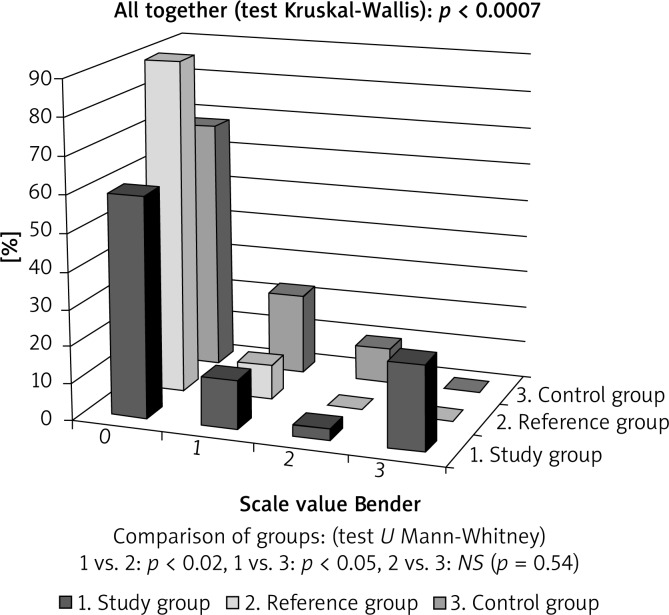
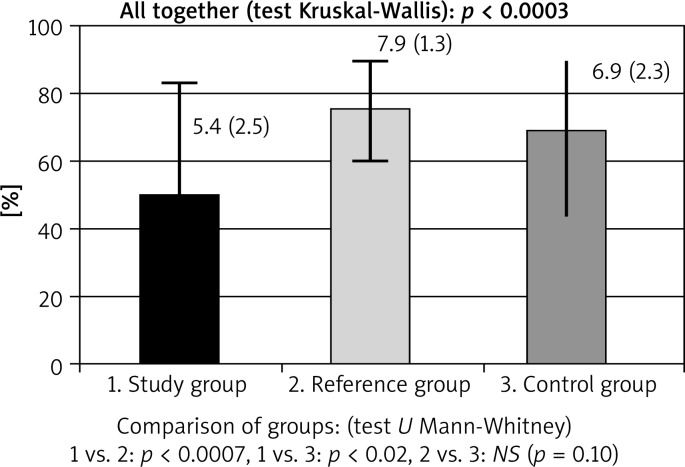
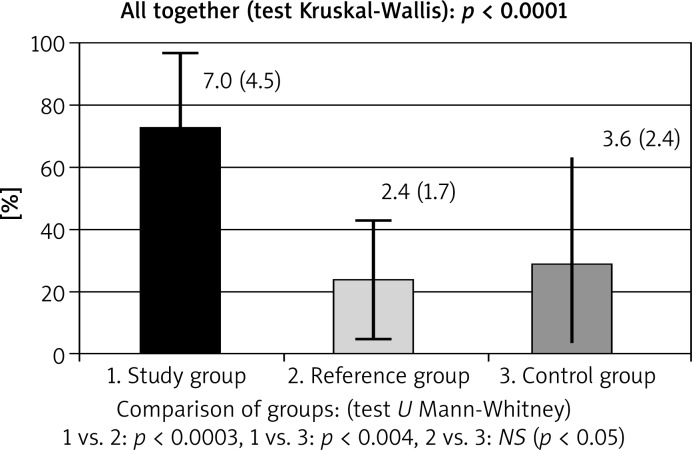
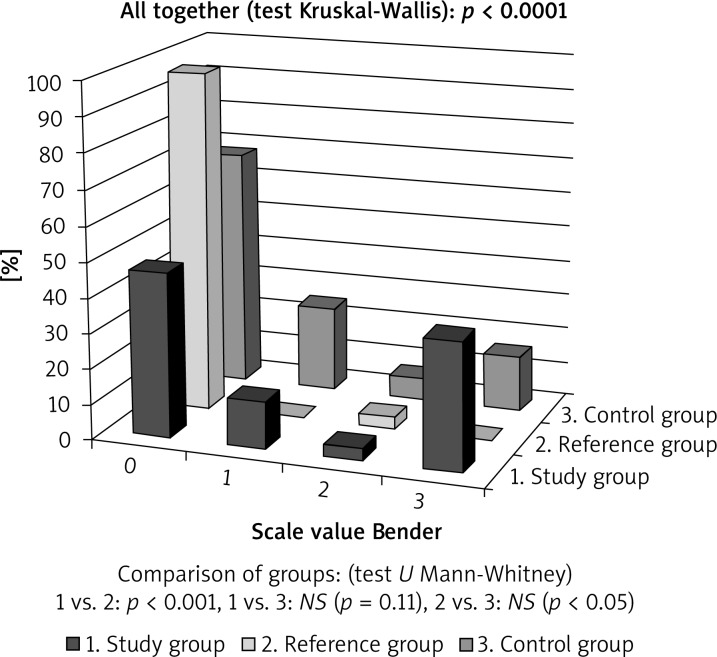
The Bender test demonstrated a significant difference in the presence and severity of visual-motor skills between the study group and the control group, while BVRT and MMSE revealed increased incidence of cognitive impairment in the study group. The Bender and BVRT (D/D)/SS (version D, method D, scaled score) scales indicated cognitive impairment in 53.3% of these patients, while the BVRT (C/A)/SS test indicated cognitive impairment in 40%. For the reference group, the values were 32.3% and 12.9%, respectively. No correlation was found between the severity of cognitive impairment and the duration of cardiac arrest.
Impairment of visual-motor skills, short-term visual memory, concentration, and visual-motor coordination occurs much more frequently and is more severe in individuals after SCA than in healthy individuals. Impairment of memory trace storage and recall after delay occurs more frequently in patients after SCA than in patients after myocardial infarction without cardiac arrest and in healthy individuals. SCA duration did not have any influence on the severity of the described disorders.
与无心脏骤停的心肌梗死患者及健康受试者相比,评估心脏骤停(SCA)患者特定认知功能损害的发生率和严重程度,并分析社会人口统计学和临床参数以及心脏骤停持续时间对上述障碍的存在及严重程度的影响。
研究组包括30名心脏骤停幸存者,参照组包括31名无心脏骤停的心肌梗死幸存者,对照组包括30名健康受试者。使用简易精神状态检查表(MMSE)、韦氏成人智力量表中的数字广度测验、洛蕾塔·本德视觉运动完形测验以及本顿视觉保持测验(BVRT)来评估认知损害的存在情况。作者编制的一份原始问卷用于整体精神状态评估。
本德测验显示研究组与对照组在视觉运动技能的存在及严重程度方面存在显著差异,而BVRT和MMSE显示研究组认知损害的发生率增加。本德和BVRT(D/D)/SS(版本D,方法D,量表分)量表显示这些患者中有53.3%存在认知损害,而BVRT(C/A)/SS测验显示认知损害的比例为40%。对于参照组,相应的值分别为32.3%和12.9%。未发现认知损害的严重程度与心脏骤停持续时间之间存在相关性。
与健康个体相比,SCA后个体的视觉运动技能、短期视觉记忆、注意力和视觉运动协调能力的损害更为频繁且更为严重。与无心脏骤停的心肌梗死患者及健康个体相比,SCA后患者延迟后记忆痕迹存储和回忆的损害更为频繁。SCA持续时间对上述障碍的严重程度没有任何影响。