Wang Li, Zhang Zhiguo, Yan Qiuli, Lu Jie, Gao Baoyin, Zhao Yanlin, Pang Yu
Changping Tuberculosis Dispensary, Beijing, People's Republic of China.
Changping Hospital of Integrated Chinese and Western Medicine, Beijing, People's Republic of China.
BMC Infect Dis. 2017 Jan 18;17(1):83. doi: 10.1186/s12879-017-2190-6.
Although the prevalence of tuberculosis has decreased significantly over the past decades, the certain populations with mental illness are at increased risk for tuberculosis infection and transmission. However, no studies have examined the performance of different laboratory examination methods among people with severe mental illness in China.
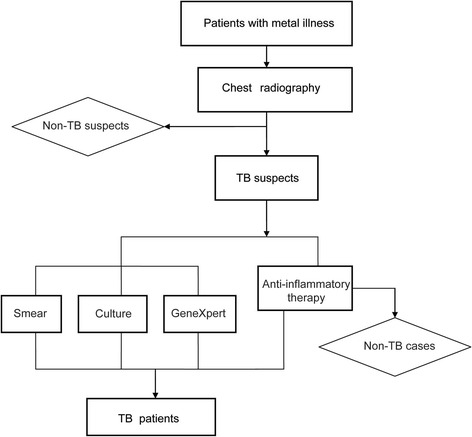
In this study, we firstly performed a retrospective study to evaluate the feasibility of three routine laboratory methods, including sputum microscopy, solid culture and GeneXpert, to diagnose tuberculosis patients with mental illness.
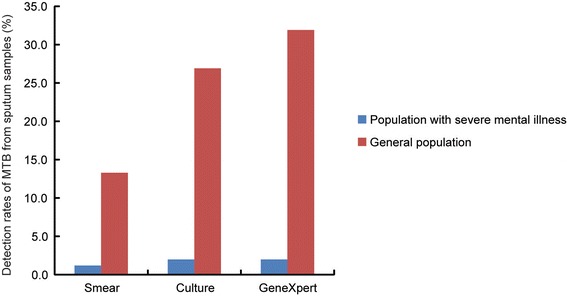
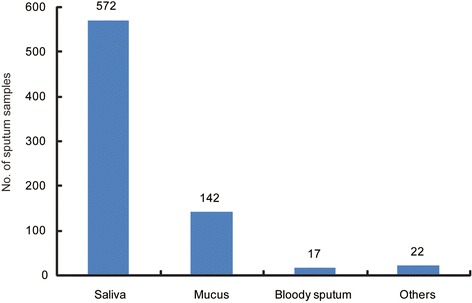
During August 2010 and March 2013, a total of 251 TB patients based on clinical and radiographic criteria with severe mental illness were enrolled in this study. The majority of patients was homeless (97/251, 38.6%), and the other 62 (24.7%) and 92 (36.7%) were from urban and rural region, respectively. The most frequently diagnosed mental illness was schizophrenia, accounting for 84.1% (211/251) of patients available for analysis. In addition, the laboratory received 753 sputum samples collected from these 251 TB patients, of which 76.0% (572/753) of samples were classified as salivary sputum, which were unqualified for microscopy and culture. When the test results were analyzed by patients, the positive numbers of TB patients detected by sputum microscopy, solid culture and GeneXpert were 3 (1.2%), 5 (2.0%) and 5 (2.0%), respectively.
In conclusion, our findings reveal that the current laboratory examinations based on sputum samples seem not to be suitable for the diagnosis of active TB in the persons with severe mental illness. The products using a non-invasive specimen such as urine deserve further evaluation, which may generate benefit for the early diagnosis of TB in this special population.
尽管在过去几十年中结核病的患病率显著下降,但某些患有精神疾病的人群感染和传播结核病的风险有所增加。然而,在中国,尚无研究探讨不同实验室检查方法在重度精神疾病患者中的表现。
在本研究中,我们首先进行了一项回顾性研究,以评估三种常规实验室方法(包括痰涂片镜检、固体培养和GeneXpert)诊断患有精神疾病的结核病患者的可行性。
在2010年8月至2013年3月期间,共有251例根据临床和影像学标准确诊为患有重度精神疾病的结核病患者纳入本研究。大多数患者无家可归(97/251,38.6%),另外62例(24.7%)和92例(36.7%)分别来自城市和农村地区。最常诊断出的精神疾病是精神分裂症,占可分析患者的84.1%(211/251)。此外,实验室收到了从这251例结核病患者中采集的753份痰标本,其中76.0%(572/753)的标本被归类为唾液痰,不适合用于镜检和培养。当按患者分析检测结果时,痰涂片镜检、固体培养和GeneXpert检测出的结核病患者阳性数分别为3例(1.2%)、5例(2.0%)和5例(2.0%)。
总之,我们的研究结果表明,目前基于痰标本的实验室检查似乎不适用于重度精神疾病患者活动性结核病的诊断。使用非侵入性标本(如尿液)的检测方法值得进一步评估,这可能有助于该特殊人群结核病的早期诊断。