Glenwright Helen, Pohl Susanne, Navarro Ferran, Miro Elisenda, Jiménez Guillermo, Blanch Anicet R, Harwood Colin R
Centre for Bacterial Cell Biology, Institute for Cell and Molecular Biology, Newcastle University Newcastle upon Tyne, UK.
Servei de Microbiologia, Hospital de la Santa Creu i Sant Pau, Institut d'Investigació Biomèdica Sant Pau Barcelona, Spain.
Front Microbiol. 2017 Jan 4;7:2122. doi: 10.3389/fmicb.2016.02122. eCollection 2016.
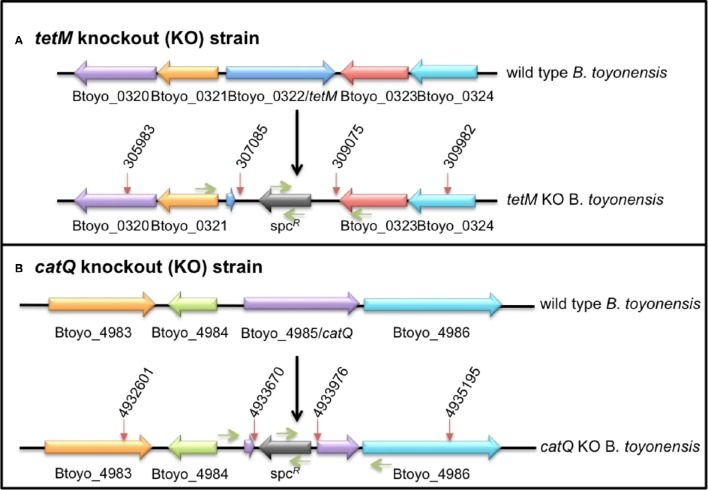
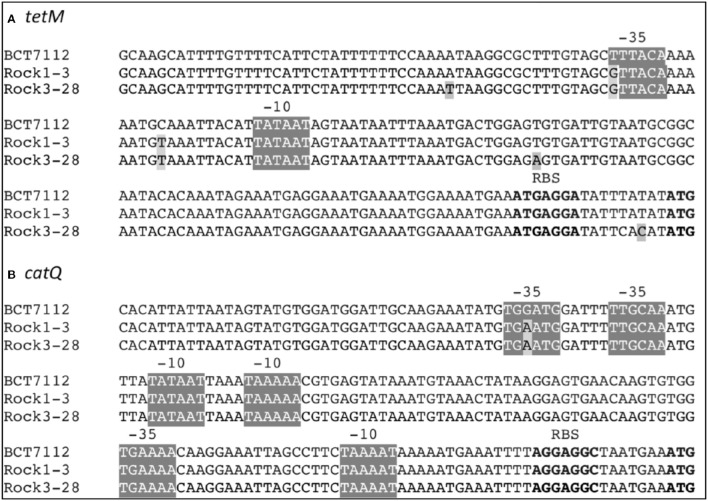
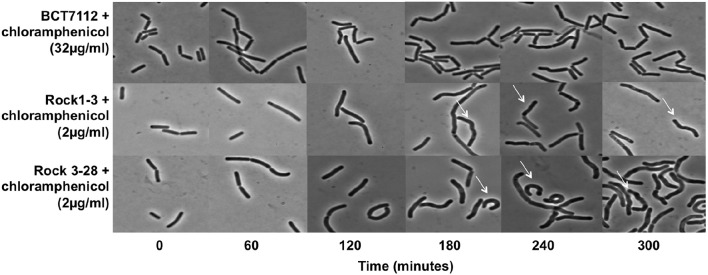
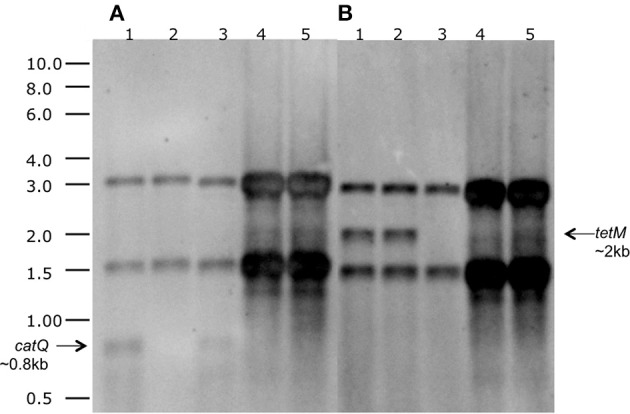
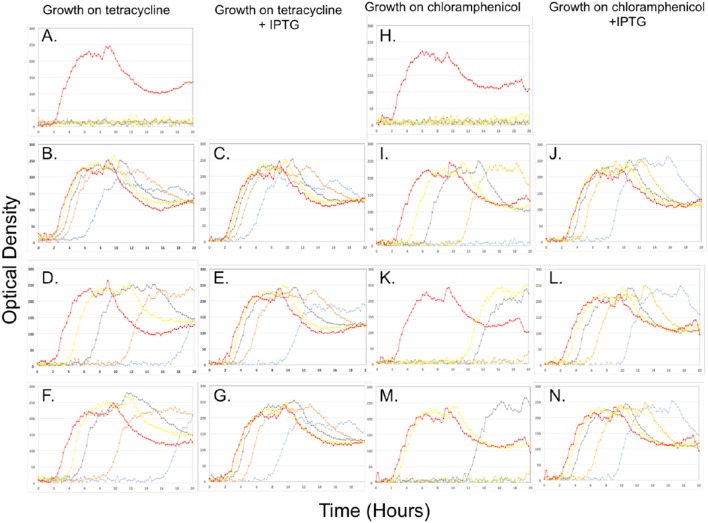
strain BCT-7112 (NCIMB 14858) has been widely used as an additive in animal nutrition for more than 30 years without reports of adverse toxigenic effects. However, this strain is resistant to chloramphenicol and tetracycline and it is generally considered inadvisable to introduce into the food chain resistance determinants capable of being transferred to other bacterial strains, thereby adding to the pool of such determinants in the gastro-enteric systems of livestock species. We therefore characterized the resistance phenotypes of this strain and its close relatives to determine whether they were of recent origin, and therefore likely to be transmissible. To this end we identified the genes responsible for chloramphenicol () and tetracycline () resistance and confirmed the presence of homologs in other members of the taxonomic unit. Unexpectedly, closely related strains encoding these genes did not exhibit chloramphenicol and tetracycline resistance phenotypes. To understand the differences in the behaviors, we cloned and expressed the genes, together with their upstream regulatory regions, into . The data showed that the genes encoded functional proteins, but were expressed inefficiently from their native promoters. is a taxonomic unit member of the group (). We therefore extended the analysis to determine the extent to which homologous chloramphenicol and tetracycline resistance genes were present in other species within this group. This analysis revealed that homologous genes were present in nearly all representative species within the group (). The absence of known transposition elements and the observations that they are found at the same genomic locations, indicates that these chloramphenicol and tetracycline resistance genes are of ancient origin and intrinsic to this taxonomic group, rather than recent acquisitions. In this context we discuss definitions of what are and are not intrinsic genes, an issue that is of fundamental importance to both Regulatory Authorities, and the animal feed and related industries.
BCT - 7112菌株(NCIMB 14858)作为动物营养添加剂已被广泛使用30多年,且无不良产毒作用的报道。然而,该菌株对氯霉素和四环素具有抗性,一般认为将能够转移至其他细菌菌株的耐药决定簇引入食物链是不可取的,因为这会增加家畜胃肠道系统中此类决定簇的数量。因此,我们对该菌株及其近缘菌株的耐药表型进行了表征,以确定它们是否为近期起源,进而确定其是否可能具有可传播性。为此,我们鉴定了负责氯霉素()和四环素()抗性的基因,并证实了在该分类单元的其他成员中存在同源基因。出乎意料的是,编码这些基因的近缘菌株并未表现出氯霉素和四环素抗性表型。为了解这些行为差异,我们将这些基因及其上游调控区域克隆并表达至。数据表明,这些基因编码功能性蛋白质,但从其天然启动子的表达效率较低。是该组()的一个分类单元成员。因此,我们扩展了分析范围,以确定该组内其他物种中同源氯霉素和四环素抗性基因的存在程度。该分析表明,该组()内几乎所有代表性物种中均存在同源基因。已知转座元件的缺失以及它们在相同基因组位置被发现的观察结果表明,这些氯霉素和四环素抗性基因起源古老,是该分类群所固有的,而非近期获得的。在此背景下,我们讨论了什么是固有基因以及什么不是固有基因的定义,这一问题对监管机构以及动物饲料及相关行业都至关重要。