Caruso Stefano, Franceschini Franco, Patriti Alberto, Roviello Franco, Annecchiarico Mario, Ceccarelli Graziano, Coratti Andrea
Stefano Caruso, Franco Franceschini, Department of General Surgery and Surgical Specialties, Unit of General Surgery, "Santa Maria Annunziata" Hospital, 50012 Florence, Italy.
World J Gastrointest Endosc. 2017 Jan 16;9(1):1-11. doi: 10.4253/wjge.v9.i1.1.
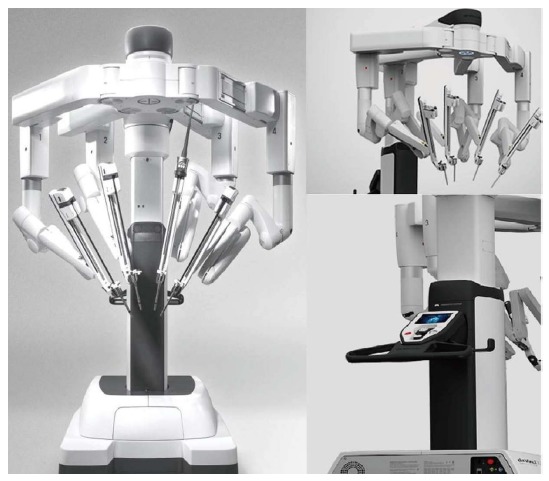
Phase III evidence in the shape of a series of randomized controlled trials and meta-analyses has shown that laparoscopic gastrectomy is safe and gives better short-term results with respect to the traditional open technique for early-stage gastric cancer. In fact, in the East laparoscopic gastrectomy has become routine for early-stage gastric cancer. In contrast, the treatment of advanced gastric cancer through a minimally invasive way is still a debated issue, mostly due to worries about its oncological efficacy and the difficulty of carrying out an extended lymphadenectomy and intestinal reconstruction after total gastrectomy laparoscopically. Over the last ten years the introduction of robotic surgery has implied overcoming some intrinsic drawbacks found to be present in the conventional laparoscopic procedure. Robot-assisted gastrectomy with D2 lymphadenectomy has been shown to be safe and feasible for the treatment of gastric cancer patients. But unfortunately, most available studies investigating the robotic gastrectomy for gastric cancer compared to laparoscopic and open technique are so far retrospective and there have not been phase III trials. In the present review we looked at scientific evidence available today regarding the new high-tech surgical robotic approach, and we attempted to bring to light the real advantages of robot-assisted gastrectomy compared to the traditional laparoscopic and open technique for the treatment of gastric cancer.
一系列随机对照试验和荟萃分析形式的III期证据表明,对于早期胃癌,腹腔镜胃切除术是安全的,并且与传统开放技术相比,短期效果更好。事实上,在东方,腹腔镜胃切除术已成为早期胃癌的常规手术。相比之下,通过微创方式治疗进展期胃癌仍然是一个有争议的问题,主要是因为担心其肿瘤学疗效以及腹腔镜全胃切除术后进行扩大淋巴结清扫和肠道重建的难度。在过去十年中,机器人手术的引入意味着克服了传统腹腔镜手术中存在的一些固有缺点。机器人辅助D2淋巴结清扫胃切除术已被证明对胃癌患者的治疗是安全可行的。但不幸的是,迄今为止,大多数比较机器人胃癌切除术与腹腔镜和开放技术的现有研究都是回顾性的,尚未进行III期试验。在本综述中,我们审视了当今关于新型高科技手术机器人方法的科学证据,并试图揭示机器人辅助胃切除术与传统腹腔镜和开放技术相比在治疗胃癌方面的真正优势。