Gu Dongxiang, Zhen Fengxian, Hannaway David B, Zhu Yan, Liu Leilei, Cao Weixing, Tang Liang
National Engineering and Technology Center for Information Agriculture, Jiangsu Key Laboratory for Information Agriculture, Jiangsu Collaborative Innovation Center for Modern Crop Production, Nanjing Agricultural University, Nanjing, Jiangsu, P.R. China.
Department of Crop & Soil Science, Oregon State University, Corvallis, Oregon, United States of America.
PLoS One. 2017 Jan 19;12(1):e0169968. doi: 10.1371/journal.pone.0169968. eCollection 2017.
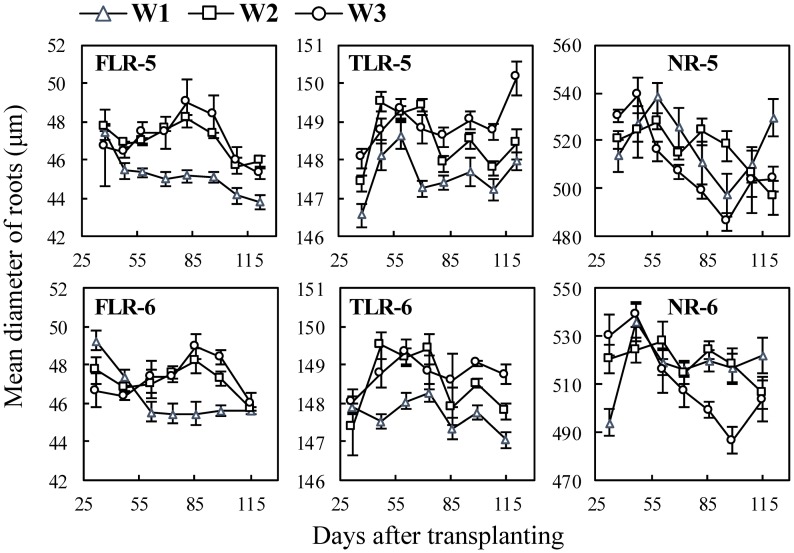
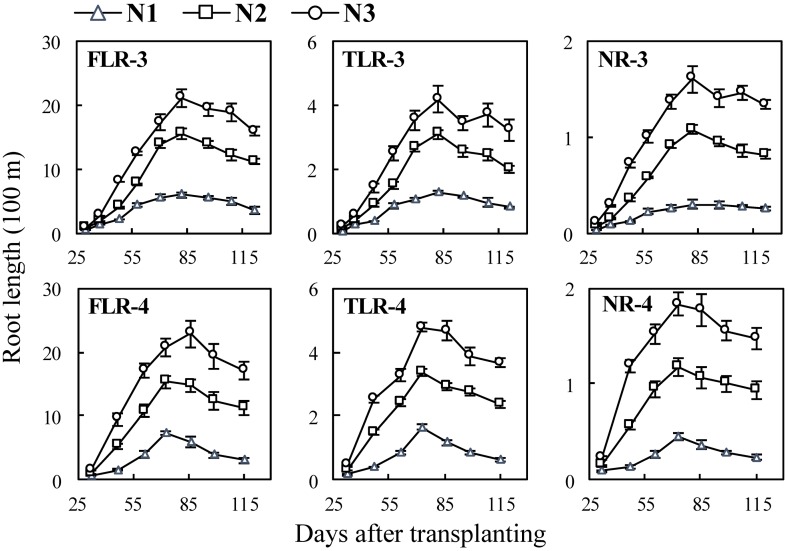
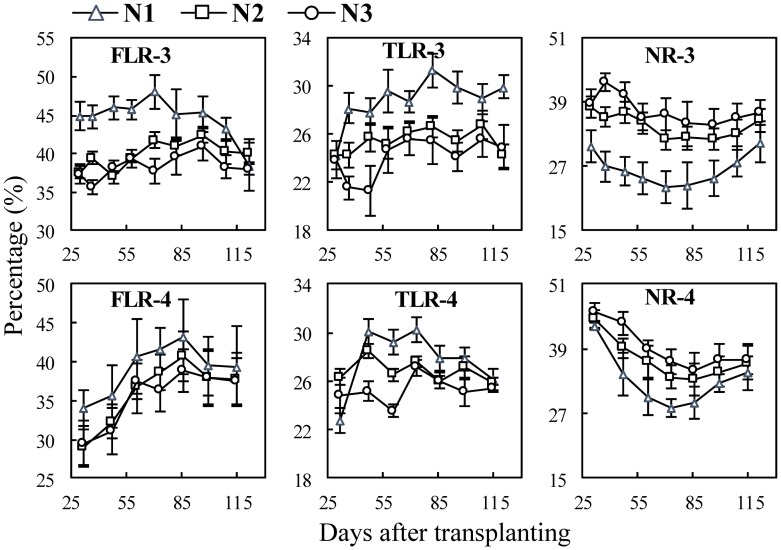
Quantitative study of root morphological characteristics of plants is helpful for understanding the relationships between their morphology and function. However, few studies and little detailed and accurate information of root characteristics were reported in fine-rooted plants like rice (Oryza sativa L.). The aims of this study were to quantitatively classify fine lateral roots (FLRs), thick lateral roots (TLRs), and nodal roots (NRs) and analyze their dynamics of mean diameter (MD), lengths and surface area percentage with growth stages in rice plant. Pot experiments were carried out during three years with three rice cultivars, three nitrogen (N) rates and three water regimes. In cultivar experiment, among the three cultivars, root length of 'Yangdao 6' was longest, while the MD of its FLR was the smallest, and the mean diameters for TLR and NR were the largest, the surface area percentage (SAP) of TLRs (SAPT) was the highest, indicating that Yangdao 6 has better nitrogen and water uptake ability. High N rate increased the length of different types of roots and increased the MD of lateral roots, decreased the SAP of FLRs (SAPF) and TLRs, but increased the SAP of NRs (SAPN). Moderate decrease of water supply increased root length and diameter, water stress increased the SAPF and SAPT, but decreased SAPN. The quantitative results indicate that rice plant tends to increase lateral roots to get more surface area for nitrogen and water uptake when available assimilates are limiting under nitrogen and water stress environments.
植物根系形态特征的定量研究有助于理解其形态与功能之间的关系。然而,在像水稻(Oryza sativa L.)这样的细根植物中,关于根系特征的研究较少,且缺乏详细准确的信息。本研究的目的是对水稻植株中的细侧根(FLRs)、粗侧根(TLRs)和节根(NRs)进行定量分类,并分析它们的平均直径(MD)、长度和表面积百分比随生长阶段的动态变化。连续三年进行盆栽试验,设置了三个水稻品种、三种施氮量和三种水分处理。在品种试验中,三个品种中,‘扬稻6号’的根长最长,但其细侧根的平均直径最小,粗侧根和节根的平均直径最大,粗侧根的表面积百分比(SAPT)最高,表明扬稻6号具有更好的氮素和水分吸收能力。高氮处理增加了不同类型根的长度,增加了侧根的平均直径,降低了细侧根(SAPF)和粗侧根的表面积百分比,但增加了节根的表面积百分比(SAPN)。适度减少供水增加了根的长度和直径,水分胁迫增加了细侧根和粗侧根的表面积百分比,但降低了节根的表面积百分比。定量结果表明,在氮素和水分胁迫环境下,当有效同化物有限时,水稻植株倾向于增加侧根以获得更多的表面积用于氮素和水分吸收。