Martins Mauricio Dias, Gingras Bruno, Puig-Waldmueller Estela, Fitch W Tecumseh
Berlin School of Mind and Brain, Humboldt University, Berlin, Germany; Max Planck Institute for Human Cognitive and Brain Sciences, Leipzig, Germany; Department of Cognitive Biology, University of Vienna, Vienna, Austria.
Department of Cognitive Biology, University of Vienna, Vienna, Austria; Institute of Psychology, University of Innsbruck, Austria.
Cognition. 2017 Apr;161:31-45. doi: 10.1016/j.cognition.2017.01.001. Epub 2017 Jan 16.
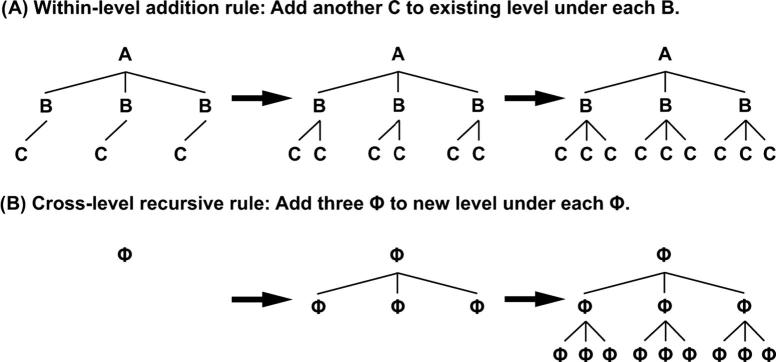
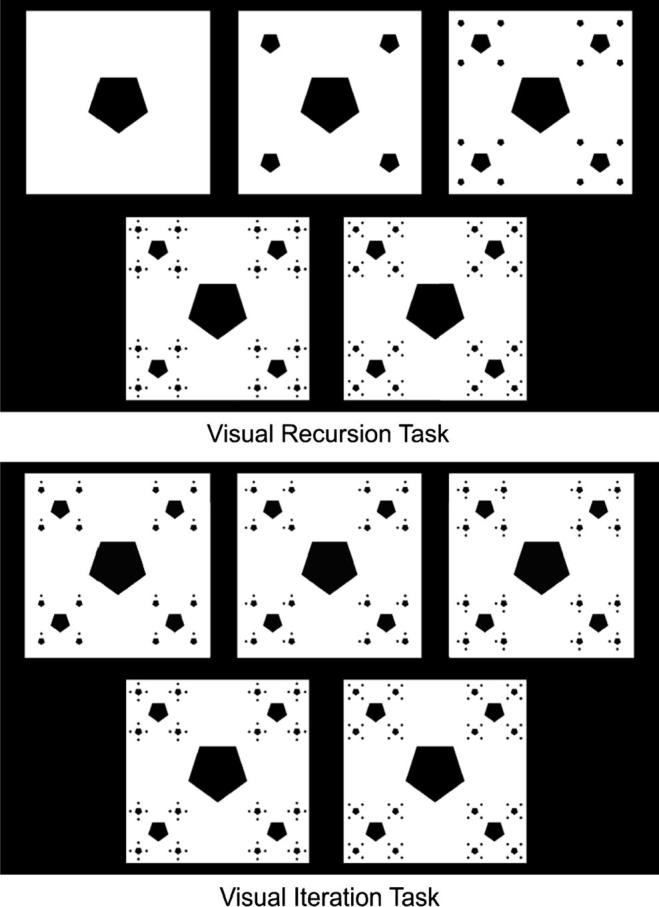
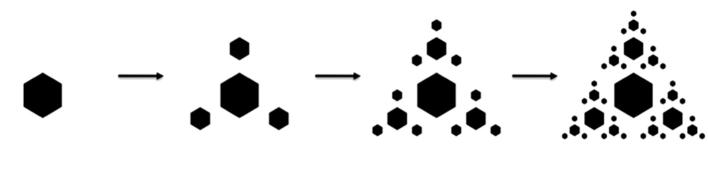
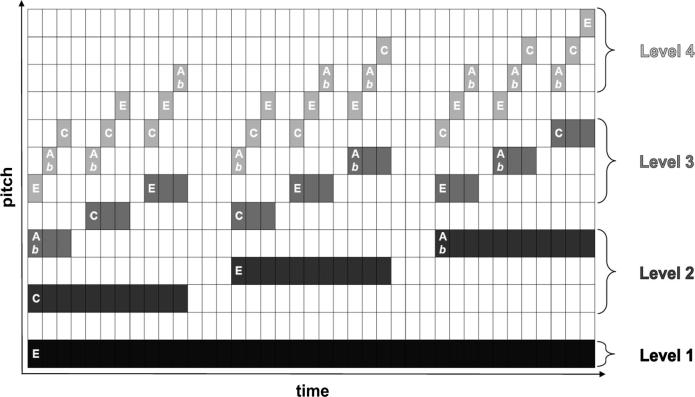
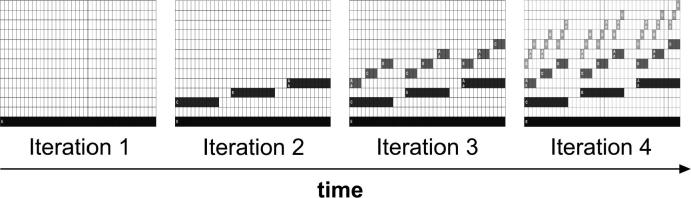
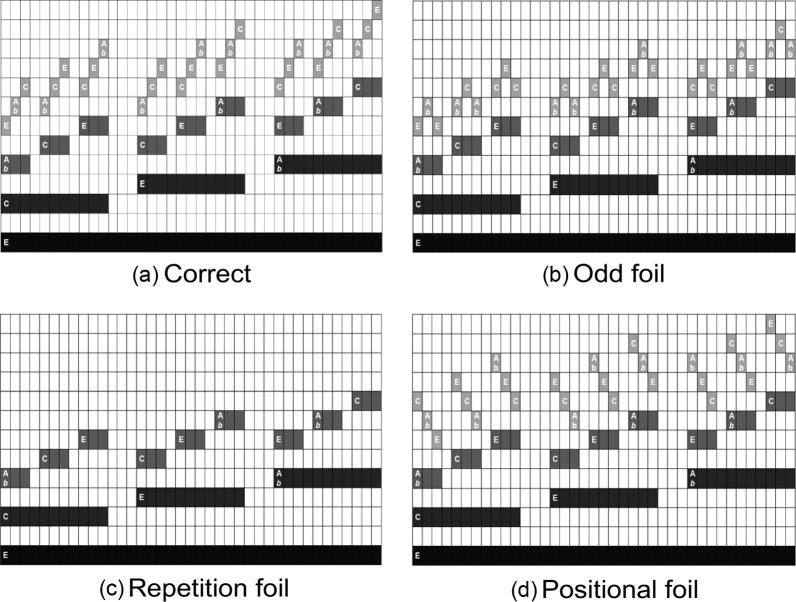
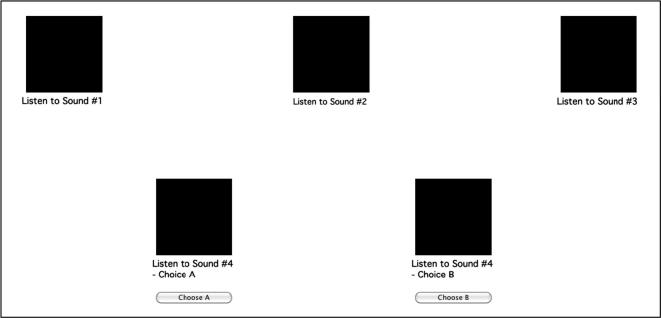
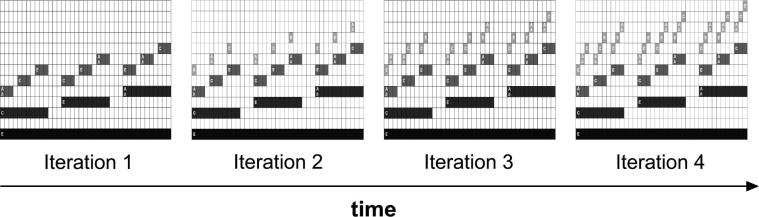
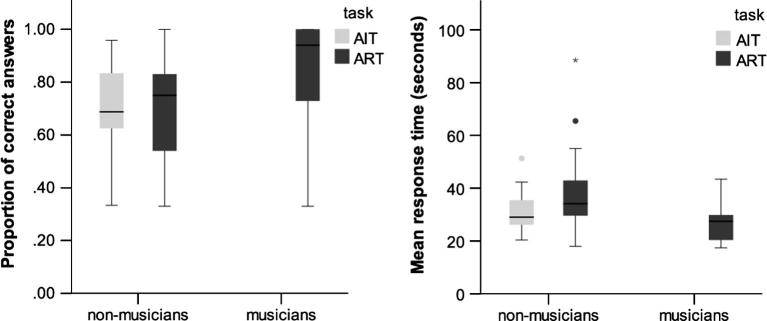
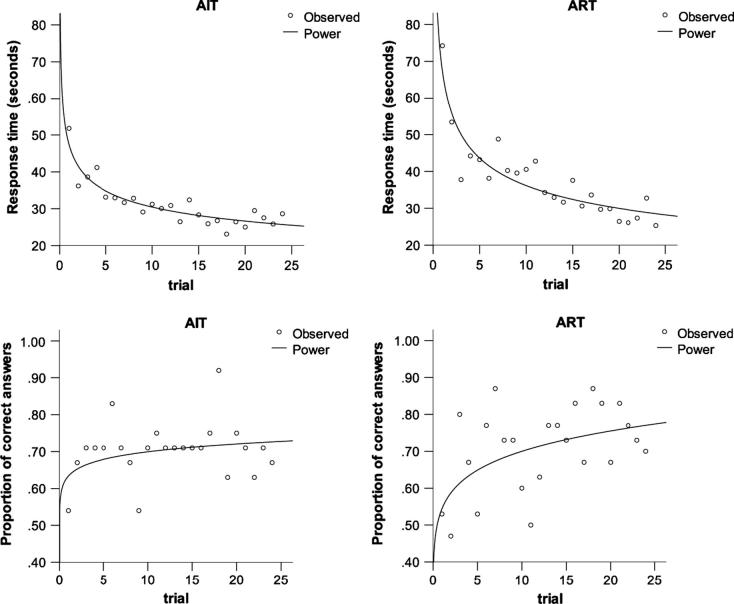
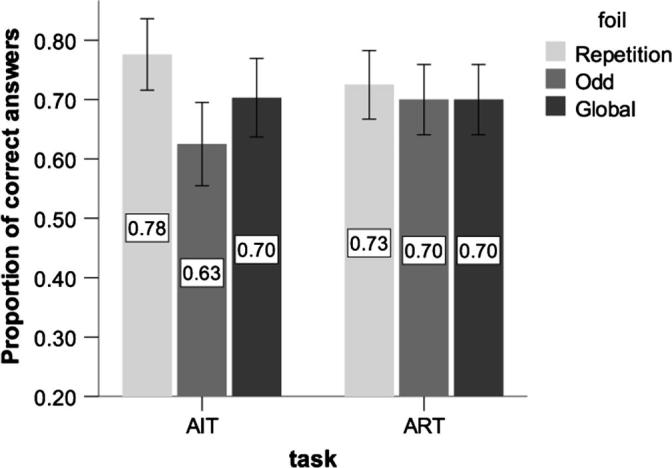
The human ability to process hierarchical structures has been a longstanding research topic. However, the nature of the cognitive machinery underlying this faculty remains controversial. Recursion, the ability to embed structures within structures of the same kind, has been proposed as a key component of our ability to parse and generate complex hierarchies. Here, we investigated the cognitive representation of both recursive and iterative processes in the auditory domain. The experiment used a two-alternative forced-choice paradigm: participants were exposed to three-step processes in which pure-tone sequences were built either through recursive or iterative processes, and had to choose the correct completion. Foils were constructed according to generative processes that did not match the previous steps. Both musicians and non-musicians were able to represent recursion in the auditory domain, although musicians performed better. We also observed that general 'musical' aptitudes played a role in both recursion and iteration, although the influence of musical training was somehow independent from melodic memory. Moreover, unlike iteration, recursion in audition was well correlated with its non-auditory (recursive) analogues in the visual and action sequencing domains. These results suggest that the cognitive machinery involved in establishing recursive representations is domain-general, even though this machinery requires access to information resulting from domain-specific processes.
人类处理层次结构的能力一直是一个长期的研究课题。然而,这种能力背后的认知机制的本质仍然存在争议。递归,即将结构嵌入同类结构中的能力,已被提出是我们解析和生成复杂层次结构能力的关键组成部分。在这里,我们研究了听觉领域中递归和迭代过程的认知表征。该实验采用了二选一的强制选择范式:参与者接触到三步过程,其中纯音序列通过递归或迭代过程构建,并且必须选择正确的完成方式。干扰项是根据与先前步骤不匹配的生成过程构建的。音乐家和非音乐家都能够在听觉领域中表征递归,尽管音乐家表现得更好。我们还观察到,一般的“音乐”能力在递归和迭代中都发挥了作用,尽管音乐训练的影响在某种程度上独立于旋律记忆。此外,与迭代不同,听觉中的递归与其在视觉和动作序列领域中的非听觉(递归)类似物有很好的相关性。这些结果表明,尽管建立递归表征所涉及的认知机制需要获取特定领域过程产生的信息,但它是领域通用的。