Department of Nephrology, Xinhua Hospital Affiliated to Shanghai Jiaotong University School of Medicine, Shanghai, China.
Department of Emergency, Putuo Hospital, Shanghai University of Traditional Chinese Medicine, Shanghai, China.
J Diabetes Investig. 2017 Jul;8(4):609-618. doi: 10.1111/jdi.12629. Epub 2017 Mar 1.
AIMS/INTRODUCTION: We aimed to evaluate the potential benefits and adverse effects of adding a mineralocorticoid receptor antagonist (MRA) to angiotensin-converting enzyme inhibitors (ACEI) and/or angiotensin receptor blockers (ARB), as standard treatment in patients with diabetic nephropathy.
We scanned the Embase, PubMed and Cochrane Central Register of Controlled Trials databases for human clinical trials published in English until June 2016, evaluating renal outcomes in patients with diabetic nephropathy.
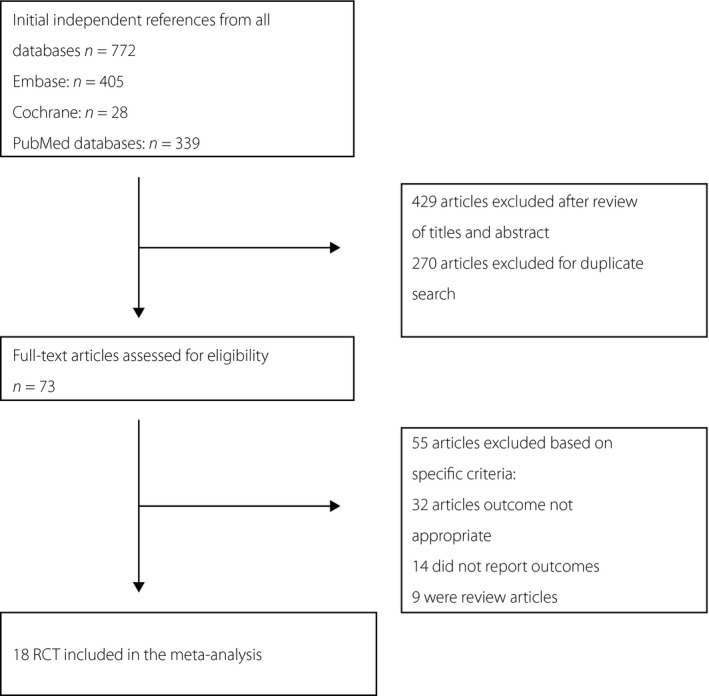
A total of 18 randomized controlled trials involving 1,786 patients were included. Compared with ACEI/ARB alone, co-administration of MRA and ACEI/ARB significantly reduced urinary albumin excretion and the urinary albumin-creatinine ratio (mean difference -69.38, 95% confidence intervals -103.53 to -35.22, P < 0.0001; mean difference -215.74, 95% confidence intervals -409.22 to -22.26, P = 0.03, respectively). A decrease of blood pressure was also found in the co-administration of MRA and ACEI/ARB groups. However, we did not observe any improvement in the glomerular filtration rate. There was a significant increase in the risk of hyperkalemia on the addition of MRA to ACEI/ARB treatment (relative risk 3.74, 95% confidence intervals 2.30-6.09, P < 0.00001).
These findings suggest that co-administration of MRA and ACEI/ARB has beneficial effects on renal outcomes with increasing the incidence of hyperkalemia.
目的/引言:我们旨在评估在糖尿病肾病患者的标准治疗中,加用盐皮质激素受体拮抗剂(MRA)与血管紧张素转换酶抑制剂(ACEI)和/或血管紧张素受体阻滞剂(ARB)联合治疗的潜在益处和不良反应。
我们检索了 Embase、PubMed 和 Cochrane 对照试验中心注册库,以获取截至 2016 年 6 月发表的评估糖尿病肾病患者肾脏结局的人类临床试验的英文文献。
共纳入 18 项包含 1786 名患者的随机对照试验。与 ACEI/ARB 单药治疗相比,MRA 与 ACEI/ARB 联合治疗可显著降低尿白蛋白排泄和尿白蛋白/肌酐比值(均数差-69.38,95%置信区间-103.53 至-35.22,P<0.0001;均数差-215.74,95%置信区间-409.22 至-22.26,P=0.03)。MRA 与 ACEI/ARB 联合治疗组也观察到血压下降。然而,我们未发现肾小球滤过率有任何改善。加用 MRA 会显著增加 ACEI/ARB 治疗的高钾血症风险(相对风险 3.74,95%置信区间 2.30-6.09,P<0.00001)。
这些发现提示,MRA 与 ACEI/ARB 联合治疗在改善肾脏结局的同时会增加高钾血症的发生风险。