Bristol Renal, Translational Health Sciences, Bristol Medical School, University of Bristol, Bristol, United Kingdom.
Pathology Department, Southmead Hospital, Bristol, United Kingdom.
JCI Insight. 2023 Mar 8;8(5):e154164. doi: 10.1172/jci.insight.154164.
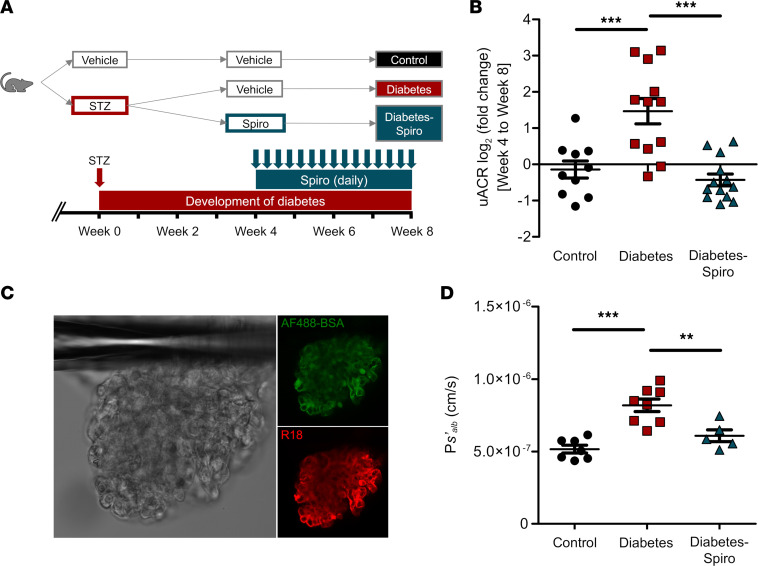
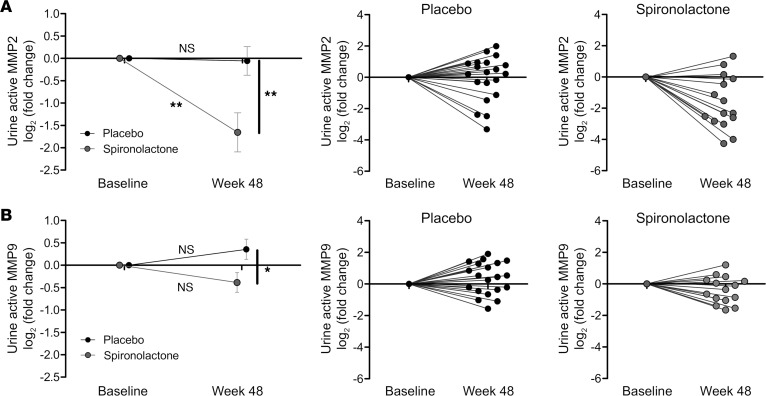
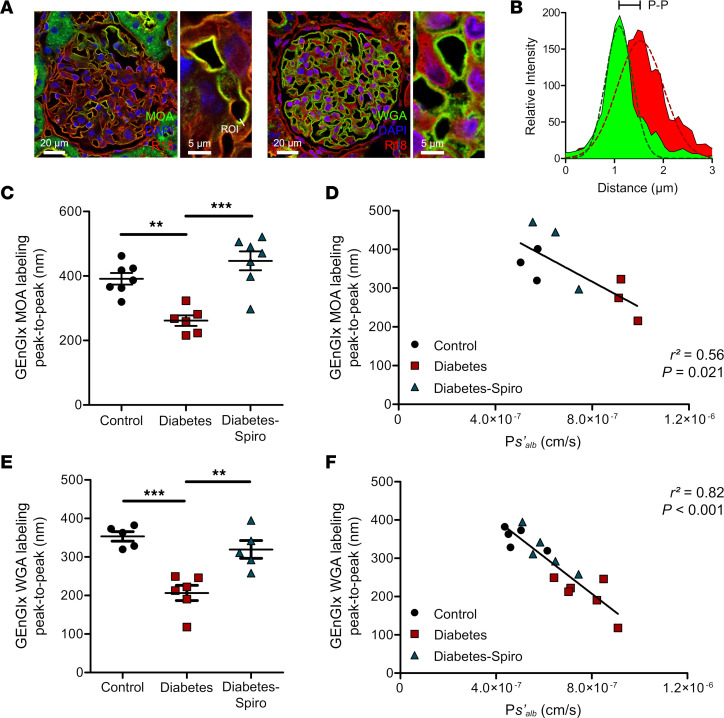
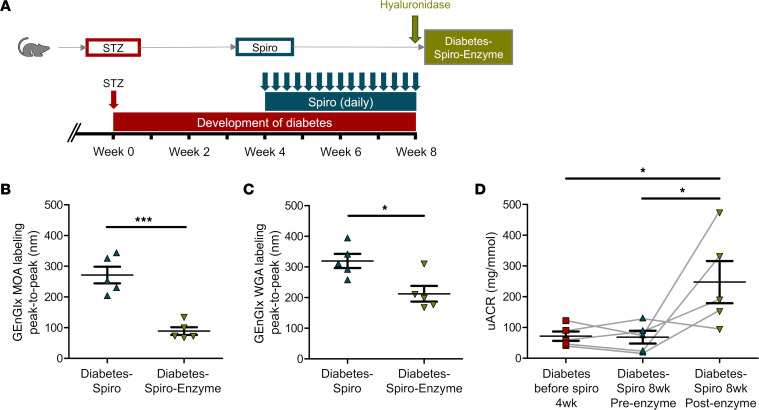
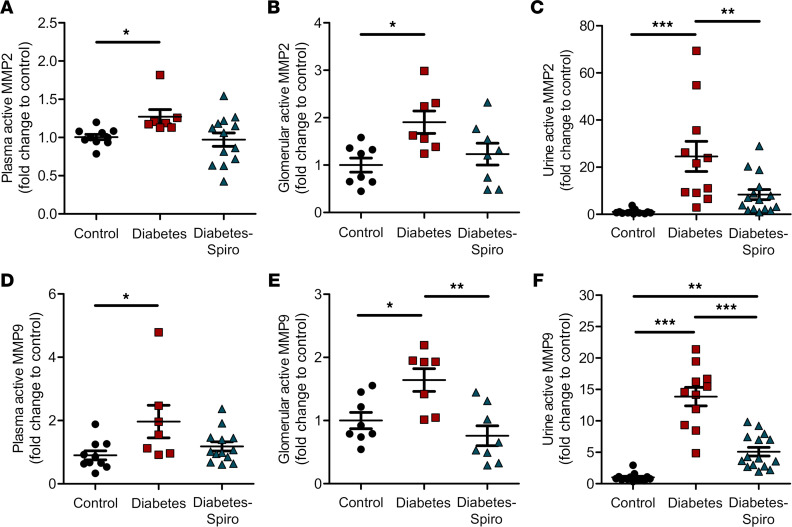
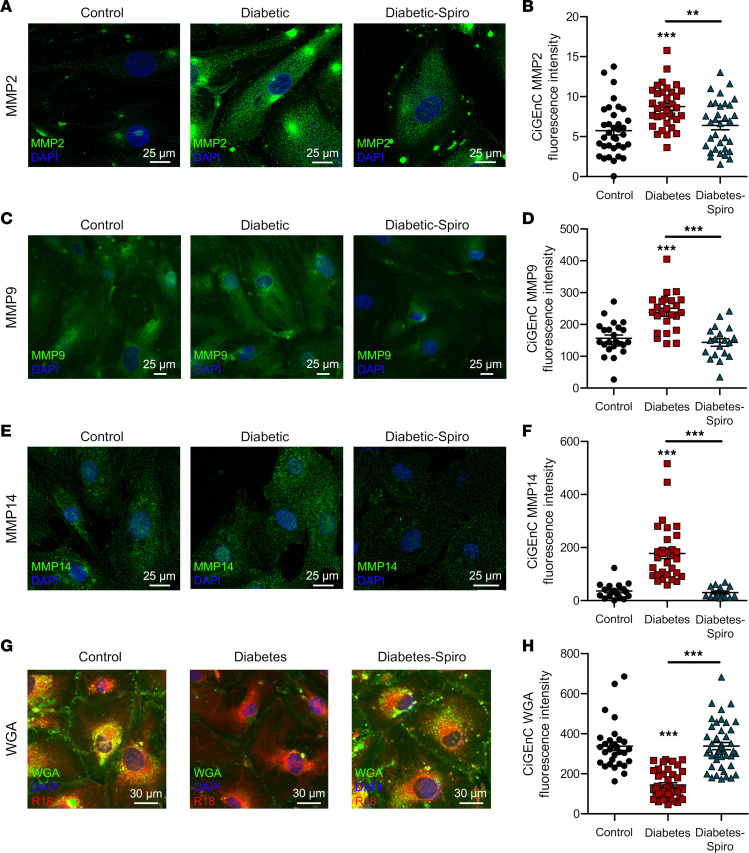
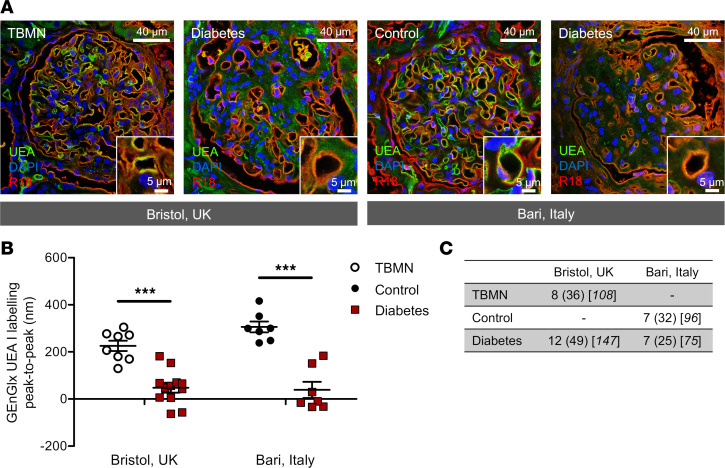
The glomerular endothelial glycocalyx (GEnGlx) forms the first part of the glomerular filtration barrier. Previously, we showed that mineralocorticoid receptor (MR) activation caused GEnGlx damage and albuminuria. In this study, we investigated whether MR antagonism could limit albuminuria in diabetes and studied the site of action. Streptozotocin-induced diabetic Wistar rats developed albuminuria, increased glomerular albumin permeability (Ps'alb), and increased glomerular matrix metalloproteinase (MMP) activity with corresponding GEnGlx loss. MR antagonism prevented albuminuria progression, restored Ps'alb, preserved GEnGlx, and reduced MMP activity. Enzymatic degradation of the GEnGlx negated the benefits of MR antagonism, confirming their dependence on GEnGlx integrity. Exposing human glomerular endothelial cells (GEnC) to diabetic conditions in vitro increased MMPs and caused glycocalyx damage. Amelioration of these effects confirmed a direct effect of MR antagonism on GEnC. To confirm relevance to human disease, we used a potentially novel confocal imaging method to show loss of GEnGlx in renal biopsy specimens from patients with diabetic nephropathy (DN). In addition, patients with DN randomized to receive an MR antagonist had reduced urinary MMP2 activity and albuminuria compared with placebo and baseline levels. Taken together, our work suggests that MR antagonists reduce MMP activity and thereby preserve GEnGlx, resulting in reduced glomerular permeability and albuminuria in diabetes.
肾小球内皮糖萼 (GEnGlx) 构成肾小球滤过屏障的第一部分。此前,我们已经表明,盐皮质激素受体 (MR) 激活会导致 GEnGlx 损伤和白蛋白尿。在这项研究中,我们研究了 MR 拮抗剂是否可以限制糖尿病患者的白蛋白尿,并研究了其作用部位。链脲佐菌素诱导的糖尿病 Wistar 大鼠出现白蛋白尿、肾小球白蛋白通透性 (Ps'alb) 增加和肾小球基质金属蛋白酶 (MMP) 活性增加,同时伴有 GEnGlx 丢失。MR 拮抗剂可预防白蛋白尿进展,恢复 Ps'alb,维持 GEnGlx,降低 MMP 活性。GEnGlx 的酶降解否定了 MR 拮抗剂的益处,证实了它们对 GEnGlx 完整性的依赖。体外将人肾小球内皮细胞 (GEnC) 暴露于糖尿病条件下可增加 MMP 并导致糖萼损伤。这些作用的改善证实了 MR 拮抗剂对 GEnC 的直接作用。为了确认与人类疾病的相关性,我们使用一种潜在的新型共聚焦成像方法,显示了糖尿病肾病 (DN) 患者肾活检标本中 GEnGlx 的丢失。此外,与安慰剂和基线水平相比,接受 MR 拮抗剂治疗的 DN 患者的尿 MMP2 活性和白蛋白尿减少。综上所述,我们的工作表明,MR 拮抗剂可降低 MMP 活性,从而维持 GEnGlx,从而减少糖尿病患者的肾小球通透性和白蛋白尿。