Ginindza Themba G, Dlamini Xolisile, Almonte Maribel, Herrero Rolando, Jolly Pauline E, Tsoka-Gwegweni Joyce M, Weiderpass Elisabete, Broutet Nathalie, Sartorius Benn
Department of Public Health, School of Nursing and Public Health, University of KwaZulu-Natal, Durban, South Africa.
Epidemiology Unit, Ministry of Health, Mbabane, Swaziland.
PLoS One. 2017 Jan 23;12(1):e0170189. doi: 10.1371/journal.pone.0170189. eCollection 2017.
High risk human papillomavirus (hr-HPV) infection and the dual burden of HIV remains a huge challenge in some low-income countries (LICs) such as Swaziland with limited or no data. We estimated the prevalence and investigated determinants of hr-HPV, including HIV infection among sexually active women in Swaziland.
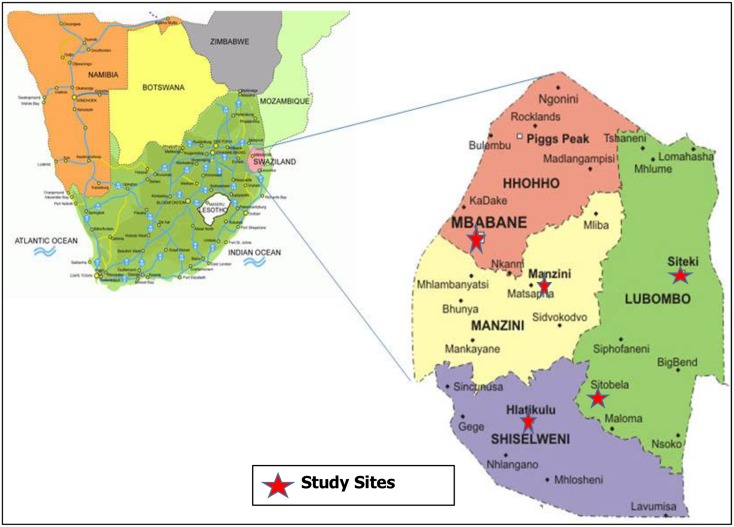
A total of 655 women aged between 15 and 49 years from five health facilities were randomly enrolled using a cross-sectional study design. Cervical cells were tested for hr-HPV types using GeneXpert HPV Assays.
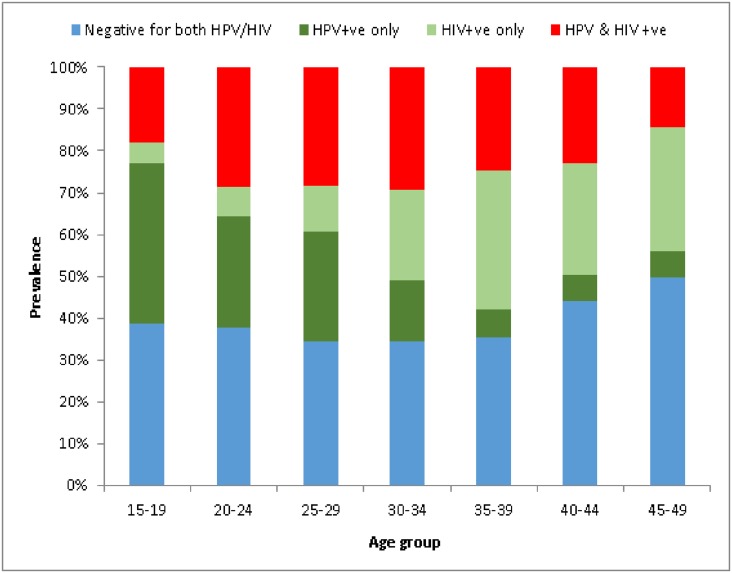
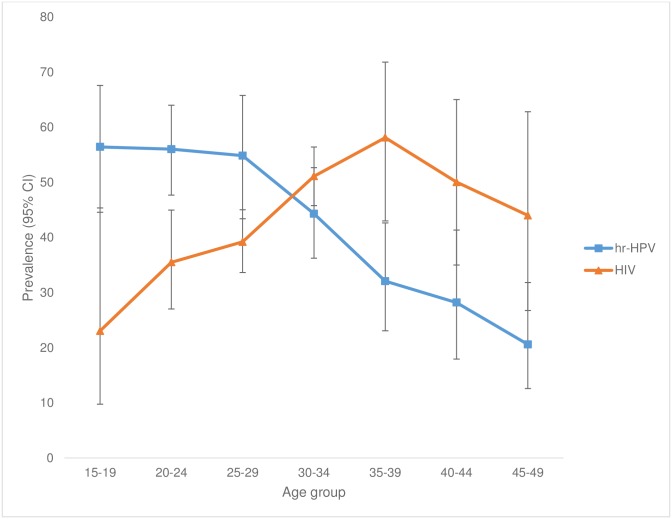
The overall weighted hr-HPV prevalence was 46.2% (95%CI: 42.8-49.5). Of hr-HPV infected women, 12.4% (95%CI: 8.6-17.5) were HPV16-positive, 13.8% (95%CI:12.0-15.8) were positive for HPV18/45, 26.7% (95%CI: 24.2-29.3) for HPV31/33/35/52/58, 7.6% (95%CI: 7.6-11.9) for HPV51/59 and 11.0%, (95%CI: 7.9-15.3) for HPV39/56/66/68. Prevalence of hr-HPV decreased with increasing age. Overall HIV prevalence remained high (42.7%; 95%CI: 35.7-46.2). HIV infection was associated with hr-HPV infection (Adjusted OR = 4.9, 95%CI: 3.043-7.8, p<0.001). Overall hr-HPV/HIV co-infection was 24.4% (95%CI: 20.3-29.1) which was significantly higher among younger age groups (p<0.001). Prevalence of multiple group hr-HPV infection was significantly higher in HIV-positive versus -negative women (27.7% and 12.7% respectively, p<0.001). The presence, absence or unknown of history of STI with HIV did not appear to modify the relationship with hr-HPV (OR = 4.2, 95%CI: 2.6-7.1, OR = 4.6, 95%CI: 2.8-7.7, p<0.001, p<0.001 and OR = 4.1, 95%CI: 1.3-13.4, p<0.021 respectively).
The prevalence of hr-HPV infection was high and significantly associated with HIV among sexually active women. Furthermore, the study has provided essential information about the HIV link with hr-HPV infections which may explain the high prevalence among HIV infected women. This can contribute to policy development and planning of prevention strategies incorporating HPV infection prevention especially among youth and HIV infected people.
在斯威士兰等一些低收入国家,高危型人乳头瘤病毒(hr-HPV)感染和艾滋病毒双重负担仍是巨大挑战,相关数据有限或缺失。我们估计了斯威士兰性活跃女性中hr-HPV的流行率,并调查了其决定因素,包括艾滋病毒感染情况。
采用横断面研究设计,从五个卫生机构随机招募了655名年龄在15至49岁之间的女性。使用GeneXpert HPV检测法对宫颈细胞进行hr-HPV分型检测。
总体加权hr-HPV流行率为46.2%(95%置信区间:42.8 - 49.5)。在感染hr-HPV的女性中,12.4%(95%置信区间:8.6 - 17.5)为HPV16阳性,13.8%(95%置信区间:12.0 - 15.8)为HPV18/45阳性,26.7%(95%置信区间:24.2 - 29.3)为HPV31/33/35/52/58阳性,7.6%(95%置信区间:7.6 - 11.9)为HPV51/59阳性,11.0%(95%置信区间:7.9 - 15.3)为HPV39/56/66/68阳性。hr-HPV流行率随年龄增长而降低。总体艾滋病毒流行率仍然很高(42.7%;95%置信区间:35.7 - 46.2)。艾滋病毒感染与hr-HPV感染相关(调整后的比值比 = 4.9,95%置信区间:3.043 - 7.8,p<0.001)。总体hr-HPV/艾滋病毒合并感染率为24.4%(95%置信区间:20.3 - 29.1),在较年轻年龄组中显著更高(p<0.001)。艾滋病毒阳性女性与阴性女性相比,多组hr-HPV感染率显著更高(分别为27.7%和12.7%,p<0.001)。有或无性传播感染病史以及艾滋病毒感染情况似乎并未改变与hr-HPV的关系(比值比分别为4.2,95%置信区间:2.6 - 7.1;4.6,95%置信区间:2.8 - 7.7,p<0.001,p<0.001;4.1,95%置信区间:1.3 - 13.4,p<0.021)。
性活跃女性中hr-HPV感染率很高,且与艾滋病毒显著相关。此外,该研究提供了关于艾滋病毒与hr-HPV感染之间联系的重要信息,这可能解释了艾滋病毒感染女性中高流行率的原因。这有助于制定政策以及规划预防策略,包括预防HPV感染,尤其是在青年和艾滋病毒感染者中。