Yang Li, Sun Hanxiao, Cao Yanan, Xuan Binbin, Fan Yingchao, Sheng Huiming, Zhuang Wenfang
Department of Hematology, Tongren Hospital, Shanghai Jiao Tong University School of Medicine, Shanghai, China.
Department of Laboratory Medicine, Tongren Hospital, Shanghai Jiao Tong University School of Medicine, Shanghai, China.
PLoS One. 2017 Jan 23;12(1):e0170630. doi: 10.1371/journal.pone.0170630. eCollection 2017.
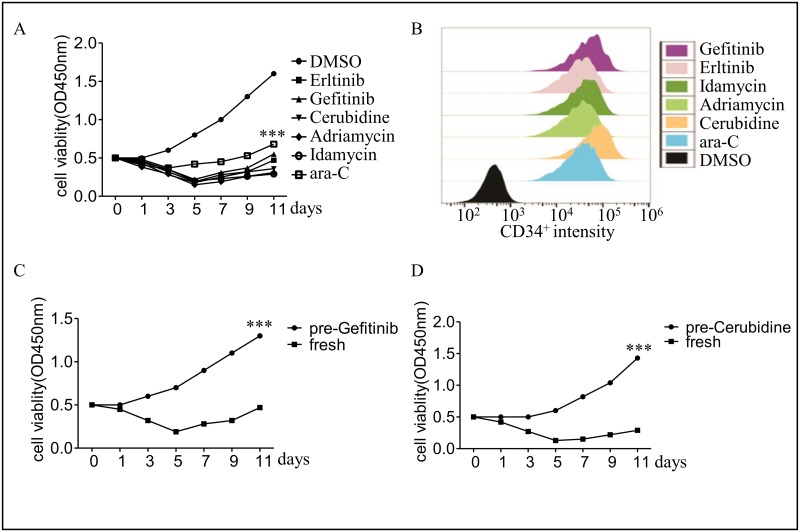
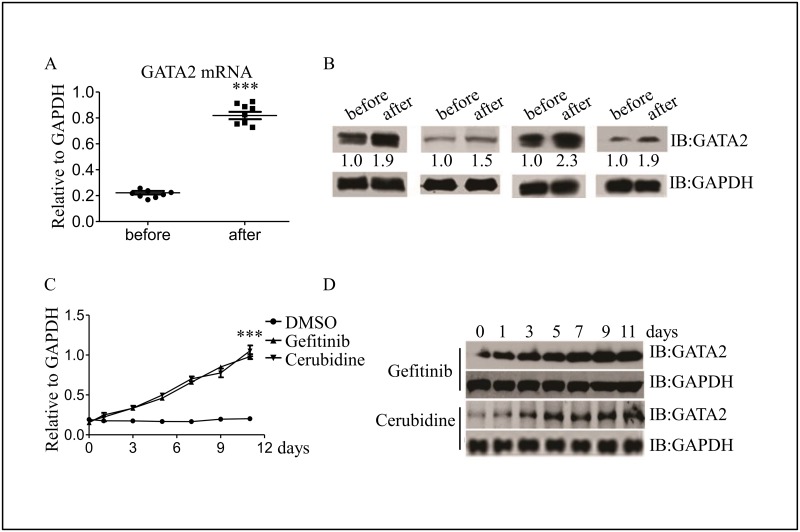
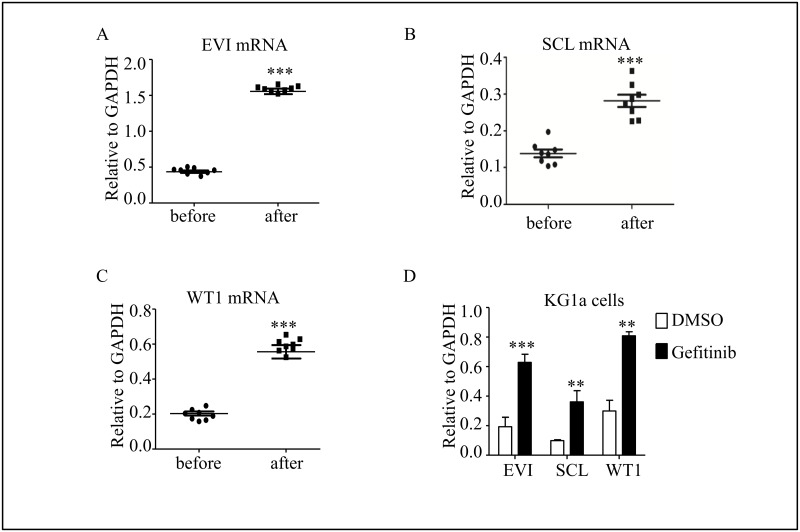
Drug resistance constitutes one of the main obstacles for clinical recovery of acute myeloid leukemia (AML) patients. Therefore, the treatment of AML requires new strategies, such as adding a third drug. To address whether GATA2 could act as a regulator of chemotherapy resistance in human leukemia cells, we observed KG1a cells and clinical patients' AML cells with a classic drug (Cerubidine) and Gefitinib. After utilizing chemotherapy, the expression of GATA2 and its target genes (EVI, SCL and WT1) in surviving AML cells and KG1a cells were significantly enhanced to double and quadrupled compared to its original level respectively. Furthermore, with continuous chemotherapeutics, AML cells with GATA2 knockdown or treated with GATA2 inhibitor (K1747) almost eliminated with dramatically reduced expression of WT1, SCL, EVI, and significantly increased apoptotic population. Therefore, we propose that reducing GATA2 expression or inhibition of its transcription activity can relieve the drug resistance of acute myeloid leukemia cells and it would be helpful for eliminating the leukemia cells in patients.
耐药性是急性髓系白血病(AML)患者临床康复的主要障碍之一。因此,AML的治疗需要新的策略,例如添加第三种药物。为了探究GATA2是否可作为人类白血病细胞化疗耐药的调节因子,我们用经典药物(柔红霉素)和吉非替尼观察了KG1a细胞和临床患者的AML细胞。化疗后,存活的AML细胞和KG1a细胞中GATA2及其靶基因(EVI、SCL和WT1)的表达分别比原来水平显著增强至两倍和四倍。此外,持续使用化疗药物后,敲低GATA2或用GATA2抑制剂(K1747)处理的AML细胞几乎被清除,WT1、SCL、EVI的表达显著降低,凋亡细胞群显著增加。因此,我们提出降低GATA2表达或抑制其转录活性可缓解急性髓系白血病细胞的耐药性,这将有助于清除患者体内的白血病细胞。