Xue Xiao-Lei, Han Xiao-Dan, Li Yuan, Chu Xiao-Fei, Miao Wei-Min, Zhang Jun-Ling, Fan Sai-Jun
Tianjin Key Lab of Radiation Medicine and Molecular Nuclear Medicine, Institute of Radiation Medicine, Peking Union Medical College and Chinese Academy of Medical Sciences, Tianjin, 300192, China.
State Key Laboratory of Experimental Hematology, Institute of Hematology and Blood Disease Hospital, Peking Union Medical College and Chinese Academy of Medical Sciences, Tianjin, 300020, China.
Stem Cell Res Ther. 2017 Jan 23;8(1):7. doi: 10.1186/s13287-016-0464-3.
The hematopoietic system is especially sensitive to total body irradiation (TBI), and myelosuppression is one of the major effects of TBI. Astaxanthin (ATX) is a powerful natural anti-oxidant with low toxicity. In this study, the effect of ATX on hematopoietic system injury after TBI was investigated.
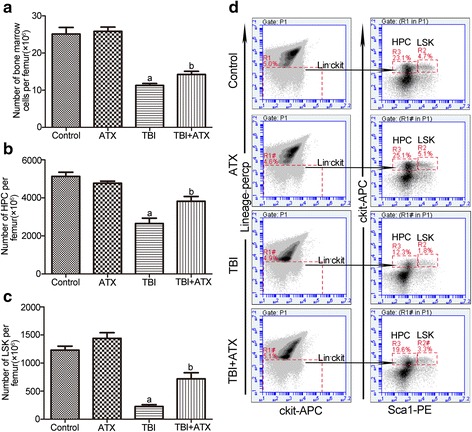
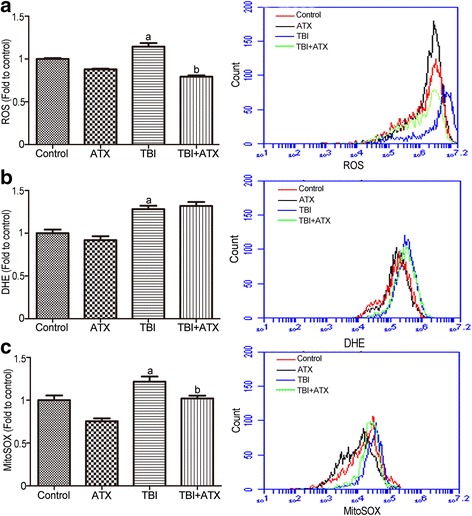
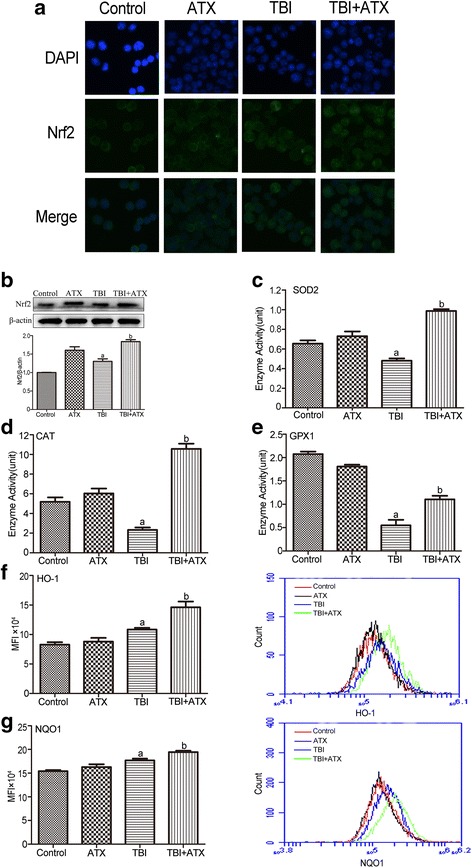
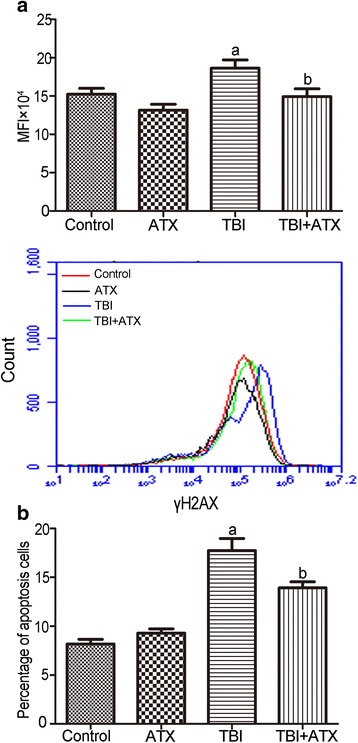
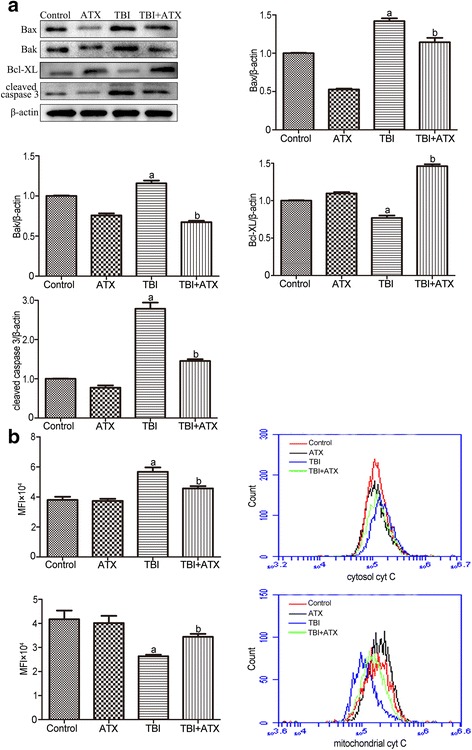
Flow cytometry was used to detect the proportion of hematopoietic progenitor cells (HPCs) and hematopoietic stem cells (HSCs), the level of intracellular reactive oxygen species (ROS), expression of cytochrome C, cell apoptosis, and NRF2-related proteins. Immunofluorescence staining was used to detect Nrf2 translocation. Western blot analysis was used to evaluate the expression of apoptotic-related proteins. Enzymatic activities assay kits were used to analyze SOD2, CAT, and GPX1 activities.
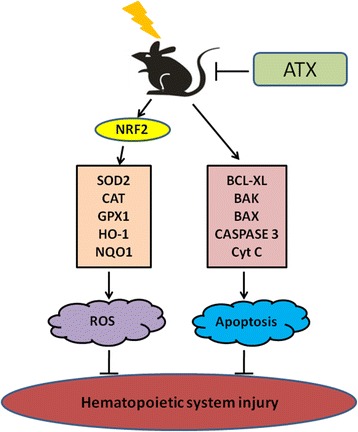
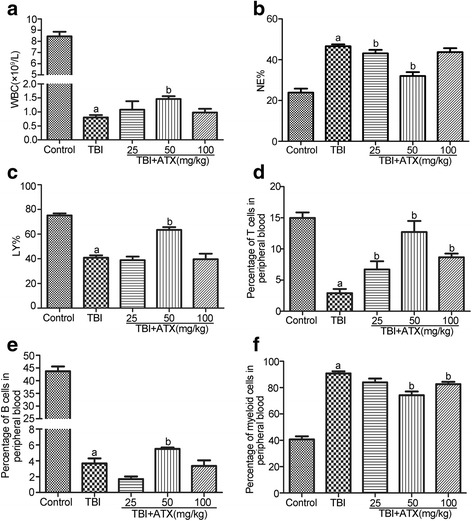
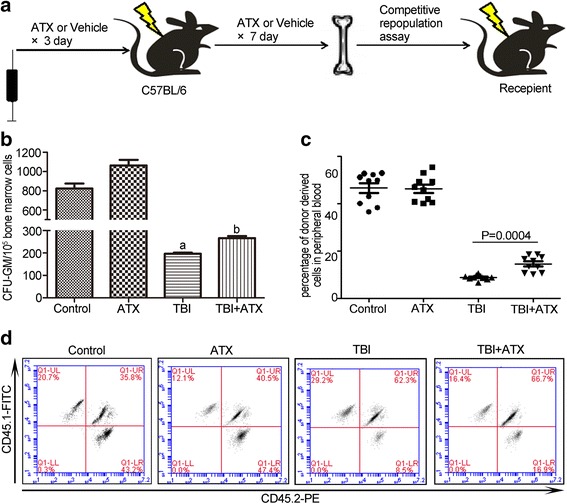
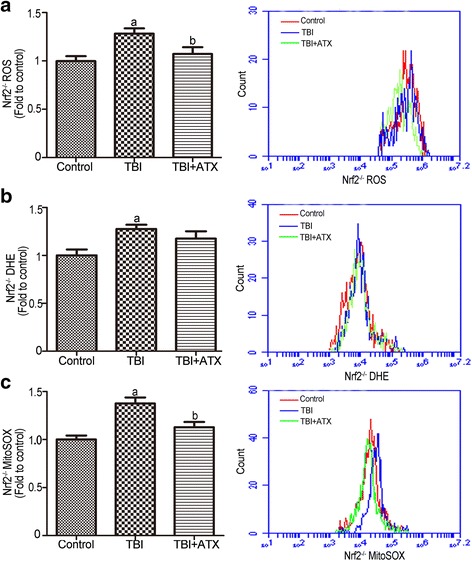
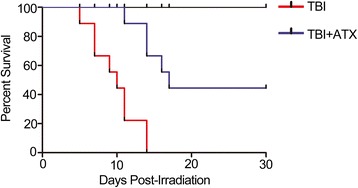
Compared with the TBI group, ATX can improve radiation-induced skewed differentiation of peripheral blood cells and accelerate hematopoietic self-renewal and regeneration. The radio-protective effect of ATX is probably attributable to the scavenging of ROS and the reduction of cell apoptosis. These changes were associated with increased activation of Nrf2 and downstream anti-oxidative proteins, and regulation of apoptotic-related proteins.
This study suggests that ATX could be used as a potent therapeutic agent to protect the hematopoietic system against TBI-induced bone marrow suppression.
造血系统对全身照射(TBI)特别敏感,骨髓抑制是TBI的主要影响之一。虾青素(ATX)是一种低毒的强效天然抗氧化剂。在本研究中,研究了ATX对TBI后造血系统损伤的影响。
采用流式细胞术检测造血祖细胞(HPCs)和造血干细胞(HSCs)的比例、细胞内活性氧(ROS)水平、细胞色素C的表达、细胞凋亡及NRF2相关蛋白。采用免疫荧光染色检测Nrf2易位。采用蛋白质印迹分析评估凋亡相关蛋白的表达。使用酶活性检测试剂盒分析SOD2、CAT和GPX1的活性。
与TBI组相比,ATX可改善辐射诱导的外周血细胞分化异常,加速造血自我更新和再生。ATX的辐射防护作用可能归因于ROS的清除和细胞凋亡的减少。这些变化与Nrf2及其下游抗氧化蛋白的激活增加以及凋亡相关蛋白的调节有关。
本研究表明,ATX可作为一种有效的治疗剂,保护造血系统免受TBI诱导的骨髓抑制。