Rui Mengjie, Qu Yang, Gao Tong, Ge Yanru, Feng Chunlai, Xu Ximing
Department of Pharmaceutics, School of Pharmacy, Jiangsu University, Zhenjiang, People's Republic of China.
Int J Nanomedicine. 2016 Dec 30;12:217-237. doi: 10.2147/IJN.S122171. eCollection 2017.
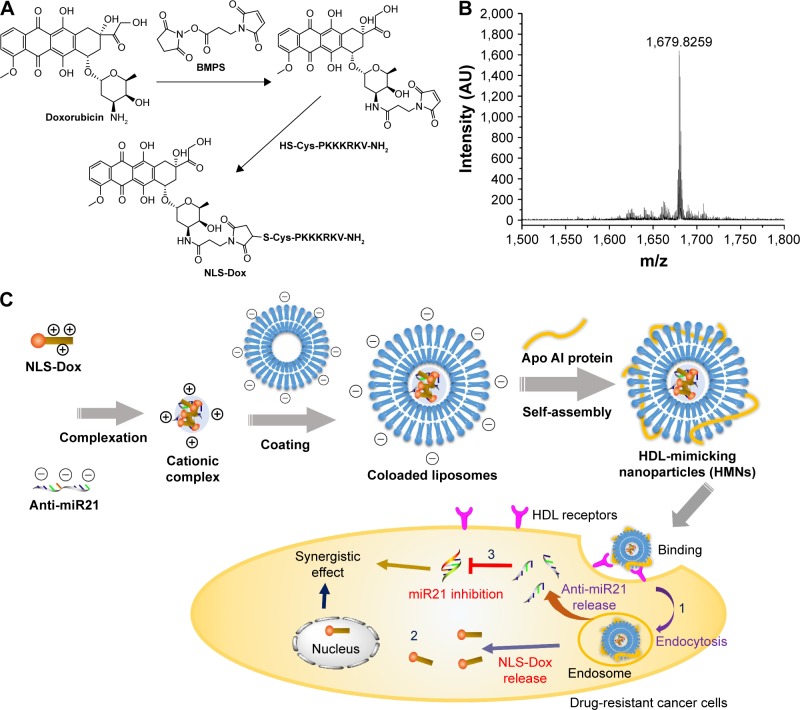
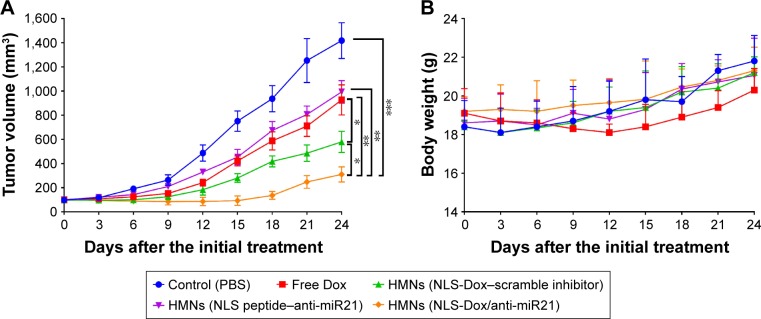
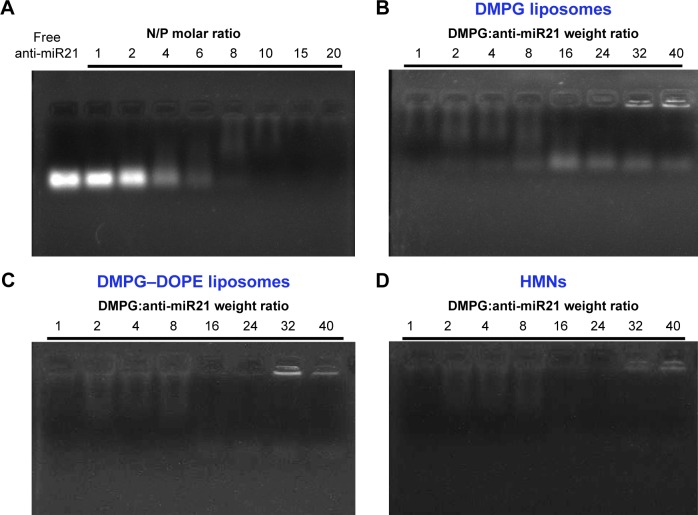
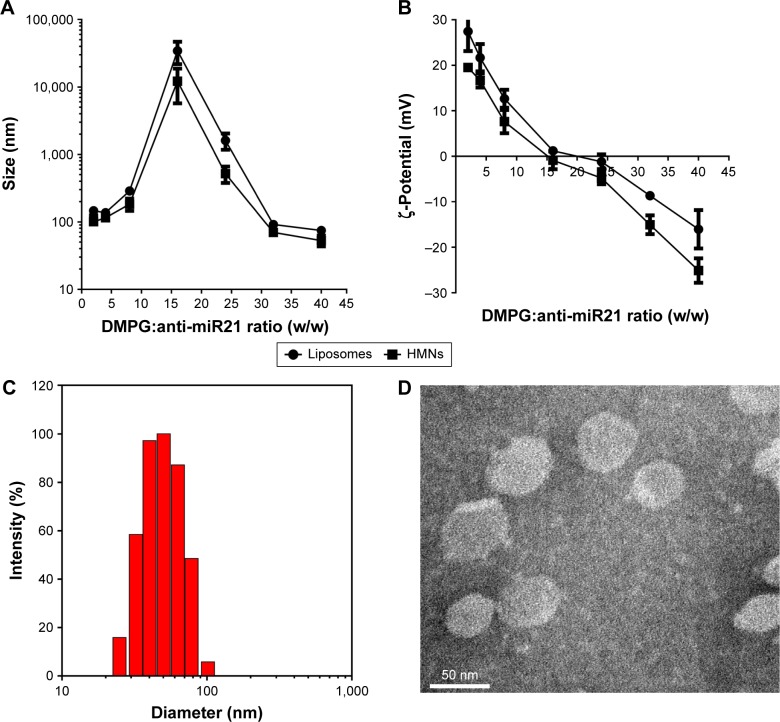
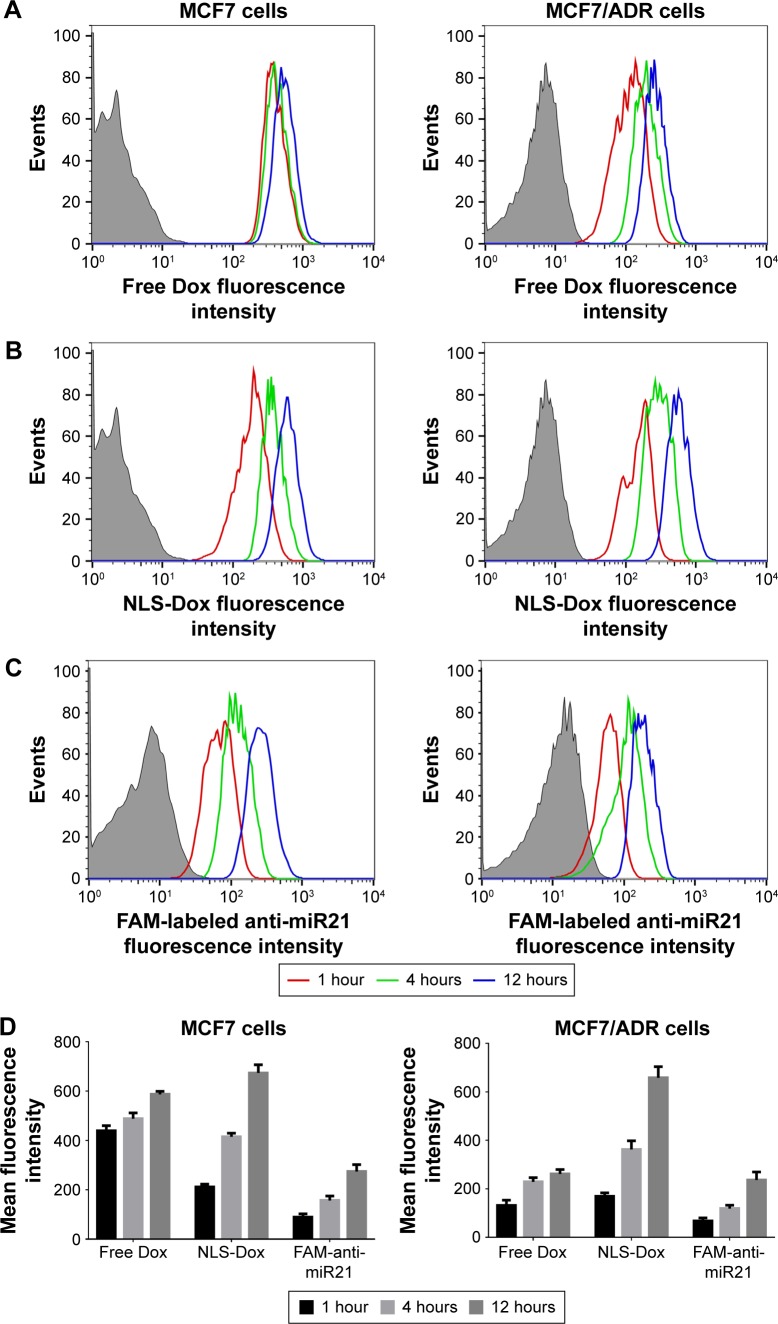
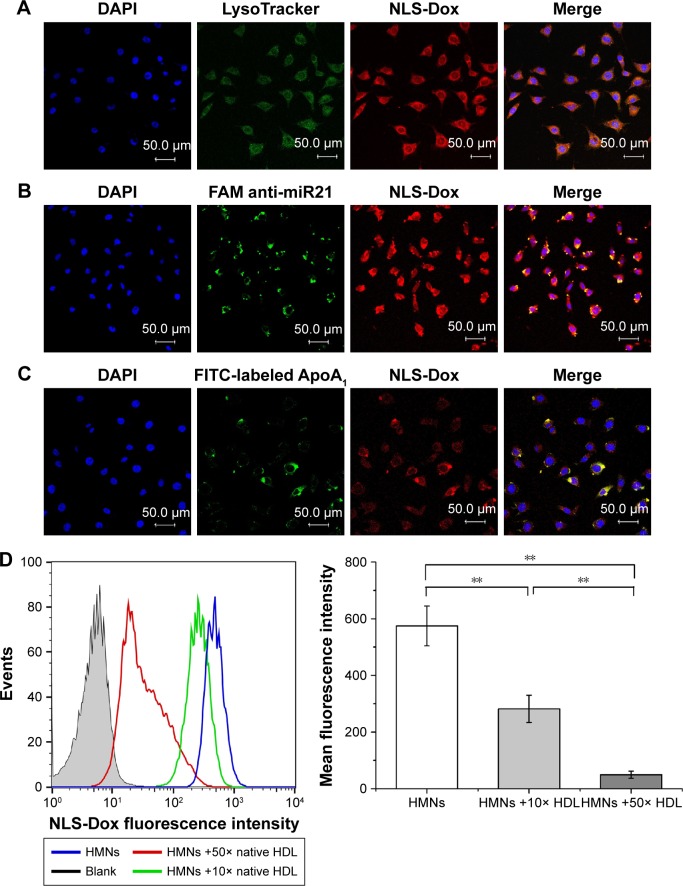
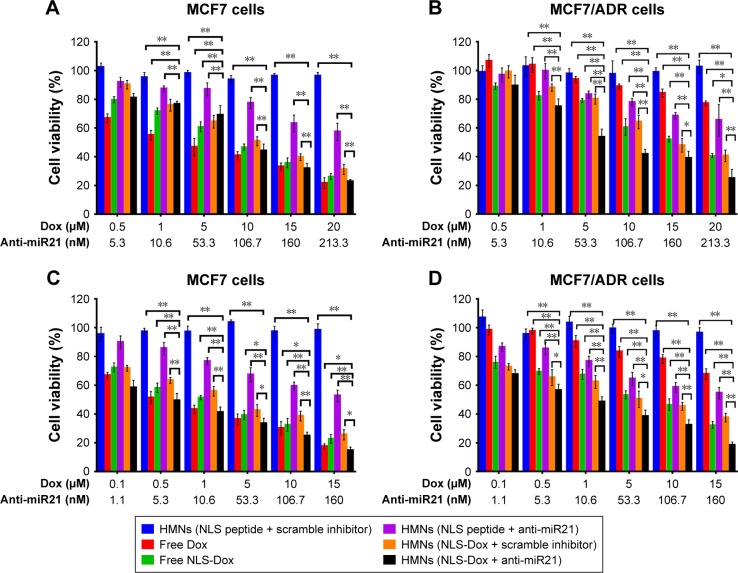
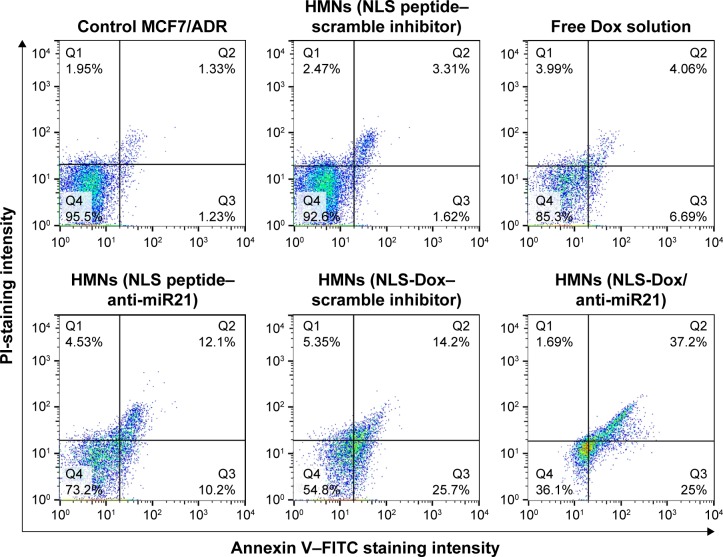
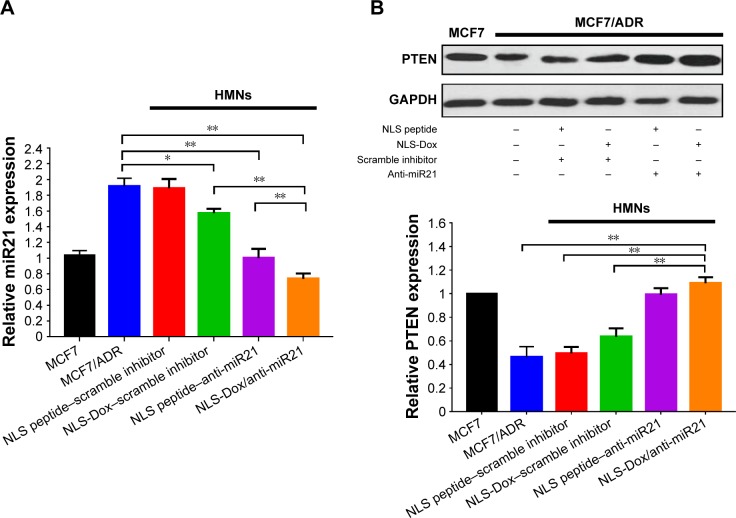
The development of drug resistance in cancer cells is one of the major obstacles to achieving effective chemotherapy. We hypothesized that the combination of a doxorubicin (Dox) prodrug and microRNA (miR)21 inhibitor might show synergistic antitumor effects on drug-resistant breast cancer cells. In this study, we aimed to develop new high-density lipoprotein-mimicking nanoparticles (HMNs) for coencapsulation and codelivery of this potential combination. Dox was coupled with a nuclear localization signal (NLS) peptide to construct a prodrug (NLS-Dox), thereby electrostatically condensing miR21 inhibitor (anti-miR21) to form cationic complexes. The HMNs were formulated by shielding these complexes with anionic lipids and Apo AI proteins. We have characterized that the coloaded HMNs had uniformly dispersed distribution, favorable negatively charged surface, and high coencapsulation efficiency. The HMN formulation effectively codelivered NLS-Dox and anti-miR21 into Dox-resistant breast cancer MCF7/ADR cells and wild-type MCF7 cells via a high-density-lipoprotein receptor-mediated pathway, which facilitated the escape of Pgp drug efflux. The coloaded HMNs consisting of NLS-Dox/anti-miR21 demonstrated greater cytotoxicity with enhanced intracellular accumulation in resistant MCF7/ADR cells compared with free Dox solution. The reversal of drug resistance by coloaded HMNs might be attributed to the suppression of miR21 expression and the related antiapoptosis network. Furthermore, the codelivery of anti-miR21 and NLS-Dox by HMNs showed synergistic antiproliferative effects in MCF7/ADR-bearing nude mice, and was more effective in tumor inhibition than other drug formulations. These data suggested that codelivery of anti-miR21 and chemotherapeutic agents by HMNs might be a promising strategy for antitumor therapy, and could restore the drug sensitivity of cancer cells, alter intracellular drug distribution, and ultimately enhance chemotherapeutic effects.
癌细胞中耐药性的产生是实现有效化疗的主要障碍之一。我们假设阿霉素(Dox)前药与微小RNA(miR)-21抑制剂联合使用可能对耐药乳腺癌细胞具有协同抗肿瘤作用。在本研究中,我们旨在开发新型高密度脂蛋白模拟纳米颗粒(HMNs),用于共封装和共同递送这种潜在的组合药物。将Dox与核定位信号(NLS)肽偶联以构建前药(NLS-Dox),从而通过静电作用浓缩miR-21抑制剂(抗miR-21)形成阳离子复合物。通过用阴离子脂质和载脂蛋白A-I蛋白包裹这些复合物来制备HMNs。我们已经证实,共负载的HMNs具有均匀分散的分布、良好的带负电荷表面和高共封装效率。HMN制剂通过高密度脂蛋白受体介导的途径将NLS-Dox和抗miR-21有效地共同递送至耐药乳腺癌MCF7/ADR细胞和野生型MCF7细胞中,这有助于P-糖蛋白介导的药物外排的逃逸。与游离Dox溶液相比,由NLS-Dox/抗miR-21组成的共负载HMNs在耐药MCF7/ADR细胞中表现出更大的细胞毒性,并增强了细胞内积累。共负载HMNs对耐药性逆转可能归因于miR-21表达的抑制以及相关的抗凋亡网络。此外,HMNs对抗miR-21和NLS-Dox的共同递送在携带MCF7/ADR的裸鼠中显示出协同抗增殖作用,并且在肿瘤抑制方面比其他药物制剂更有效。这些数据表明,HMNs对抗miR-21和化疗药物的共同递送可能是一种有前景的抗肿瘤治疗策略,并且可以恢复癌细胞的药物敏感性,改变细胞内药物分布,并最终增强化疗效果。