University of Florida Health Shands Hospital, Department of Emergency Medicine, Gainesville, Florida.
LSU-HSC Shreveport, Emergency Medicine Department, Shreveport, Louisiana.
West J Emerg Med. 2017 Jan;18(1):114-116. doi: 10.5811/westjem.2016.10.31506. Epub 2016 Nov 21.
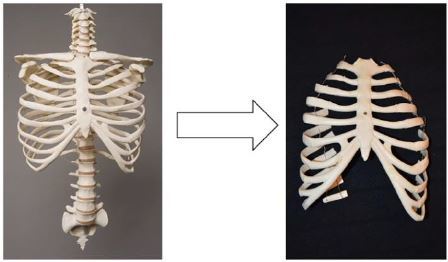
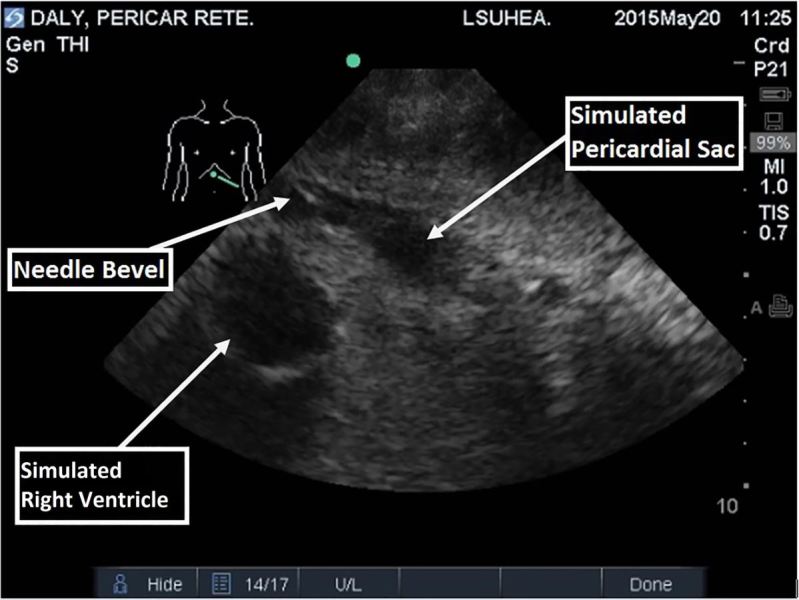
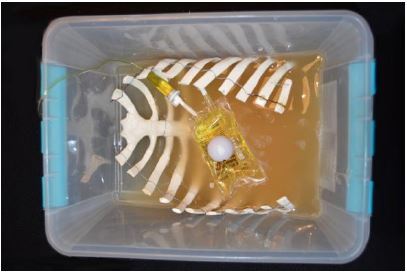
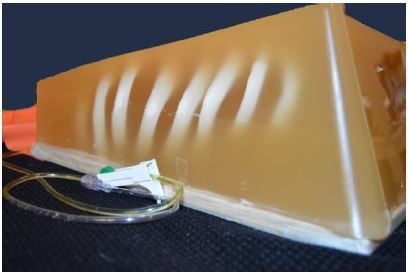
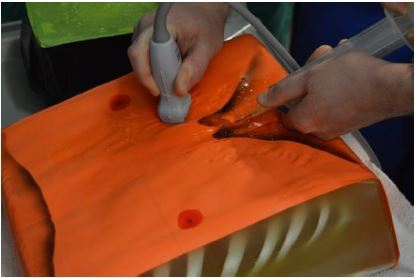
Cardiac tamponade is a life-threatening emergency for which pericardiocentesis may be required. Real-time bedside ultrasound has obviated the need for routine blind procedures in cardiac arrest, and the number of pericardiocenteses being performed has declined. Despite this fact, pericardiocentesis remains an essential skill in emergency medicine. While commercially available training models exist, cost, durability, and lack of anatomical landmarks limit their usefulness. We sought to create a pericardiocentesis model that is realistic, simple to build, reusable, and cost efficient. We constructed the model using a red dye-filled ping pong ball (simulating the right ventricle) and a 250cc normal saline bag (simulating the effusion) encased in an artificial rib cage and held in place by gel wax. The inner saline bag was connected to a 1L saline bag outside of the main assembly to act as a fluid reservoir for repeat uses. The entire construction process takes approximately 16-20 hours, most of which is attributed to cooling of the gel wax. Actual construction time is approximately four hours at a cost of less than $200. The model was introduced to emergency medicine residents and medical students during a procedure simulation lab and compared to a model previously described by dell'Orto.1 The learners performed ultrasound-guided pericardiocentesis using both models. Learners who completed a survey comparing realism of the two models felt our model was more realistic than the previously described model. On a scale of 1-9, with 9 being very realistic, the previous model was rated a 4.5. Our model was rated a 7.8. There was also a marked improvement in the perceived recognition of the pericardium, the heart, and the pericardial sac. Additionally, 100% of the students were successful at performing the procedure using our model. In simulation, our model provided both palpable and ultrasound landmarks and held up to several months of repeated use. It was less expensive than commercial models ($200 vs up to $16,500) while being more realistic in simulation than other described "do-it-yourself models." This model can be easily replicated to teach the necessary skill of pericardiocentesis.
心脏压塞是一种危及生命的紧急情况,可能需要进行心包穿刺术。实时床边超声已经避免了在心脏骤停时常规进行盲目操作的需要,心包穿刺术的数量也有所下降。尽管如此,心包穿刺术仍然是急诊医学中的一项重要技能。虽然有市售的培训模型,但成本、耐用性和缺乏解剖学标志限制了它们的实用性。我们试图创建一种现实、易于构建、可重复使用且经济高效的心包穿刺术模型。我们使用充满红色染料的乒乓球(模拟右心室)和一个 250cc 的生理盐水袋(模拟渗出液)构建模型,将其包裹在人工肋骨笼中,并使用凝胶蜡固定。内部生理盐水袋连接到主组件外部的 1L 生理盐水袋,作为重复使用的液体储存器。整个构建过程大约需要 16-20 小时,其中大部分时间用于凝胶蜡的冷却。实际构建时间约为四个小时,成本低于 200 美元。该模型在一次程序模拟实验室中被介绍给急诊医学住院医师和医学生,并与 dell'Orto 之前描述的模型进行了比较。1 学习者使用这两种模型进行了超声引导下心包穿刺术。在比较两种模型的逼真度的调查中完成的学习者认为我们的模型比之前描述的模型更逼真。在 1-9 的评分范围内,9 分表示非常逼真,之前的模型评分为 4.5 分。我们的模型评分为 7.8 分。对心包、心脏和心包囊的识别也有明显改善。此外,100%的学生成功地使用我们的模型完成了该程序。在模拟中,我们的模型提供了可触及和超声标志,并且可以重复使用数月。与其他描述的“自己动手”模型相比,它的成本更低(200 美元对高达 16500 美元),在模拟中更逼真。这个模型可以很容易地复制,以教授心包穿刺术这一必要技能。