Di Bella Luca Marco, Alampi Roberto, Biundo Flavia, Toscano Giovanni, Felice Maria Rosa
Department of Chemical, Biological, Pharmaceutical, and Environmental Sciences, University of Messina, Viale F. Stagno D'Alcontres, 31, 98166, Messina, Italy.
Inter University National Group of Marine Sciences (CoNISMa), Piazzale Flaminio, 9, 00196, Rome, Italy.
BMC Biochem. 2017 Jan 24;18(1):1. doi: 10.1186/s12858-017-0076-2.
In vertebrates, there is an intimate relationship between copper and iron homeostasis. Copper deficiency, which leads to a defect in ceruloplasmin enzymatic activity, has a strong effect on iron homeostasis resulting in cellular iron retention. Much is known about the mechanisms underlying cellular iron retention under "normal" conditions, however, less is known about the effect of copper deficiency during inflammation.
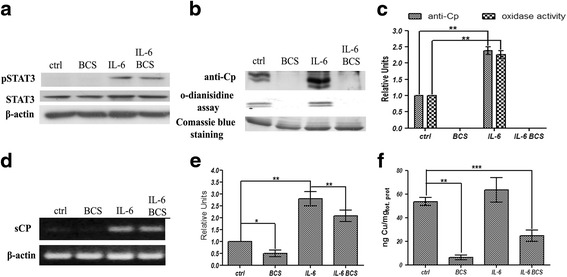
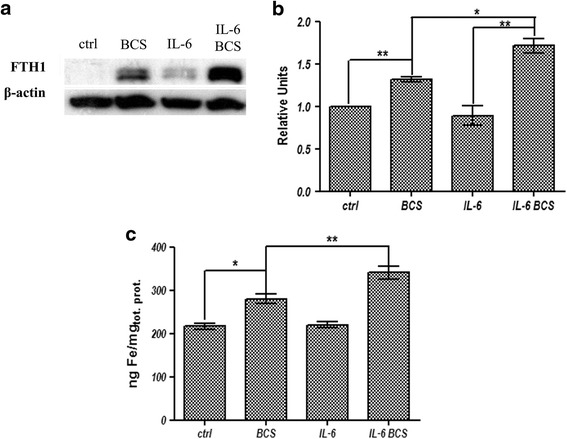
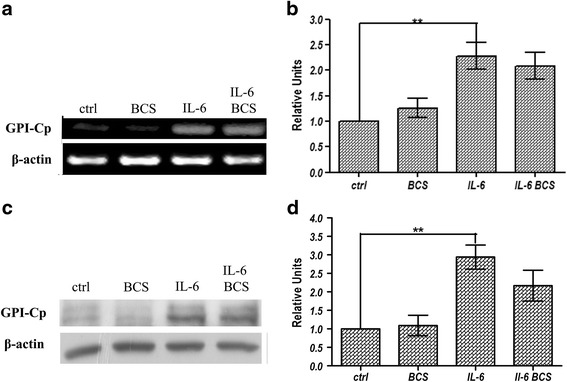
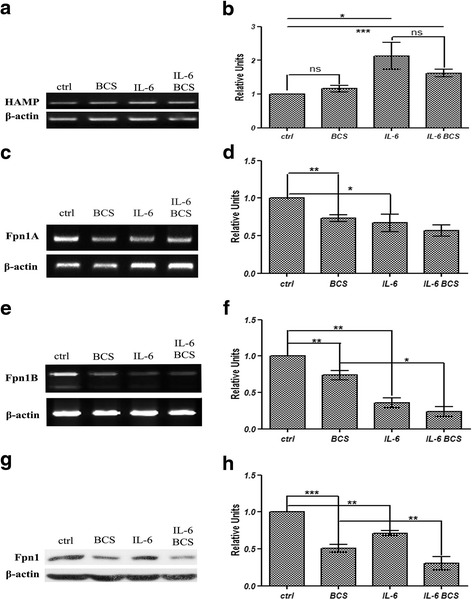
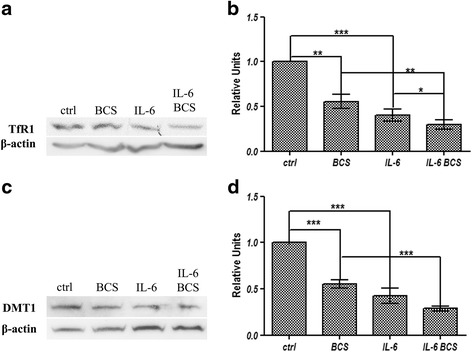
We show that copper deficiency and the inflammatory cytokine interleukin-6 have different effects on the expression of proteins involved in iron and copper metabolism such as the soluble and glycosylphosphtidylinositol anchored forms of ceruloplasmin, hepcidin, ferroportin1, transferrin receptor1, divalent metal transporter1 and H-ferritin subunit. We demonstrate, using the human HepG2 cell line, that in addition to ceruloplasmin isoforms, copper deficiency affects other proteins, some posttranslationally and some at the transcriptional level. The addition of interleukin-6, moreover, has different effects on expression of ferroportin1 and ceruloplasmin, in which ferroportin1 is decreased while ceruloplasmin is increased. These effects are stronger when a copper chelating agent and IL-6 are used simultaneously.
These results suggest that copper chelation has effects not only on ceruloplasmin but also on other proteins involved in iron metabolism, sometimes at the mRNA level and, in inflammatory conditions, the functions of ferroportin and ceruloplasmin may be independent.
在脊椎动物中,铜和铁的稳态之间存在密切关系。铜缺乏会导致铜蓝蛋白酶活性缺陷,对铁稳态有强烈影响,导致细胞内铁潴留。在“正常”条件下,关于细胞内铁潴留的潜在机制已有很多了解,然而,关于炎症期间铜缺乏的影响却知之甚少。
我们发现铜缺乏和炎性细胞因子白细胞介素-6对参与铁和铜代谢的蛋白质表达有不同影响,如可溶性和糖基磷脂酰肌醇锚定形式的铜蓝蛋白、铁调素、铁转运蛋白1、转铁蛋白受体1、二价金属转运体1和H-铁蛋白亚基。我们使用人肝癌细胞系HepG2证明,除了铜蓝蛋白异构体,铜缺乏还会影响其他蛋白质,有些是在翻译后水平,有些是在转录水平。此外,白细胞介素-6的添加对铁转运蛋白1和铜蓝蛋白的表达有不同影响,其中铁转运蛋白1减少而铜蓝蛋白增加。当同时使用铜螯合剂和白细胞介素-6时,这些影响更强。
这些结果表明,铜螯合不仅对铜蓝蛋白有影响,而且对其他参与铁代谢的蛋白质也有影响,有时在mRNA水平,并且在炎症条件下,铁转运蛋白和铜蓝蛋白的功能可能是独立的。