Wu Tiancong, Geng Ji, Guo Wenjie, Gao Jing, Zhu Xixu
Department of Radiation Oncology, Jinling Hospital, Medical School of Nanjing University, Nanjing 210002, China.
School of Pharmacy, Jiangsu University, Zhenjiang 212013, China.
Acta Pharm Sin B. 2017 Jan;7(1):65-72. doi: 10.1016/j.apsb.2016.04.003. Epub 2016 Jun 20.
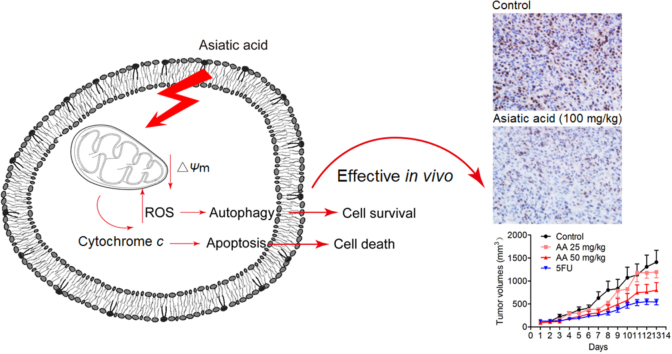
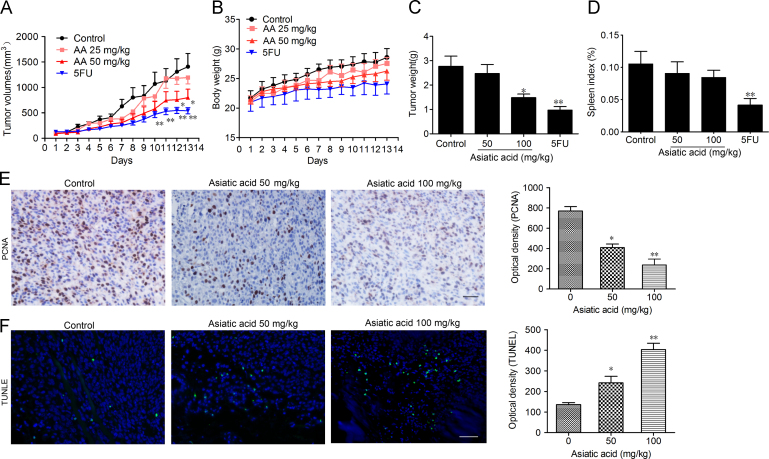
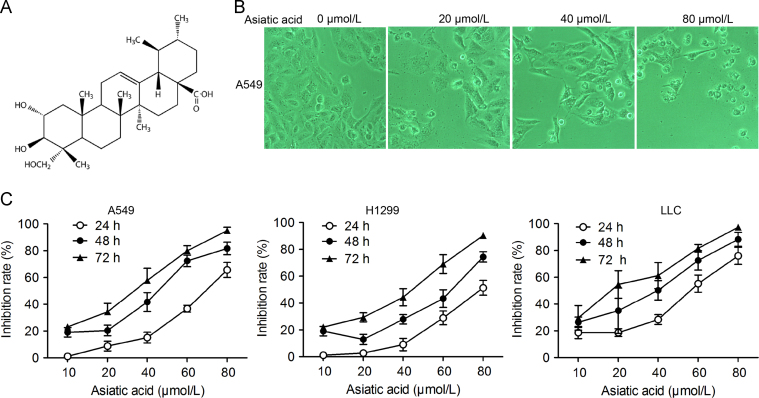
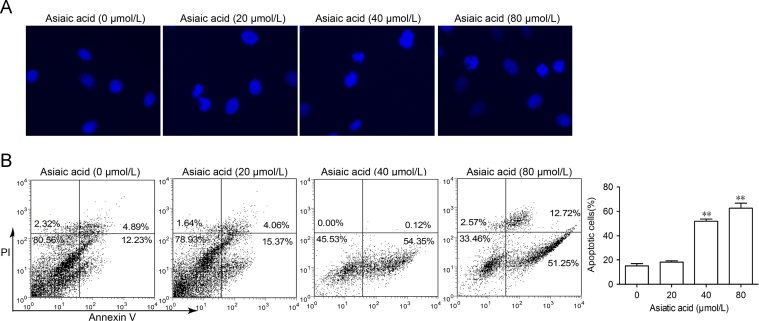
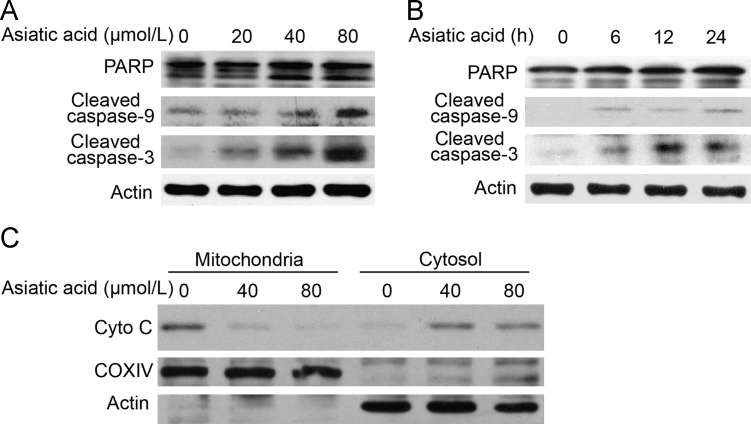
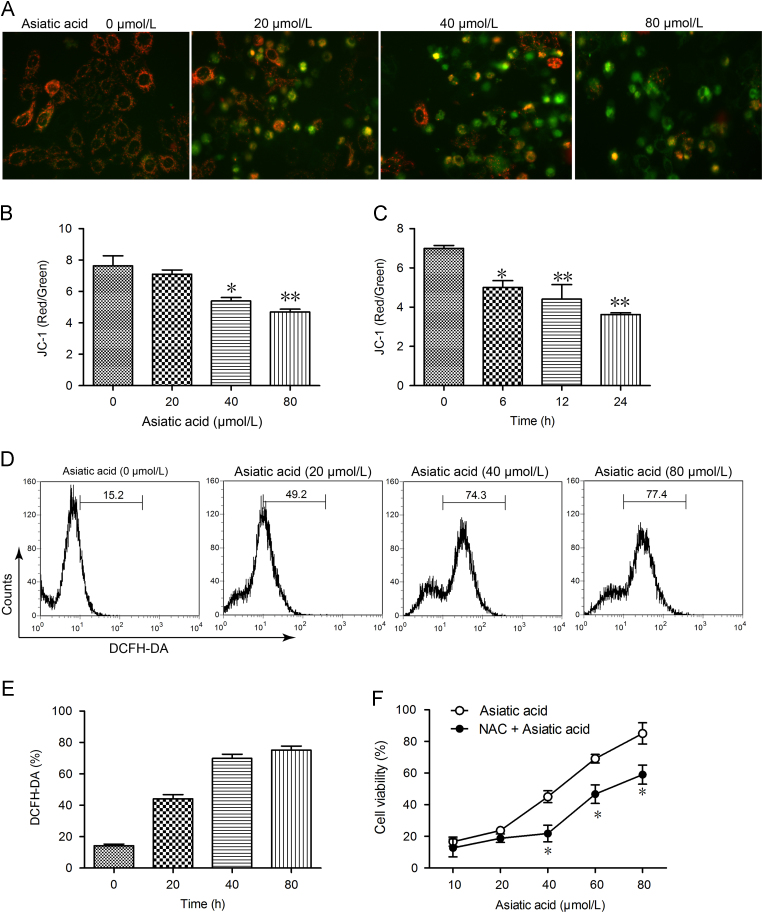
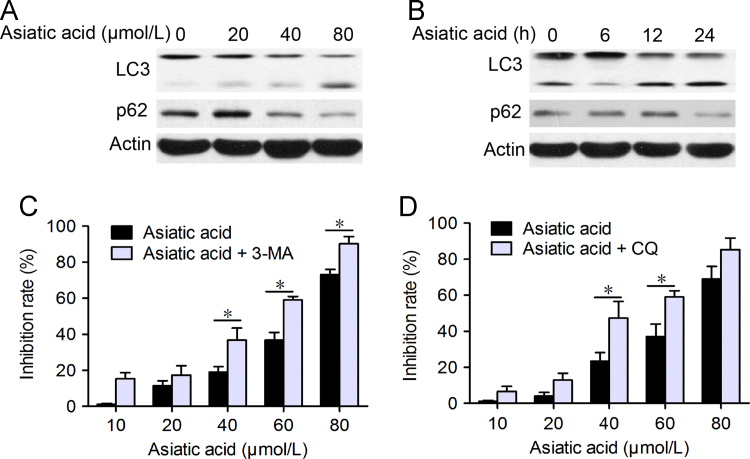
Asiatic acid (AA), a pentacyclic triterpene found in , displays significant anti-proliferative effects on cancer cells although the underlying mechanism of this effect remains unknown. This study investigated the efficacy and mechanism of action of AA against lung cancer both and . Using the MTT assay, AA was found to induce apoptosis in a dose- and time-dependent manner, an effect enhanced by pretreatment with an autophagy inhibitor. It also elevated expression of microtubule-associated protein 1 light chain 3 (LC3) and decreased the expression of p62. Furthermore, exposure to AA resulted in collapse of the mitochondrial membrane potential and generation of reactive oxygen species (ROS), suggesting mitochondria are the target of AA. In the mouse lung cancer xenograft model, oral administration of AA significantly inhibited tumor volume and weight accompanied by significant apoptosis of lung cancer cells. In addition, it led to a significant decrease in the expression of proliferating cell nuclear antigen (PCNA). In summary, the results show that AA significantly reduces lung cancer cell growth both and and that the associated apoptosis is mediated through mitochondrial damage.
齐墩果酸(AA)是一种存在于[具体来源未给出]中的五环三萜,对癌细胞具有显著的抗增殖作用,尽管这种作用的潜在机制尚不清楚。本研究在体内和体外研究了AA对肺癌的疗效和作用机制。通过MTT法发现,AA以剂量和时间依赖性方式诱导细胞凋亡,自噬抑制剂预处理可增强这种作用。它还提高了微管相关蛋白1轻链3(LC3)的表达并降低了p62的表达。此外,暴露于AA导致线粒体膜电位崩溃和活性氧(ROS)的产生,表明线粒体是AA的作用靶点。在小鼠肺癌异种移植模型中,口服AA显著抑制肿瘤体积和重量,并伴有肺癌细胞的显著凋亡。此外,它导致增殖细胞核抗原(PCNA)的表达显著降低。总之,结果表明AA在体内和体外均能显著降低肺癌细胞的生长,且相关的细胞凋亡是通过线粒体损伤介导的。