Marsden Anne E, Grudzinski Kevin, Ondrey Jakob M, DeLoney-Marino Cindy R, Visick Karen L
Department of Microbiology and Immunology, Loyola University Chicago, Maywood, Illinois, United States of America.
Department of Biology, University of Southern Indiana, Evansville, Indiana, United States of America.
PLoS One. 2017 Jan 25;12(1):e0169521. doi: 10.1371/journal.pone.0169521. eCollection 2017.
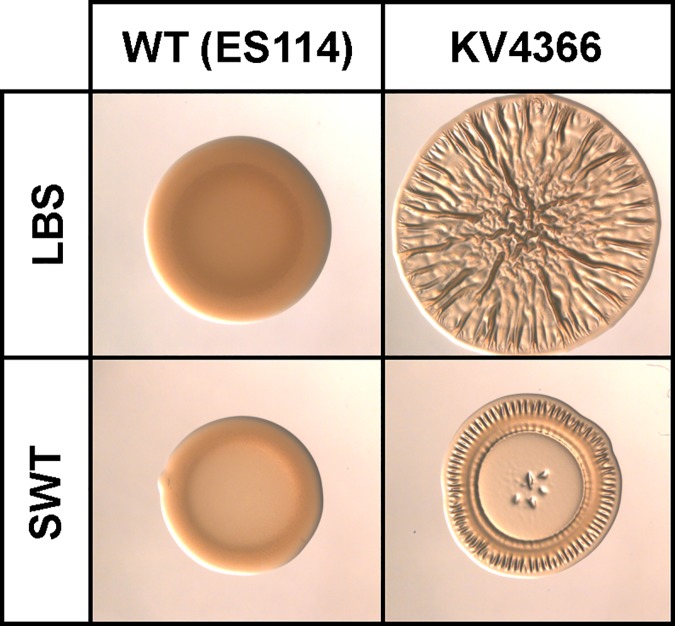
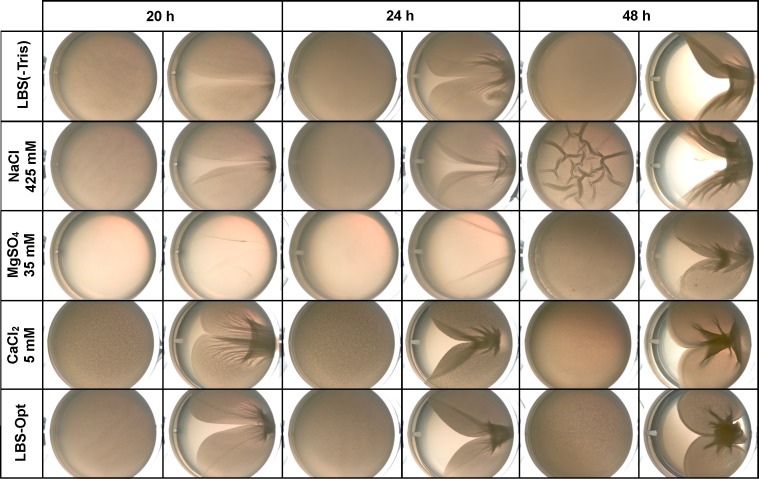
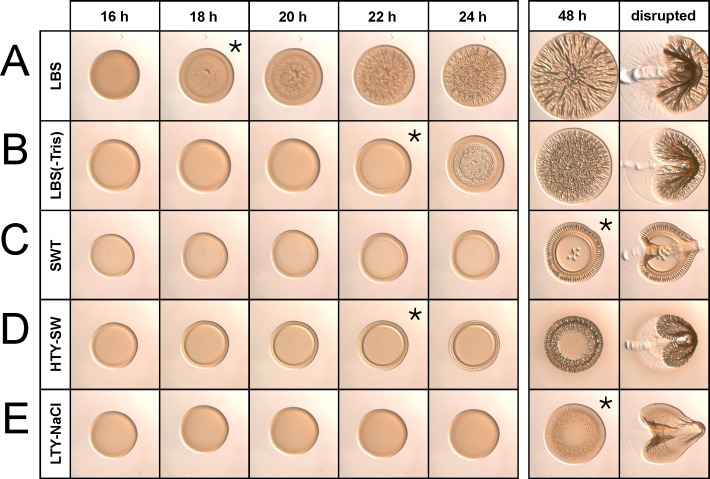
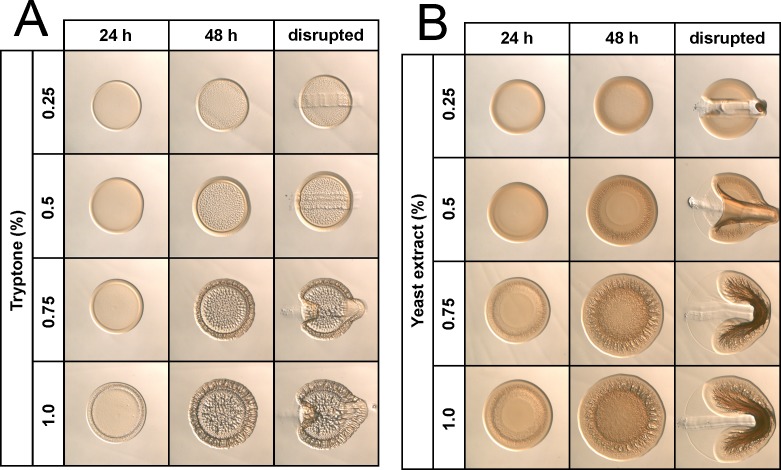
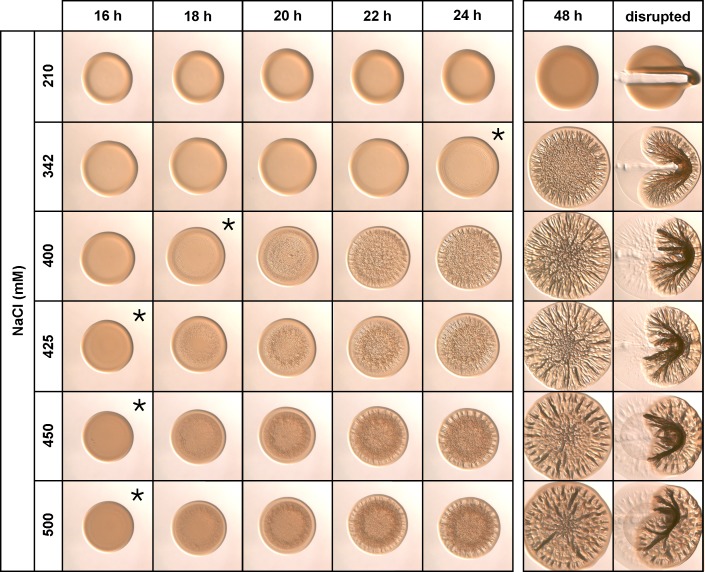
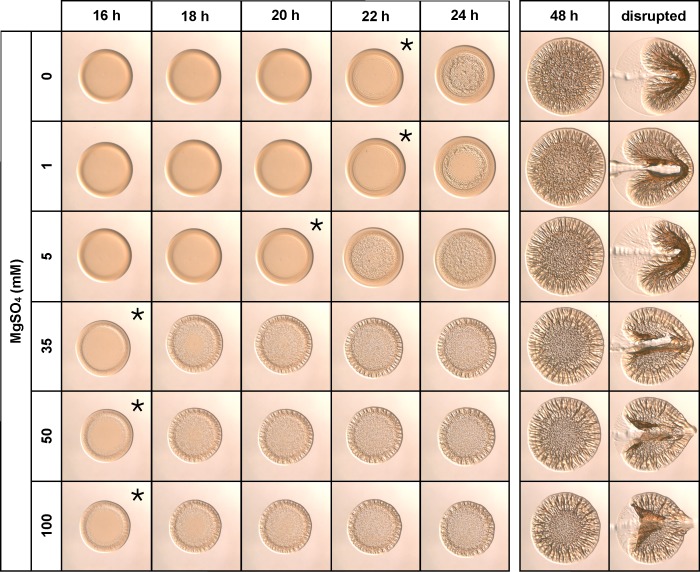
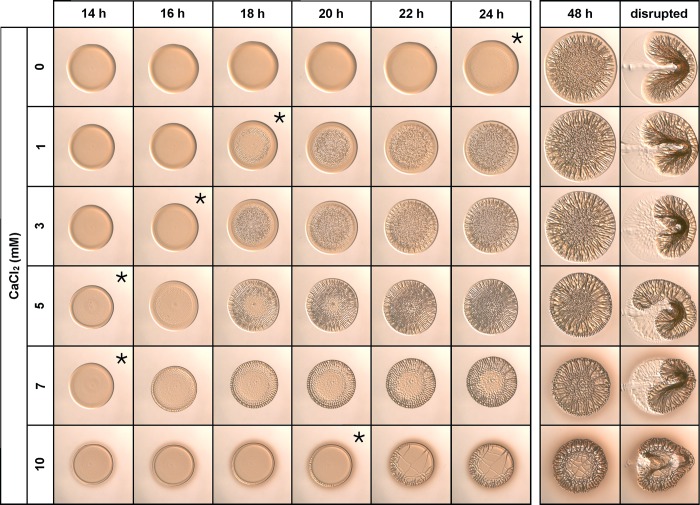
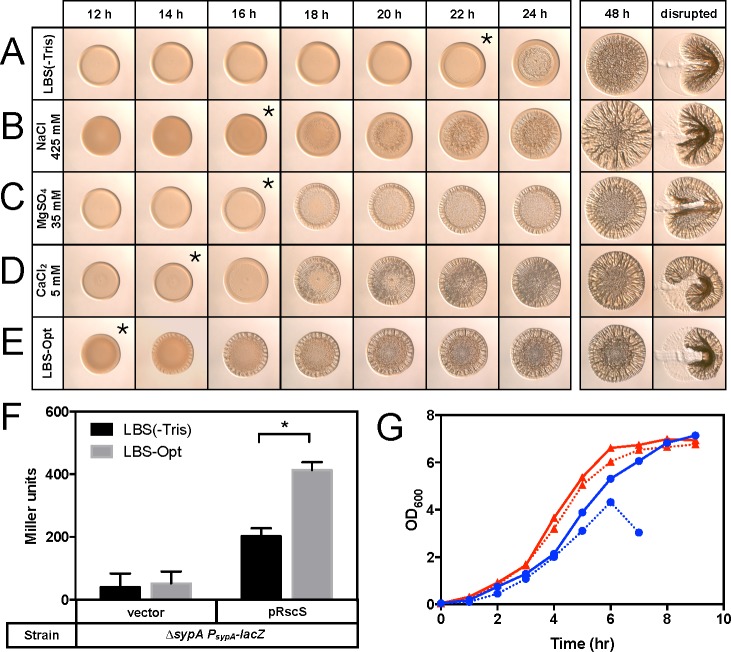
Vibrio fischeri, a marine bacterium and symbiont of the Hawaiian bobtail squid Euprymna scolopes, depends on biofilm formation for successful colonization of the squid's symbiotic light organ. Here, we investigated if culture conditions, such as nutrient and salt availability, affect biofilm formation by V. fischeri by testing the formation of wrinkled colonies on solid media. We found that V. fischeri forms colonies with more substantial wrinkling when grown on the nutrient-dense LBS medium containing NaCl relative to those formed on the more nutrient-poor, seawater-salt containing SWT medium. The presence of both tryptone and yeast extract was necessary for the production of "normal" wrinkled colonies; when grown on tryptone alone, the colonies displayed a divoting phenotype and were attached to the agar surface. We also found that the type and concentration of specific seawater salts influenced the timing of biofilm formation. Of the conditions assayed, wrinkled colony formation occurred earliest in LBS(-Tris) media containing 425 mM NaCl, 35 mM MgSO4, and 5 mM CaCl2. Pellicle formation, another measure of biofilm development, was also enhanced in these growth conditions. Therefore, both nutrient and salt availability contribute to V. fischeri biofilm formation. While growth was unaffected, these optimized conditions resulted in increased syp locus expression as measured by a PsypA-lacZ transcriptional reporter. We anticipate these studies will help us understand how the natural environment of V. fischeri affects its ability to form biofilms and, ultimately, colonize E. scolopes.
费氏弧菌是一种海洋细菌,也是夏威夷短尾乌贼(Euprymna scolopes)的共生菌,它依靠生物膜形成来成功定殖于乌贼的共生发光器官。在此,我们通过检测在固体培养基上形成的褶皱菌落,研究了诸如营养物质和盐分可利用性等培养条件是否会影响费氏弧菌的生物膜形成。我们发现,相对于在营养物质较匮乏、含有海水盐分的SWT培养基上形成的菌落,费氏弧菌在含有NaCl的营养丰富的LBS培养基上生长时,会形成褶皱更明显的菌落。胰蛋白胨和酵母提取物的同时存在对于产生“正常”的褶皱菌落是必需的;当仅在胰蛋白胨上生长时,菌落呈现凹陷表型并附着于琼脂表面。我们还发现特定海水盐分的类型和浓度会影响生物膜形成的时间。在所检测的条件中,在含有425 mM NaCl、35 mM MgSO4和5 mM CaCl2的LBS(-Tris)培养基中最早出现褶皱菌落形成。生物膜发育的另一个指标——菌膜形成,在这些生长条件下也得到了增强。因此,营养物质和盐分的可利用性均有助于费氏弧菌生物膜的形成。虽然生长未受影响,但通过PsypA-lacZ转录报告基因检测发现,这些优化条件导致syp基因座表达增加。我们预计这些研究将有助于我们了解费氏弧菌的自然环境如何影响其形成生物膜的能力,以及最终定殖于短尾乌贼的能力。