Wang Tao, Hou Jingjing, Li Zengpeng, Zheng Zihan, Wei Jie, Song Dan, Hu Tao, Wu Qiao, Yang James Y, Cai Jian-Chun
Department of Gastrointestinal Surgery, Zhongshan Hospital affiliated to Xiamen University, Xiamen, China 361004.; Institute of Gastrointestinal Oncology, Medical college of Xiamen University, Xiang'an, Xiamen, China 361102.; Xiehe Clinical Medical College, Fujian Medical University, Fuzhou, China 350001.
State Key Laboratory Breeding Base of Marine Genetic Resources, Third Institute of Oceanography, State Oceanic Administration, 184 University Road, Xiamen, China 361005.
Int J Biol Sci. 2017 Jan 15;13(1):122-134. doi: 10.7150/ijbs.14770. eCollection 2017.
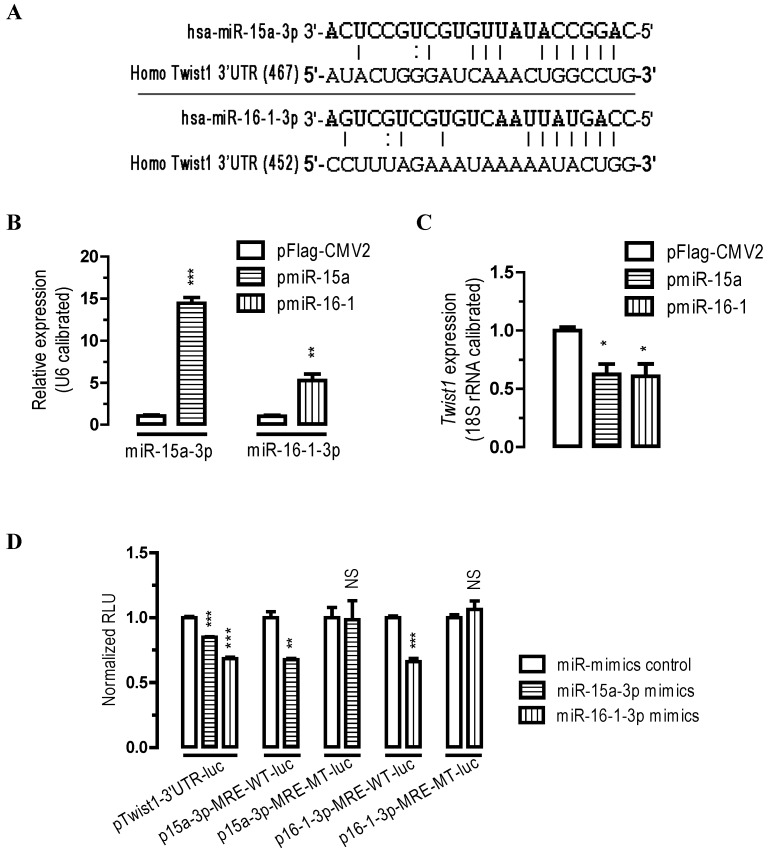
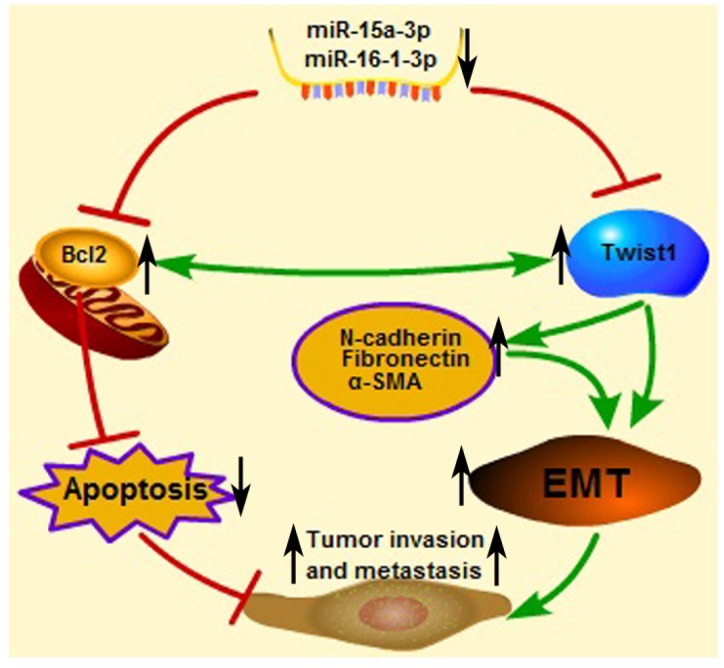
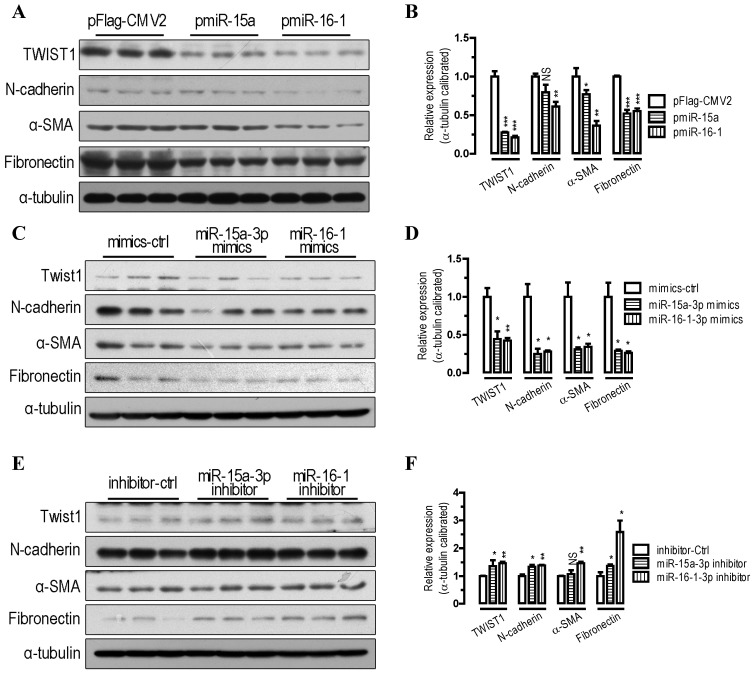
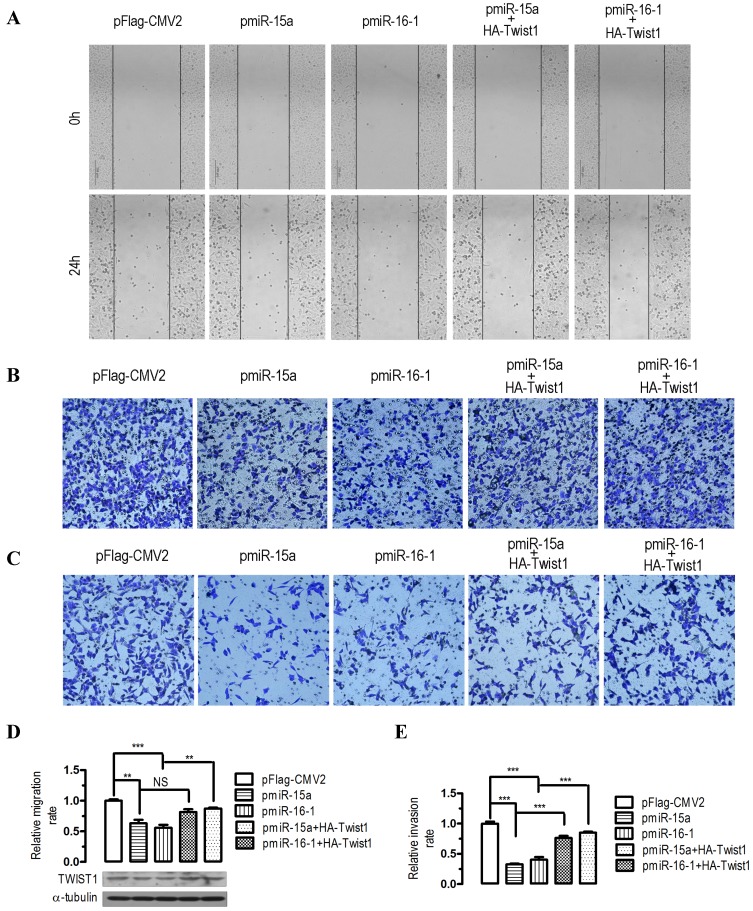
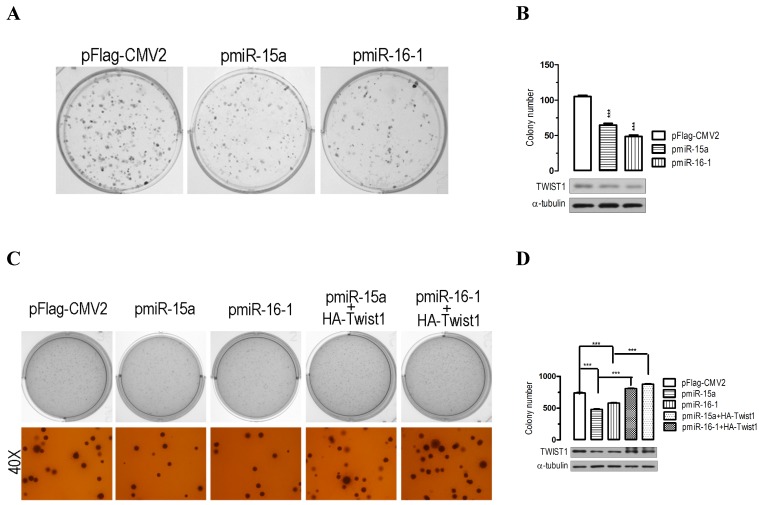
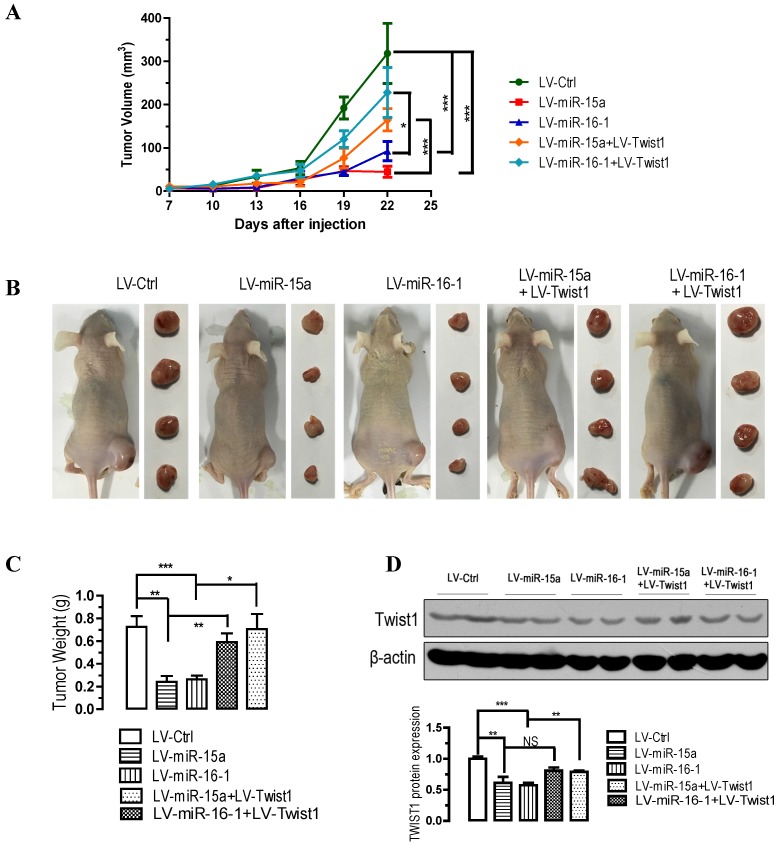
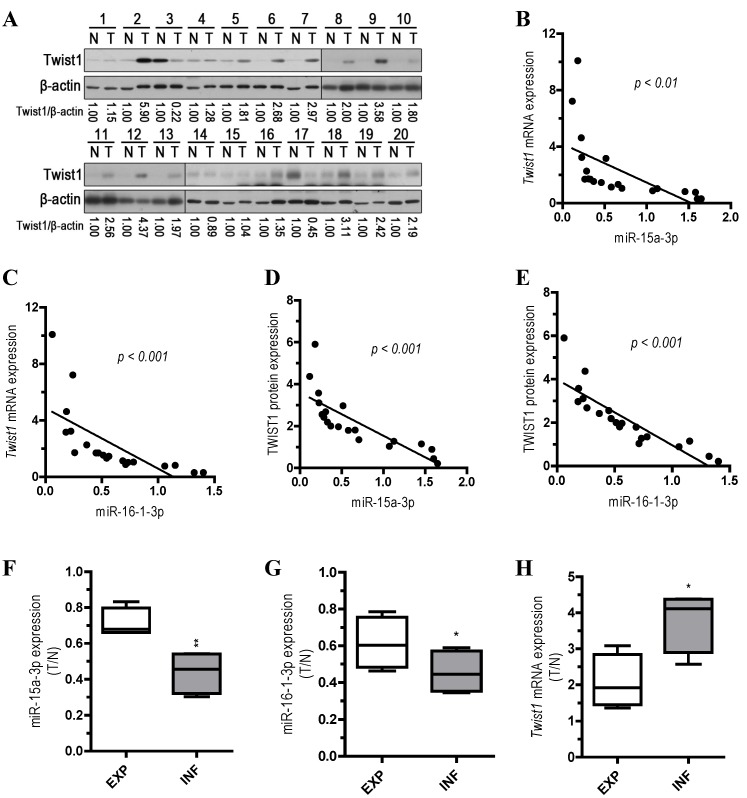
MicroRNAs are a novel class of gene regulators that function as oncogenes or tumor suppressors. In our current study, we investigated the role of miR-15a-3p and miR-16-1-3p in the regulation of expression and EMT process. Our bioinformatics analysis suggested that on the 3' UTR of , there are two conserved miRNA recognition sites for miR-15a-3p and miR-16-1-3p respectively. Interestingly, overexpression of miR-15a-3p and miR-16-1-3p significantly suppressed the activity of luciferase reporter containing -3' UTR, reduced mRNA and protein level of EMT related genes such as TWIST1, N-cadherin, α-SMA and Fibronectin, and repressed MMP9 and MMP2 activity, as well as cell migration and invasion. Conversely, inhibition of miR-15a-3p and miR-16-1-3p significantly increased TWIST1, N-cadherin, α-SMA and Fibronectin protein expression. In addition, co-transfection significantly ameliorated the loss of cell migration and invasion. Moreover, overexpression of miR-15a-3p and miR-16-1-3p dramatically suppressed the ability of BGC823 cells to form colonies and develop tumors in nude mice. Finally, qPCR and Western blot analysis showed that miR-15a-3p and miR-16-1-3p were significantly reduced in clinical gastric cancer tissue, whereas mRNA and protein were significantly up-regulated, suggesting that this aberrant down-regulation of miR-15a-3p and miR-16-1-3p might be associated with the abnormal regulation of Twist1 and the EMT process in gastric cancer development. Our results help to elucidate a novel and important mechanism for the regulation of in the development of cancer.
微小RNA是一类新型的基因调节因子,可作为癌基因或肿瘤抑制因子发挥作用。在我们目前的研究中,我们研究了miR-15a-3p和miR-16-1-3p在调节[基因名称]表达和上皮-间质转化(EMT)过程中的作用。我们的生物信息学分析表明,在[基因名称]的3'非翻译区(UTR)上,分别有两个针对miR-15a-3p和miR-16-1-3p的保守微小RNA识别位点。有趣的是,miR-15a-3p和miR-16-1-3p的过表达显著抑制了含有[基因名称]-3'UTR的荧光素酶报告基因的活性,降低了EMT相关基因如TWIST1、N-钙黏蛋白、α-平滑肌肌动蛋白(α-SMA)和纤连蛋白的mRNA和蛋白质水平,并抑制了基质金属蛋白酶9(MMP9)和基质金属蛋白酶2(MMP2)的活性以及细胞迁移和侵袭。相反,抑制miR-15a-3p和miR-16-1-3p显著增加了TWIST1、N-钙黏蛋白、α-SMA和纤连蛋白的蛋白质表达。此外,[基因名称]共转染显著改善了细胞迁移和侵袭能力的丧失。此外,miR-15a-3p和miR-16-1-3p的过表达显著抑制了BGC823细胞在裸鼠中形成集落和发生肿瘤的能力。最后,定量聚合酶链反应(qPCR)和蛋白质免疫印迹分析表明,临床胃癌组织中miR-15a-3p和miR-16-1-3p显著降低,而[基因名称]的mRNA和蛋白质显著上调,这表明miR-15a-3p和miR-16-1-3p的这种异常下调可能与胃癌发生过程中Twist1的异常调节和EMT过程有关。我们的结果有助于阐明癌症发生过程中[基因名称]调节的一种新的重要机制。