Varga Matthew Gordon, Peek Richard M
Department of Cancer Biology, Vanderbilt University School of Medicine, Nashville, TN, USA.
Department of Medicine, Vanderbilt University School of Medicine, Nashville, TN, USA.
Curr Top Microbiol Immunol. 2017;400:169-193. doi: 10.1007/978-3-319-50520-6_8.
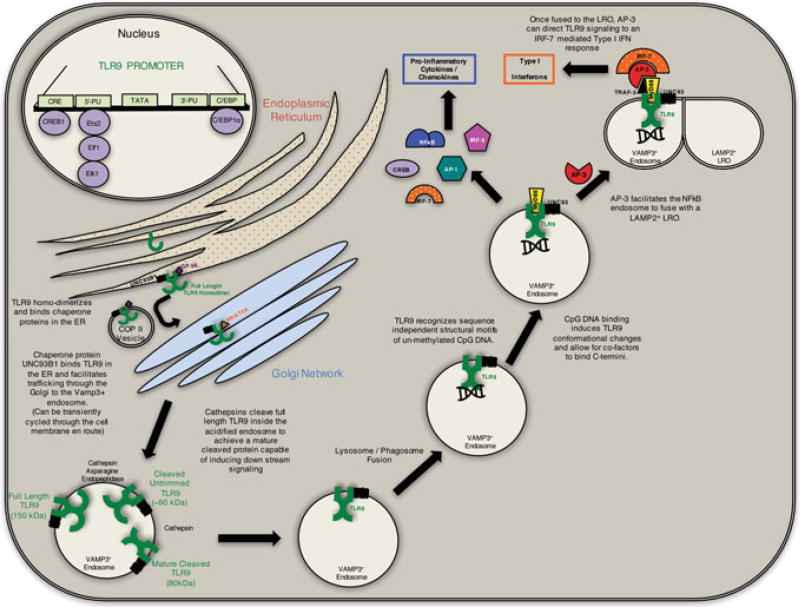
Helicobacter pylori is the most common bacterial infection worldwide, and virtually all infected persons develop co-existing gastritis. H. pylori is able to send and receive signals from the gastric mucosa, which enables both host and microbe to engage in a dynamic equilibrium. In order to persist within the human host, H. pylori has adopted dichotomous strategies to both induce inflammation as a means of liberating nutrients while simultaneously tempering the immune response to augment its survival. Toll-like receptors (TLRs) and Nod proteins are innate immune receptors that are present in epithelial cells and represent the first line of defense against pathogens. To ensure persistence, H. pylori manipulates TLR-mediated defenses using strategies that include rendering its LPS and flagellin to be non-stimulatory to TLR4 and TLR5, respectively; translocating peptidoglycan into host cells to induce NOD1-mediated anti-inflammatory responses; and translocating DNA into host cells to induce TLR9 activation.
幽门螺杆菌是全球最常见的细菌感染,几乎所有感染者都会并发胃炎。幽门螺杆菌能够与胃黏膜发送和接收信号,这使得宿主和微生物都能处于动态平衡。为了在人类宿主体内持续存在,幽门螺杆菌采取了两种策略:既诱导炎症作为释放营养物质的一种方式,同时又调节免疫反应以增加其存活率。Toll样受体(TLRs)和Nod蛋白是上皮细胞中存在的天然免疫受体,是抵御病原体的第一道防线。为确保持续存在,幽门螺杆菌采用多种策略来操纵TLR介导的防御,这些策略包括使其脂多糖(LPS)和鞭毛蛋白分别对TLR4和TLR5无刺激作用;将肽聚糖转运到宿主细胞中以诱导NOD1介导的抗炎反应;以及将DNA转运到宿主细胞中以诱导TLR9激活。