Meng Di, Huo Caiyun, Wang Ming, Xiao Jin, Liu Bo, Wei Tangting, Dong Hong, Zhang Guozhong, Hu Yanxin, Sun Lunquan
Key Laboratory of Animal Epidemiology and Zoonosis of Ministry of Agriculture, College of Veterinary Medicine, China Agricultural University Beijing, China.
Key Laboratory of Animal Epidemiology and Zoonosis of Ministry of Agriculture, College of Veterinary Medicine, China Agricultural UniversityBeijing, China; Key Laboratory of Veterinary Bioproduction and Chemical Medicine of the Ministry of Agriculture, Zhongmu Institutes of China Animal Husbandry Industry Co., LtdBeijing, China.
Front Microbiol. 2017 Jan 12;7:2130. doi: 10.3389/fmicb.2016.02130. eCollection 2016.
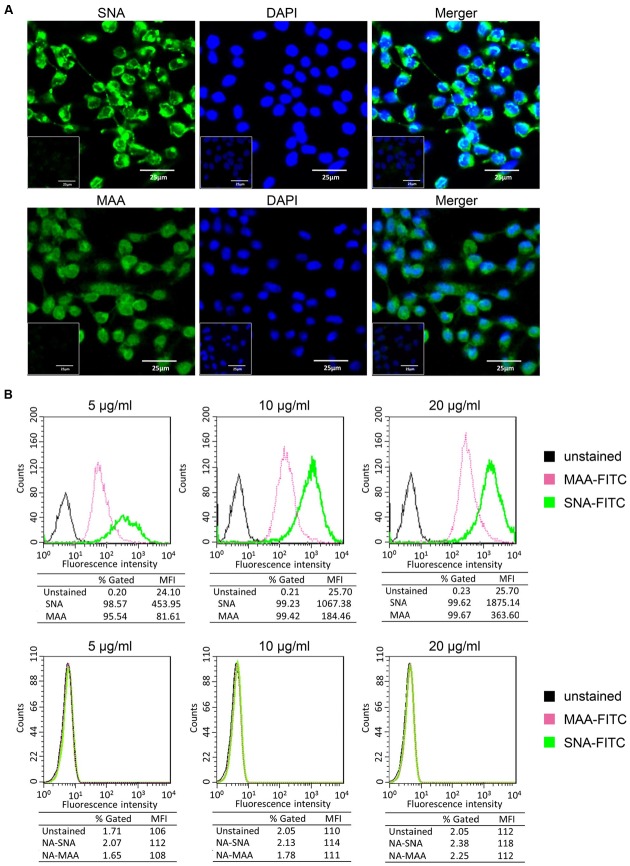
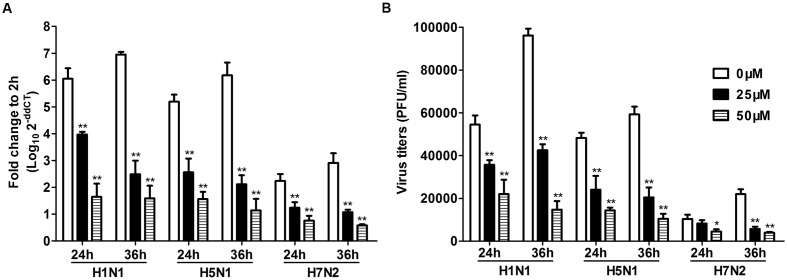
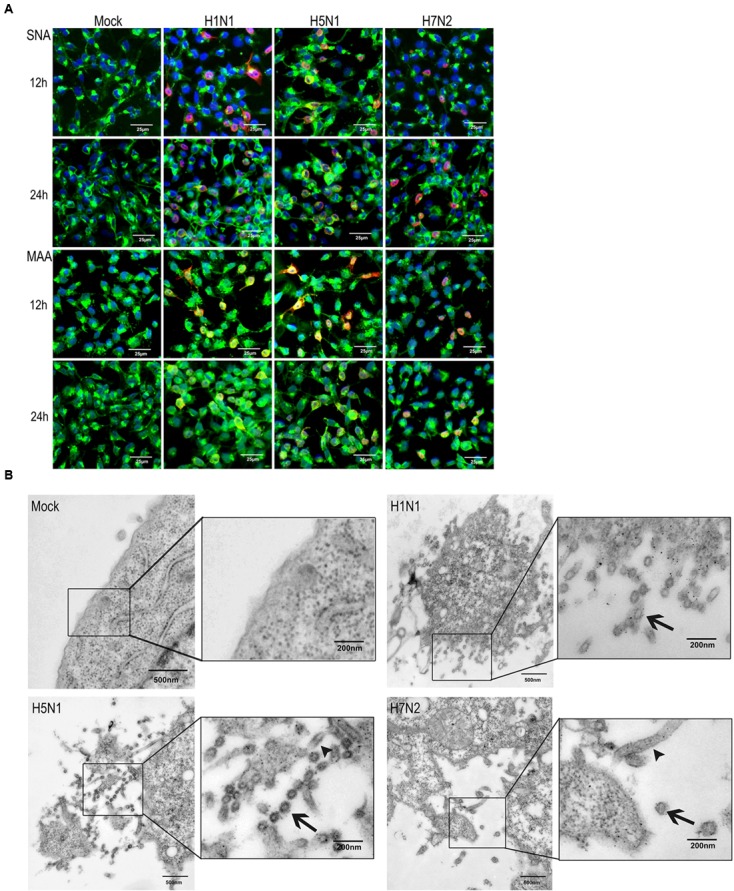
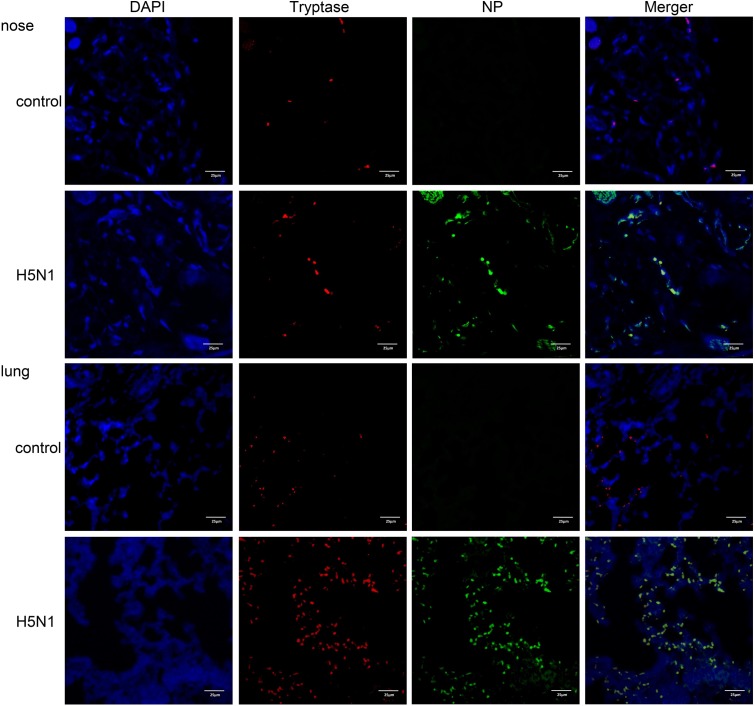
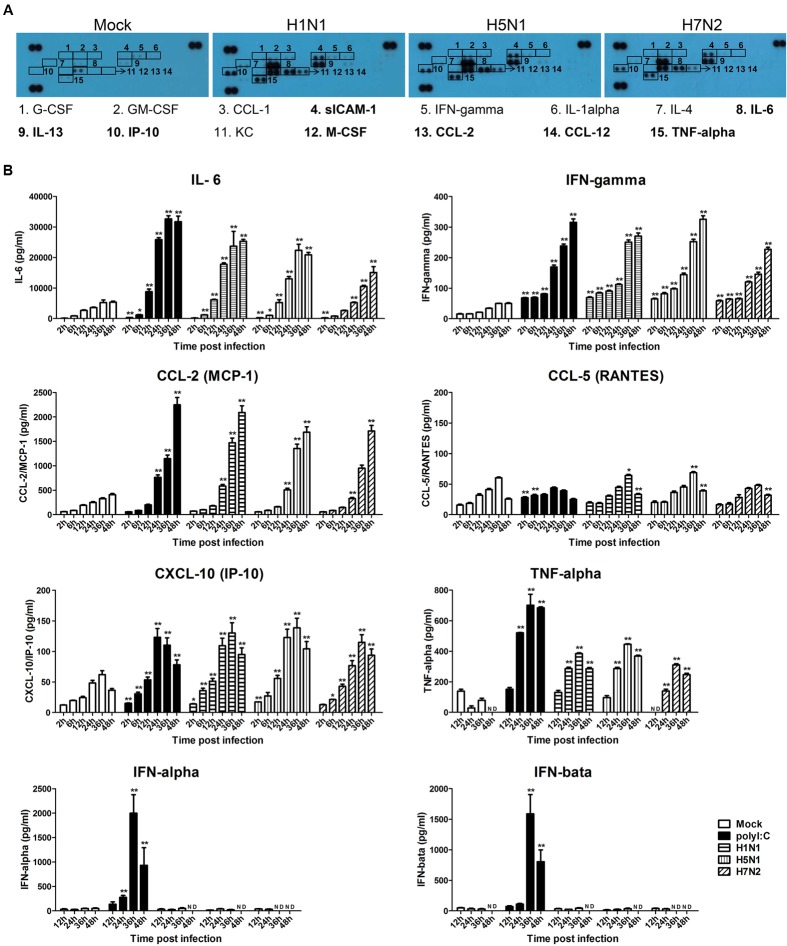
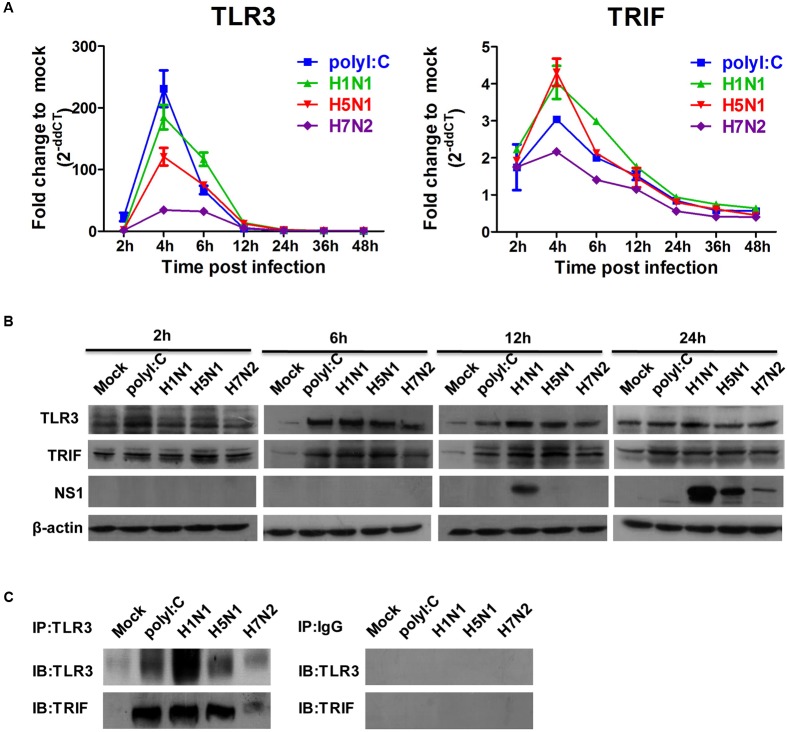
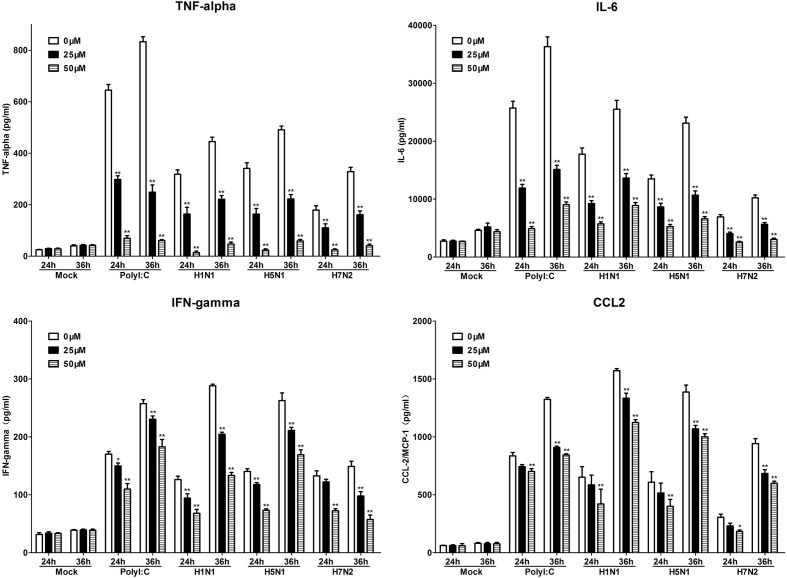
The influenza A viruses (IAVs) cause acute respiratory infection in both humans and animals. As a member of the initial lines of host defense system, the role of mast cells during IAV infection has been poorly understood. Here, we characterized for the first time that both avian-like (α-2, 3-linked) and human-like (α-2, 6- linked) sialic acid (SA) receptors were expressed by the mouse mastocytoma cell line (P815). The P815 cells did support the productive replication of H1N1 (A/WSN/33), H5N1 (A/chicken/ Henan/1/04) and H7N2 (A/chicken/Hebei/2/02) while the infection of H5N1 in mast cells was confirmed by the specific staining of nasal mucosa and lung tissue from mice. All the three viruses triggered the infected P815 cells to produce pro-inflammatory cytokines and chemokines including IL-6, IFN-γ, TNF-α, CCL-2, CCL-5, and IP-10, but not the antiviral type I interferon. It was further confirmed that TLR3 pathway was involved in P815 cell response to IAV-infection. Our findings highlight the remarkable tropism and infectivity of IAV to P815 cells, indicating that mast cells may be unneglectable player in the development of IAV infection.
甲型流感病毒(IAV)可导致人类和动物发生急性呼吸道感染。作为宿主防御系统第一道防线的成员,肥大细胞在IAV感染过程中的作用一直未得到充分了解。在此,我们首次发现小鼠肥大细胞瘤细胞系(P815)表达禽源样(α-2,3连接)和人源样(α-2,6连接)唾液酸(SA)受体。P815细胞确实支持H1N1(A/WSN/33)、H5N1(A/鸡/河南/1/04)和H7N2(A/鸡/河北/2/02)的有效复制,同时通过对小鼠鼻黏膜和肺组织的特异性染色证实了肥大细胞中H5N1的感染。所有这三种病毒均触发被感染的P815细胞产生促炎细胞因子和趋化因子,包括IL-6、IFN-γ、TNF-α、CCL-2、CCL-5和IP-10,但不产生抗病毒I型干扰素。进一步证实TLR3途径参与P815细胞对IAV感染的反应。我们的研究结果突出了IAV对P815细胞显著的嗜性和感染性,表明肥大细胞可能是IAV感染发展过程中不可忽视的参与者。