State Key Laboratory of Pharmaceutical Biotechnology, LKS Faculty of Medicine, The University of Hong Kong, Hong Kong, China.
Department of Medicine, LKS Faculty of Medicine, The University of Hong Kong, Hong Kong, China.
Nat Commun. 2017 Jan 27;8:14147. doi: 10.1038/ncomms14147.
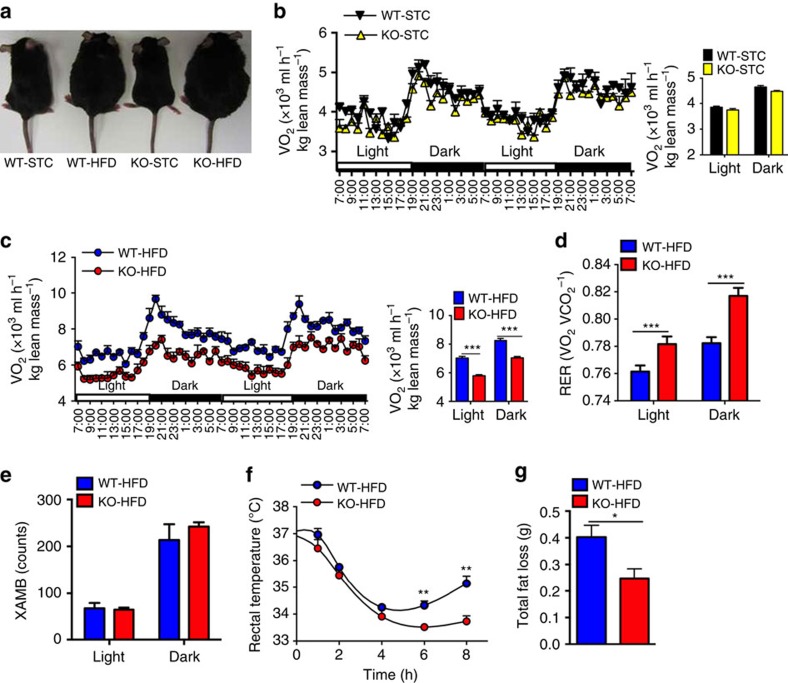
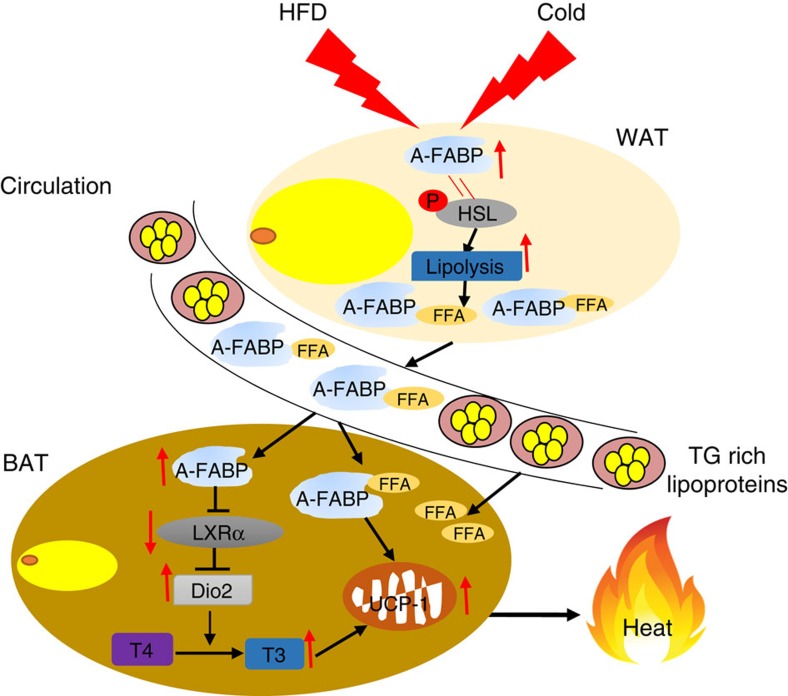
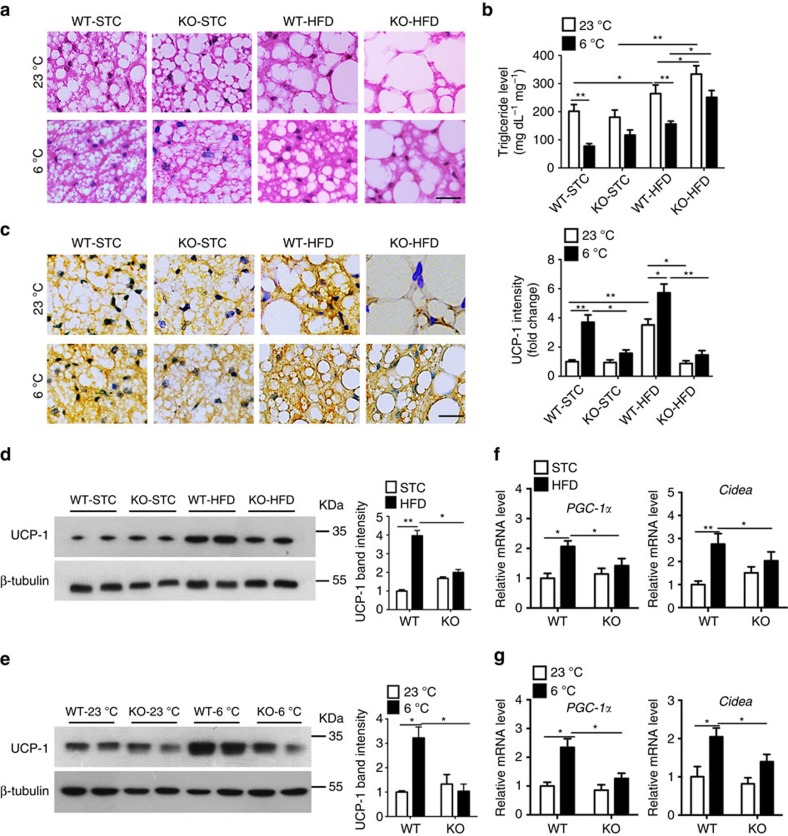
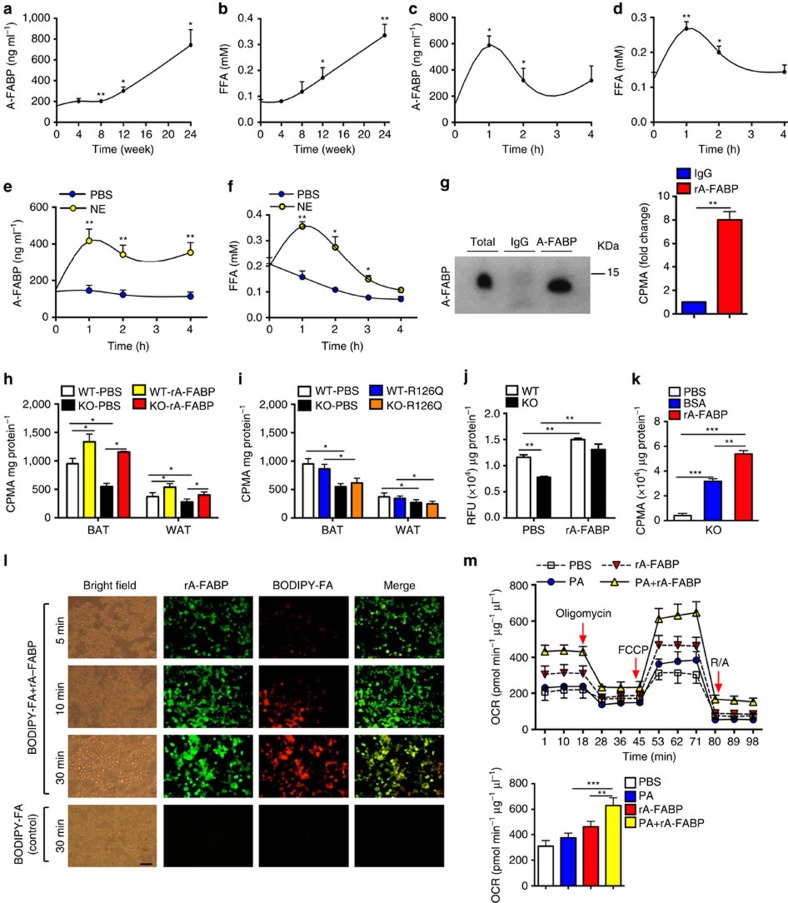
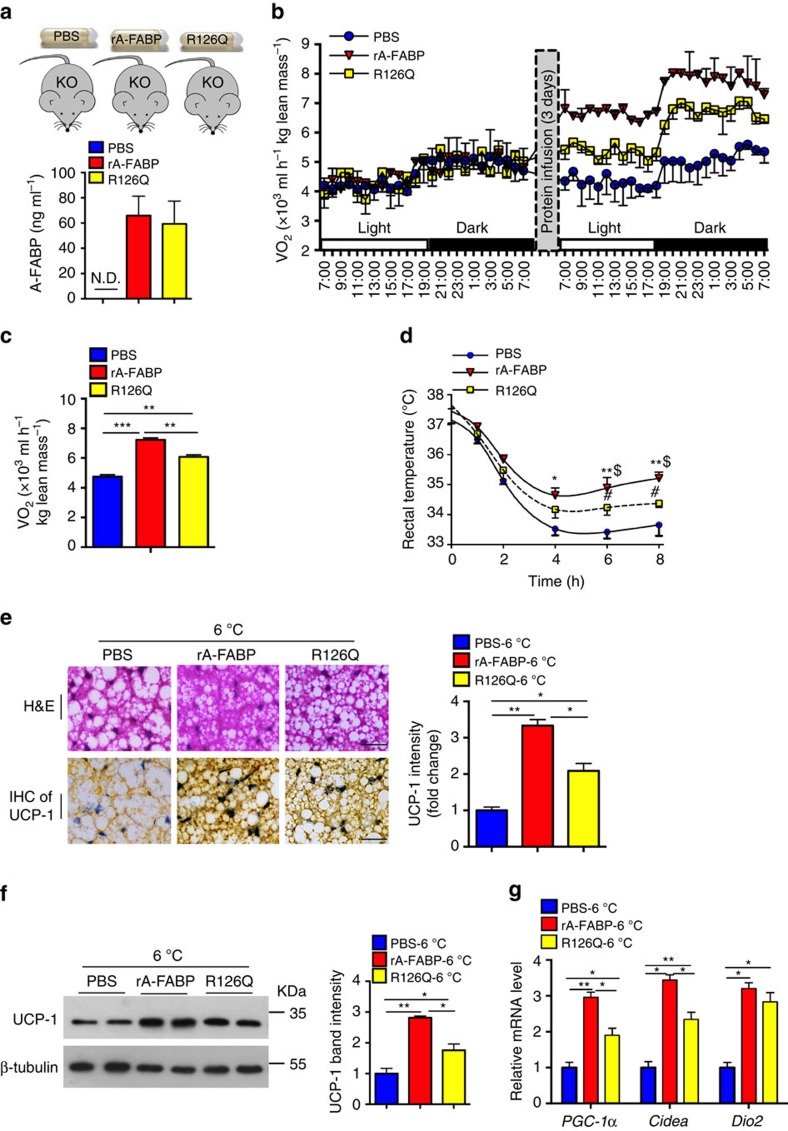
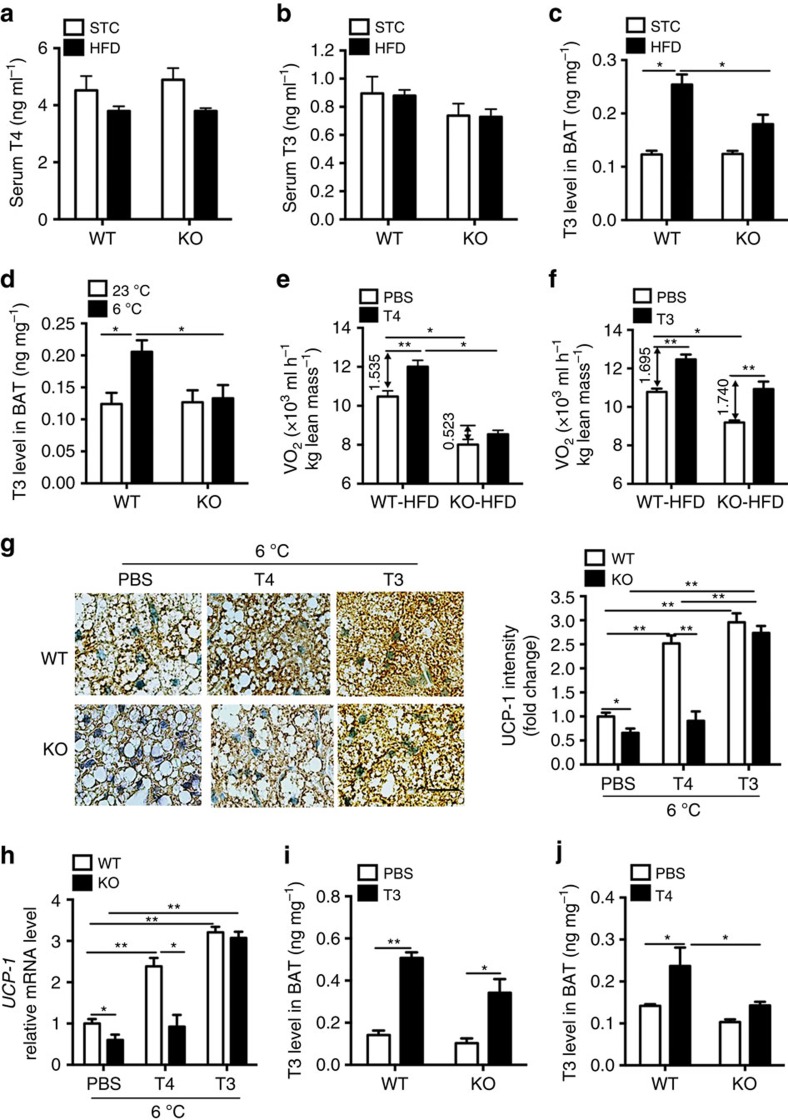
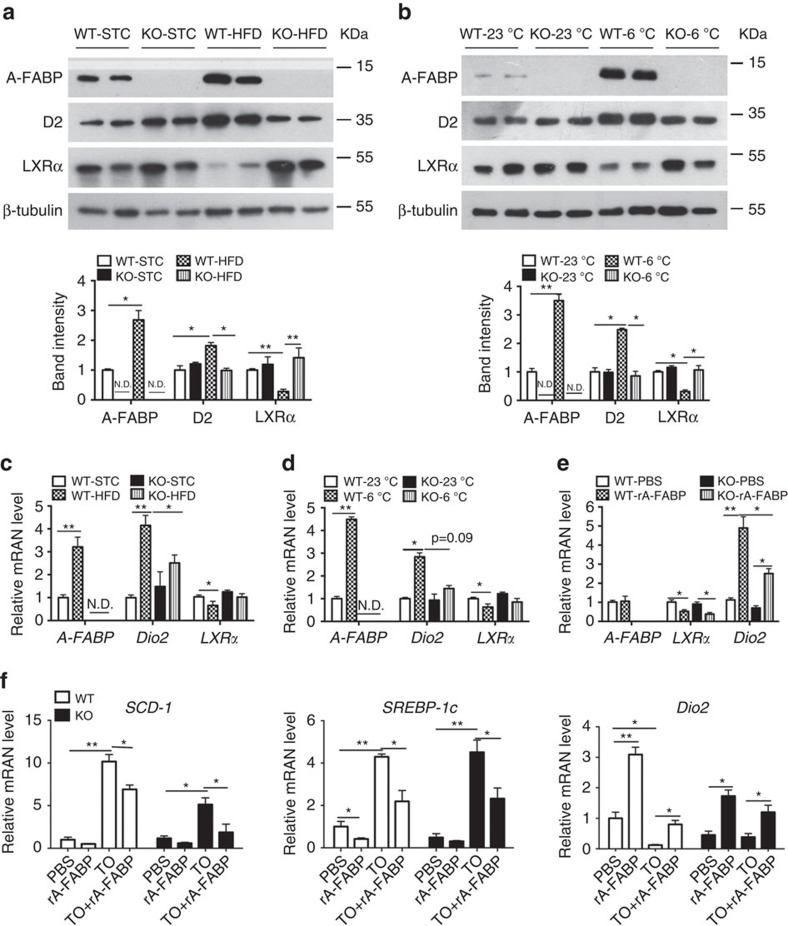
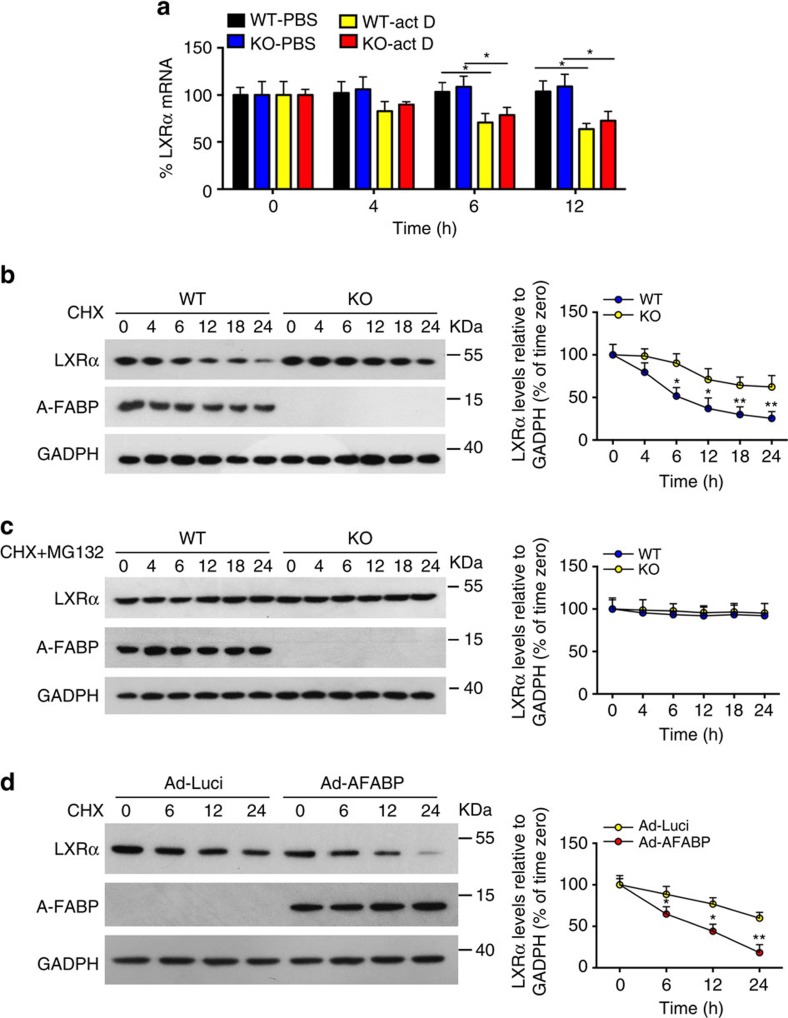
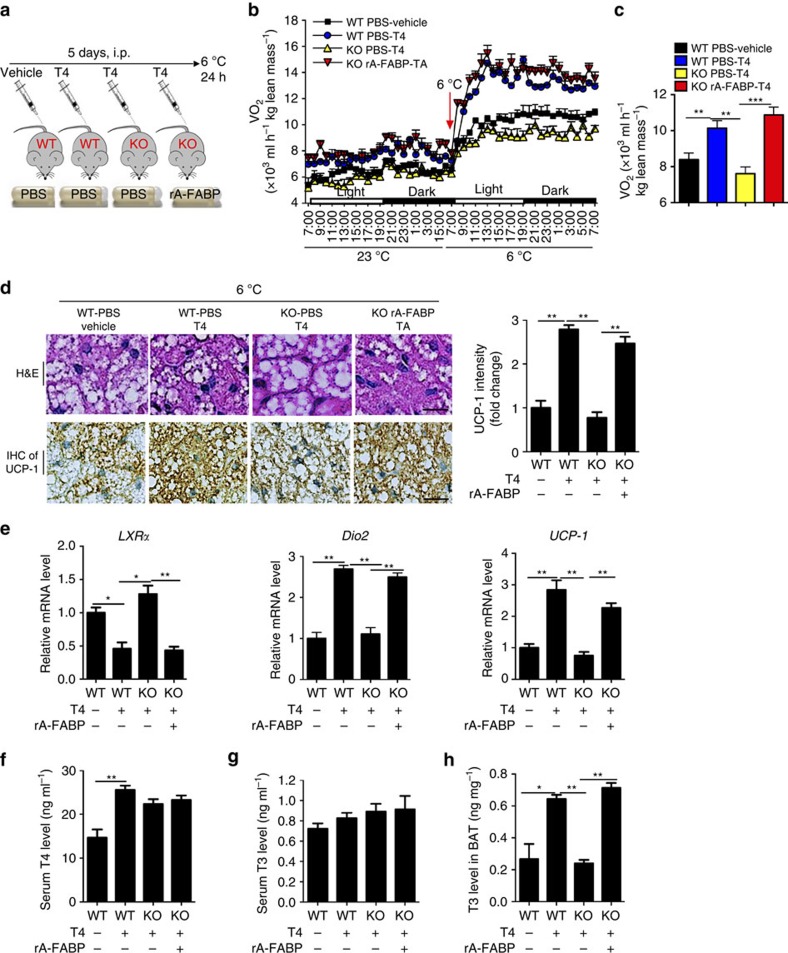
The adipokine adipocyte fatty acid-binding protein (A-FABP) has been implicated in obesity-related cardio-metabolic complications. Here we show that A-FABP increases thermogenesis by promoting the conversion of T4 to T3 in brown adipocytes. We find that A-FABP levels are increased in both white (WAT) and brown (BAT) adipose tissues and the bloodstream in response to thermogenic stimuli. A-FABP knockout mice have reduced thermogenesis and whole-body energy expenditure after cold stress or after feeding a high-fat diet, which can be reversed by infusion of recombinant A-FABP. Mechanistically, A-FABP induces the expression of type-II iodothyronine deiodinase in BAT via inhibition of the nuclear receptor liver X receptor α, thereby leading to the conversion of thyroid hormone from its inactive form T4 to active T3. The thermogenic responses to T4 are abrogated in A-FABP KO mice, but enhanced by A-FABP. Thus, A-FABP acts as a physiological stimulator of BAT-mediated adaptive thermogenesis.
脂肪因子脂肪细胞脂肪酸结合蛋白(A-FABP)与肥胖相关的心脏代谢并发症有关。在这里,我们表明 A-FABP 通过促进棕色脂肪细胞中 T4 向 T3 的转化来增加产热。我们发现,A-FABP 水平在白色(WAT)和棕色(BAT)脂肪组织以及血液中都会因产热刺激而增加。在冷应激或高脂肪饮食后,A-FABP 敲除小鼠的产热和全身能量消耗减少,而通过输注重组 A-FABP 可以逆转这种情况。从机制上讲,A-FABP 通过抑制核受体肝 X 受体 α 诱导 BAT 中 II 型甲状腺素脱碘酶的表达,从而导致甲状腺激素从其无活性形式 T4 转化为活性 T3。A-FABP KO 小鼠对 T4 的产热反应被阻断,但 A-FABP 增强了这种反应。因此,A-FABP 是 BAT 介导的适应性产热的生理刺激物。