Zong Jiuyu, Wu Xiaoping, Huang Xiaowen, Yuan Lufengzi, Yuan Kai, Zhang Zixuan, Jiang Mengxue, Ping Zhihui, Cheong Lai Yee, Xu Aimin, Hoo Ruby Lai Chong
State Key Laboratory of Pharmaceutical Biotechnology, LKS Faculty of Medicine, The University of Hong Kong, Pokfulam, Hong Kong, China; Department of Pharmacology and Pharmacy, LKS Faculty of Medicine, The University of Hong Kong, Pokfulam, Hong Kong, China.
Institute of Digestive Disease and Department of Medicine and Therapeutics, State Key Laboratory of Digestive Disease, Li Ka Shing Institute of Health Sciences, The Chinese University of Hong Kong, Hong Kong, China.
Mol Metab. 2025 Jun;96:102133. doi: 10.1016/j.molmet.2025.102133. Epub 2025 Apr 1.
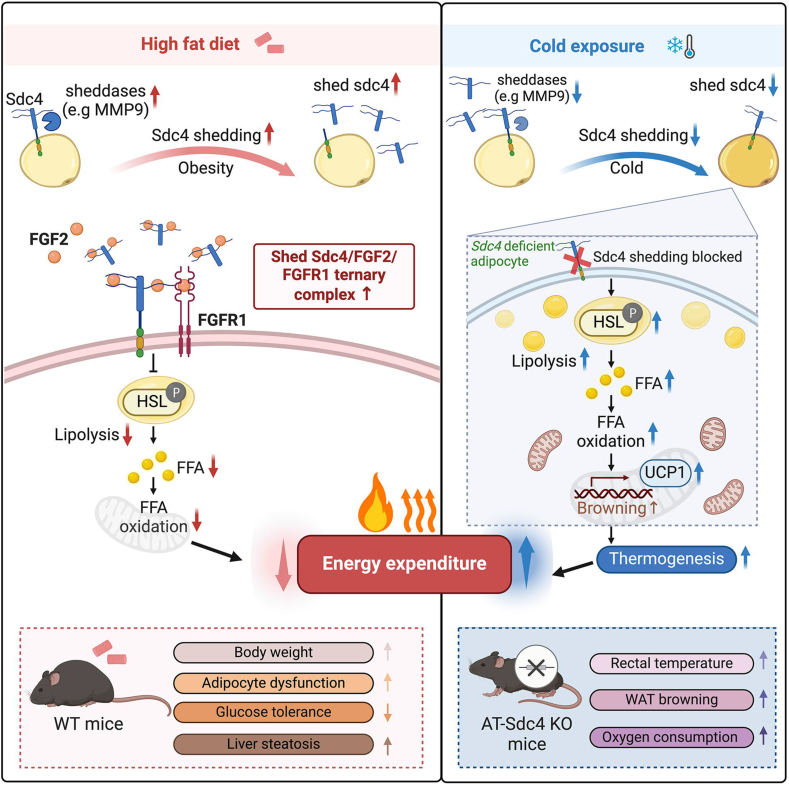
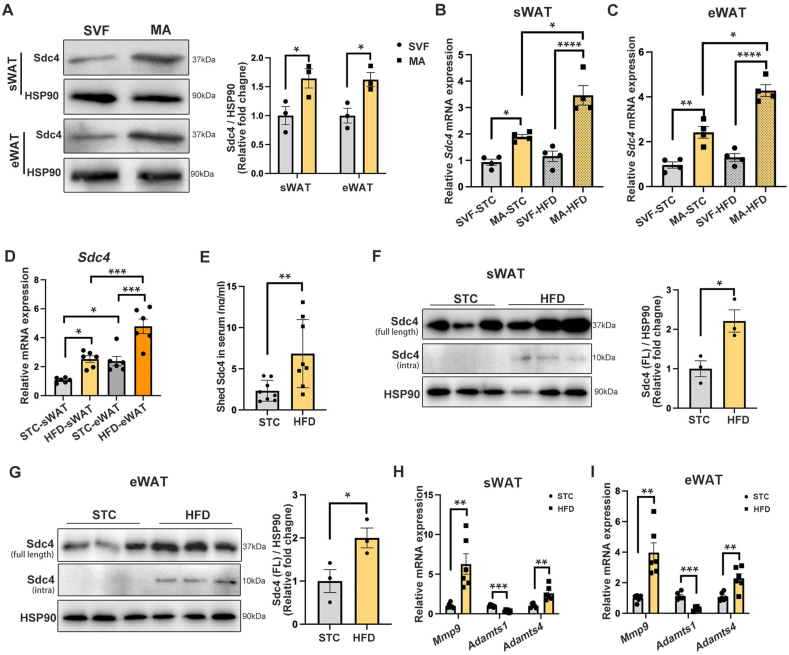
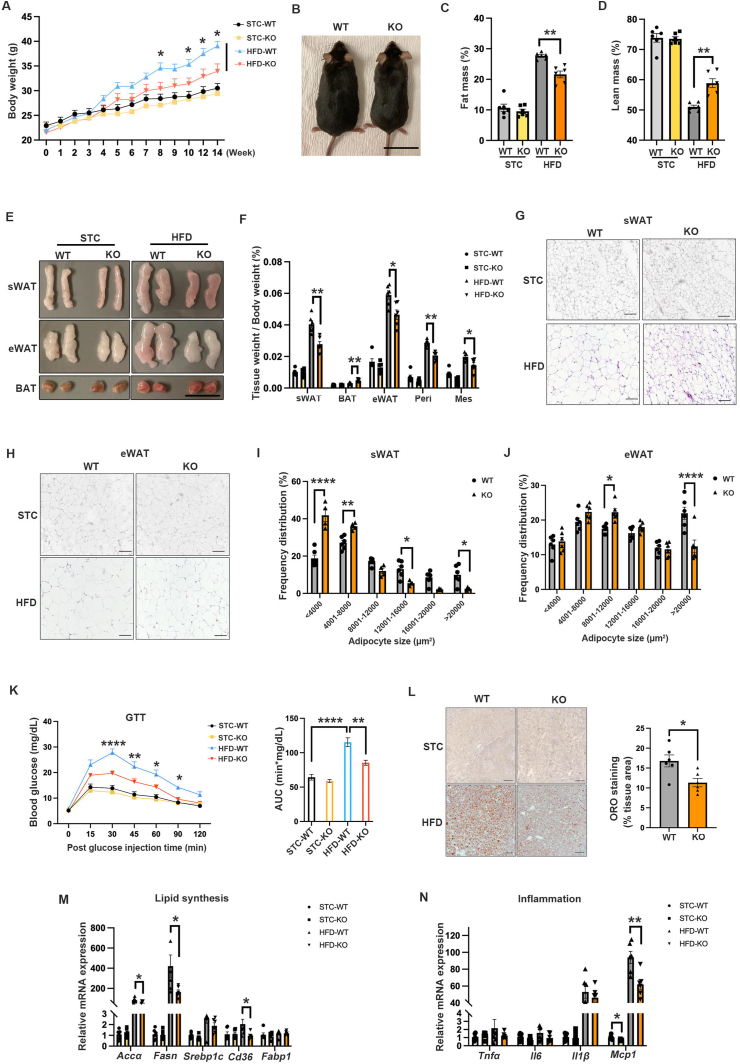
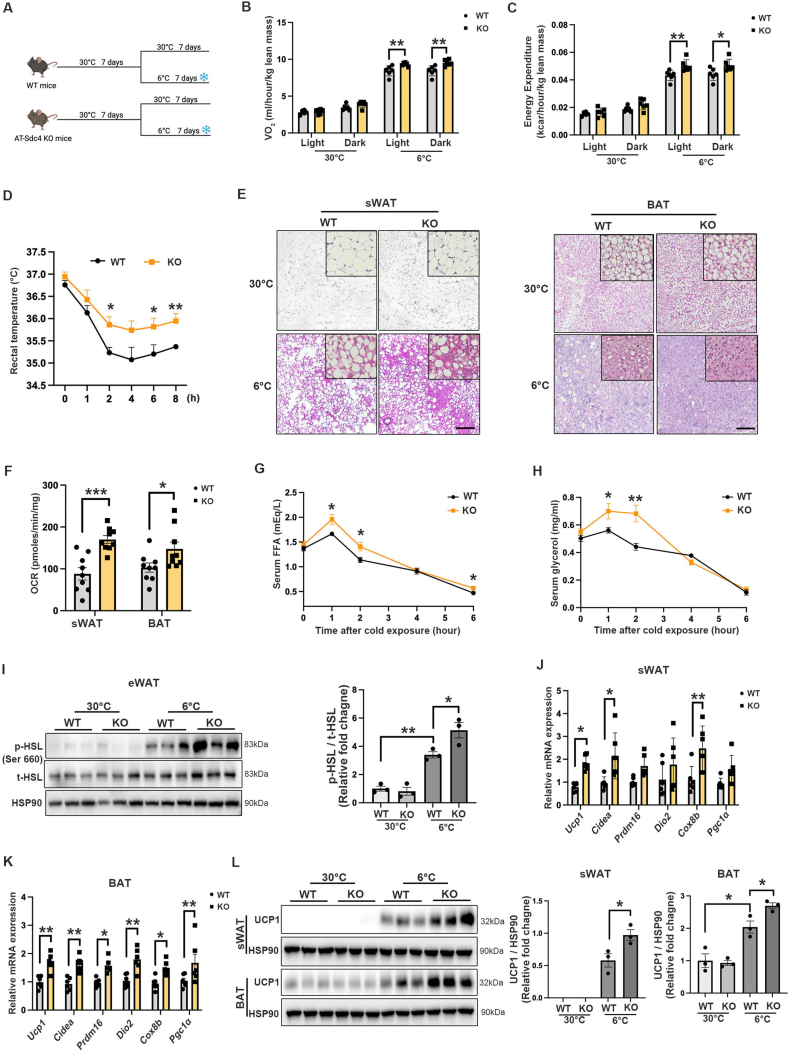
Lipolysis in white adipose tissue (WAT) provides fatty acids as energy substrates for thermogenesis to increase energy expenditure. Syndecan-4 (Sdc4) is a transmembrane proteoglycan bearing heparan sulfate chains. Although single nucleotide polymorphisms (SNPs) of the Sdc4 gene have been identified linking to metabolic syndromes, its specific function in adipose tissue remains obscure. Here, we show that Sdc4 serves as a regulator of lipid metabolism and adaptive thermogenesis. Sdc4 expression and shedding are elevated in the white adipose tissue (WAT) of diet-induced obese mice. Adipocyte-specific deletion of Sdc4 promotes lipolysis and WAT browning, thereby raising whole-body energy expenditure to protect against diet-induced obesity. Mechanistically, fibroblast growth factor 2 (FGF2) is a paracrine factor that maintains energy homeostasis. Elevated shed Sdc4 concentrates and delivers FGF2 to fibroblast growth factor receptor 1 (FGFR1) on adipocytes, which in turn suppresses lipolysis by reducing hormone-sensitive lipase (HSL) activity, thus exaggerating adipose tissue dysfunction upon high-fat diet induction. Sdc4-deficient adipocytes show higher lipolytic and thermogenic capacity by enhancing HSL phosphorylation and UCP1 expression. Overall, our study reveals that adipocyte-derived shed Sdc4 is a novel suppressor of lipolysis, contributing to decreased energy expenditure, thus exaggerating obesity. Targeting shed Sdc4 is a potential therapeutic strategy for obesity.
白色脂肪组织(WAT)中的脂肪分解为产热提供脂肪酸作为能量底物,以增加能量消耗。Syndecan-4(Sdc4)是一种带有硫酸乙酰肝素链的跨膜蛋白聚糖。尽管已鉴定出Sdc4基因的单核苷酸多态性(SNP)与代谢综合征有关,但其在脂肪组织中的具体功能仍不清楚。在此,我们表明Sdc4作为脂质代谢和适应性产热的调节因子。在饮食诱导的肥胖小鼠的白色脂肪组织(WAT)中,Sdc4的表达和脱落增加。脂肪细胞特异性缺失Sdc4可促进脂肪分解和WAT褐变,从而提高全身能量消耗,预防饮食诱导的肥胖。从机制上讲,成纤维细胞生长因子2(FGF2)是维持能量稳态的旁分泌因子。升高的脱落Sdc4聚集并将FGF2递送至脂肪细胞上的成纤维细胞生长因子受体1(FGFR1),进而通过降低激素敏感性脂肪酶(HSL)活性来抑制脂肪分解,从而在高脂饮食诱导时加剧脂肪组织功能障碍。Sdc4缺陷型脂肪细胞通过增强HSL磷酸化和UCP1表达表现出更高的脂肪分解和产热能力。总体而言,我们的研究表明,脂肪细胞衍生的脱落Sdc4是脂肪分解的新型抑制剂,导致能量消耗减少,从而加剧肥胖。靶向脱落的Sdc4是肥胖的潜在治疗策略。