Ehrmann Werner, Schmiedl Gerhard, Beuscher Sarah, Krüger Stefan
Institut für Geophysik und Geologie, Universität Leipzig, Talstraße 35, Leipzig, Germany.
Centrum für Erdsystemforschung und Nachhaltigkeit, Universität Hamburg, Bundesstraße 55, Hamburg, Germany.
PLoS One. 2017 Jan 27;12(1):e0170989. doi: 10.1371/journal.pone.0170989. eCollection 2017.
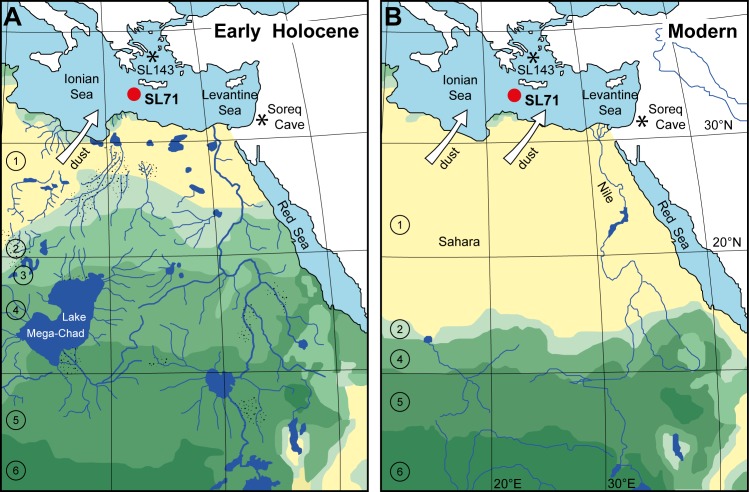
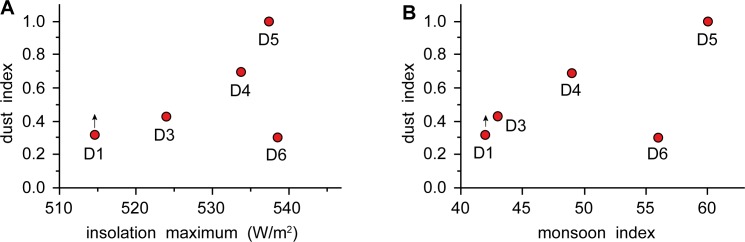
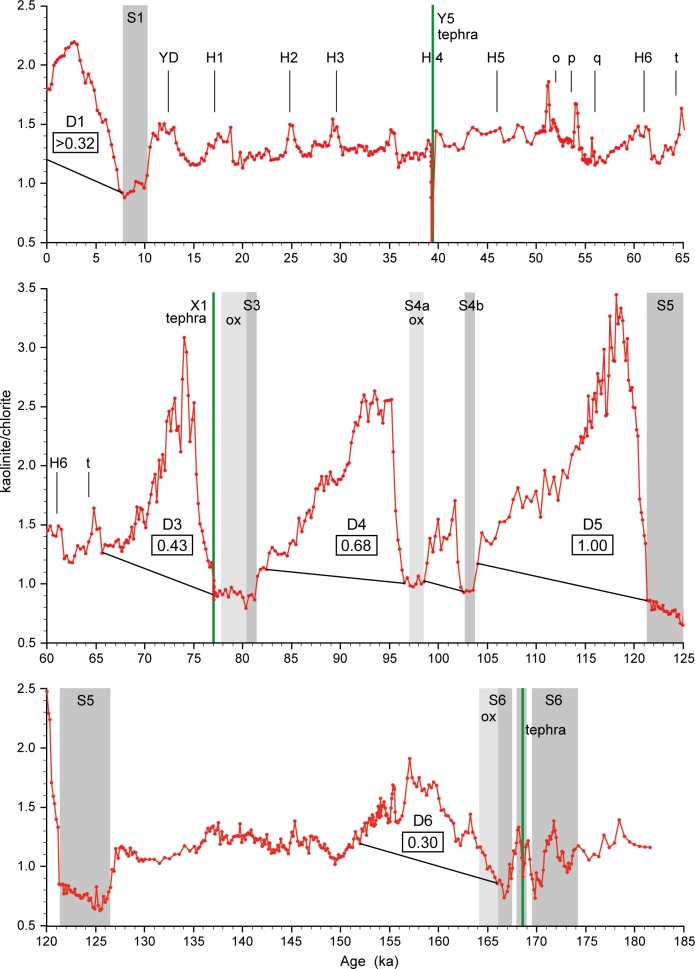
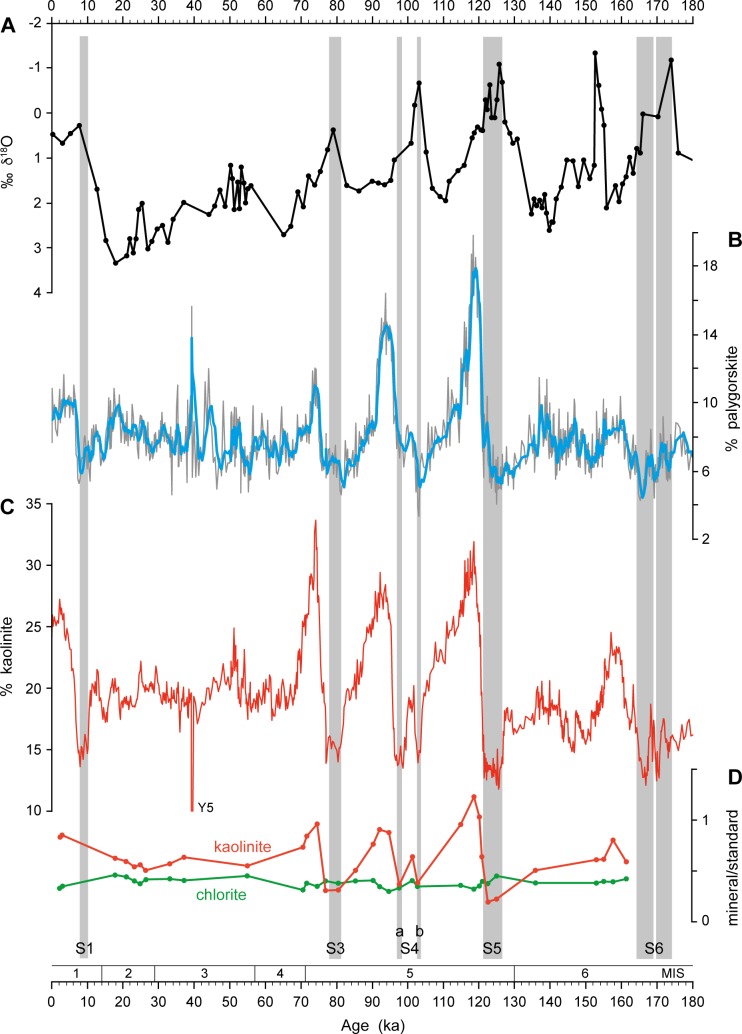
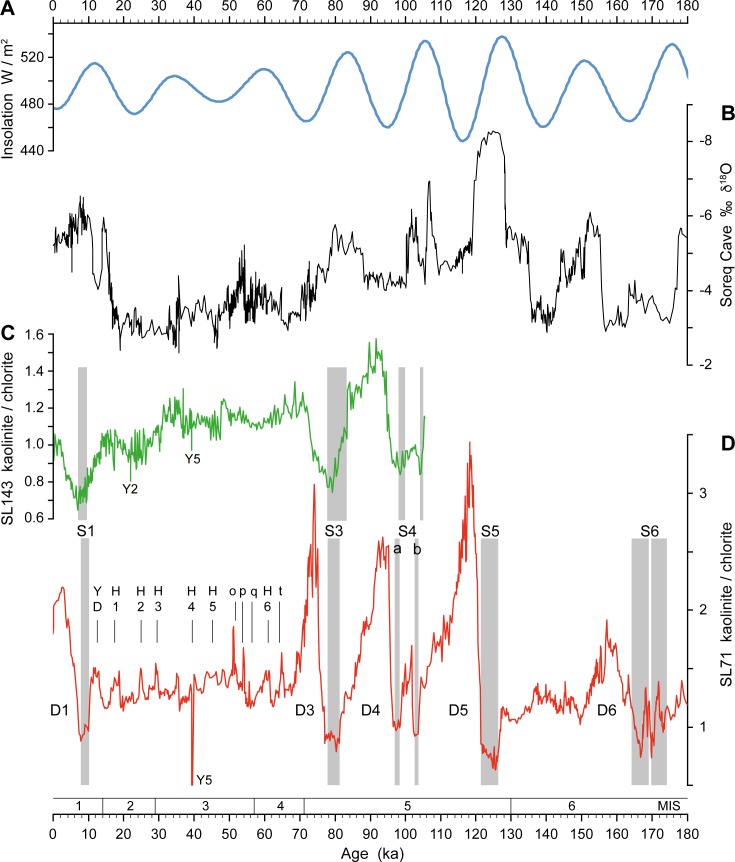
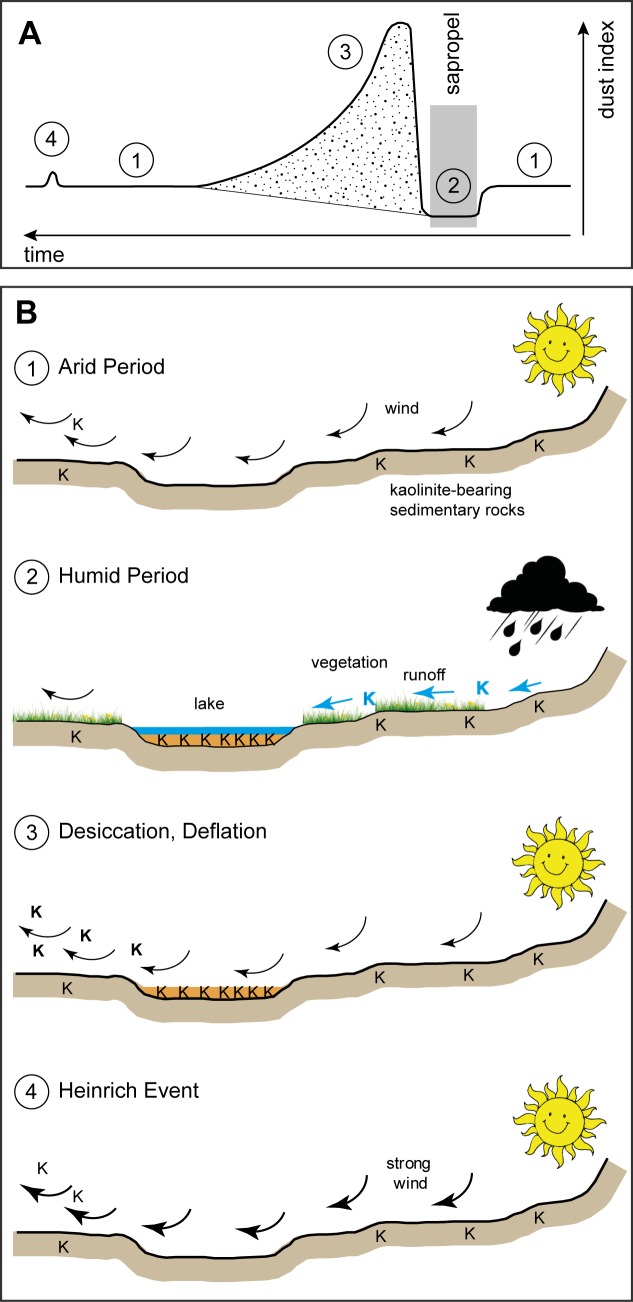
North Africa experienced dramatic changes in hydrology and vegetation during the late Quaternary driven by insolation-induced shifts of the tropical rain belt and further modulated by millennial-scale droughts and vegetation-climate feedbacks. While most past proxy and modelling studies concentrated on the temporal and spatial dynamics of the last African humid period, little is known about the intensities and characteristics of pre-Holocene humid periods. Here we present a high-resolution record of fine-grained eastern Saharan dust from the Eastern Mediterranean Sea spanning the last 180 kyr, which is based on the clay mineral composition of the marine sediments, especially the kaolinite/chlorite ratio. Minimum aeolian kaolinite transport occurred during the African Humid Periods because kaolinite deflation was hampered by increased humidity and vegetation cover. Instead, kaolinite weathering from kaolinite-bearing Cenozoic rocks was stored in lake basins, river beds and soils during these periods. During the subsequent dry phases, fine-grained dust was mobilised from the desiccated lakes, rivers and soils resulting in maximum aeolian uptake and transport of kaolinite. The kaolinite transport decreased again when these sediment sources exhausted. We conclude that the amount of clay-sized dust blown out of the Sahara into the Eastern Mediterranean Sea is proportional to the intensity of the kaolinite weathering and accumulation in soils and lake sediments, and thus to the strength of the preceding humid period. These humid periods provided the windows for the migration of modern humans out of Africa, as postulated previously. The strongest humid period occurred during the Eemian and was followed by two weaker phases centred at ca. 100 ka and ca. 80 ka.
在第四纪晚期,由于日照引起的热带雨带移动,并受到千年尺度干旱和植被 - 气候反馈的进一步调节,北非的水文和植被发生了巨大变化。虽然过去大多数代理和模型研究都集中在最后一个非洲湿润期的时空动态上,但对于全新世前湿润期的强度和特征却知之甚少。在这里,我们展示了一份来自东地中海的、跨越过去18万年的撒哈拉东部细粒尘埃的高分辨率记录,该记录基于海洋沉积物的粘土矿物成分,特别是高岭石/绿泥石比率。在非洲湿润期,风沙搬运的高岭石最少,因为湿度增加和植被覆盖阻碍了高岭石的风蚀。相反,在这些时期,含高岭石的新生代岩石风化产生的高岭石被储存在湖盆、河床和土壤中。在随后的干旱阶段,细粒尘埃从干涸的湖泊、河流和土壤中被 mobilised,导致高岭石的风沙吸收和搬运达到最大值。当这些沉积物来源耗尽时,高岭石的搬运量再次下降。我们得出结论,从撒哈拉吹入东地中海的粘土大小尘埃的数量与高岭石在土壤和湖泊沉积物中的风化和积累强度成正比,因此与之前湿润期的强度成正比。如先前假设的那样,这些湿润期为现代人类迁出非洲提供了窗口。最强的湿润期发生在埃姆期,随后是两个较弱的阶段,分别以约10万年和约8万年为中心。