Department of Biotechnology and Life Sciences, University of Insubria, Varese, Italy.
"The Protein Factory Research Center", Politecnico di Milano and University of Insubria, Varese, Italy.
Microb Cell Fact. 2017 Jan 31;16(1):16. doi: 10.1186/s12934-017-0634-8.
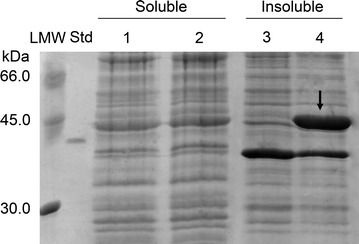
Through functional screening of a fosmid library, generated from a phytopathogen-suppressive soil metagenome, the novel antifungal chitinase-named Chi18H8 and belonging to family 18 glycosyl hydrolases-was previously discovered. The initial extremely low yield of Chi18H8 recombinant production and purification from Escherichia coli cells (21 μg/g cell) limited its characterization, thus preventing further investigation on its biotechnological potential.
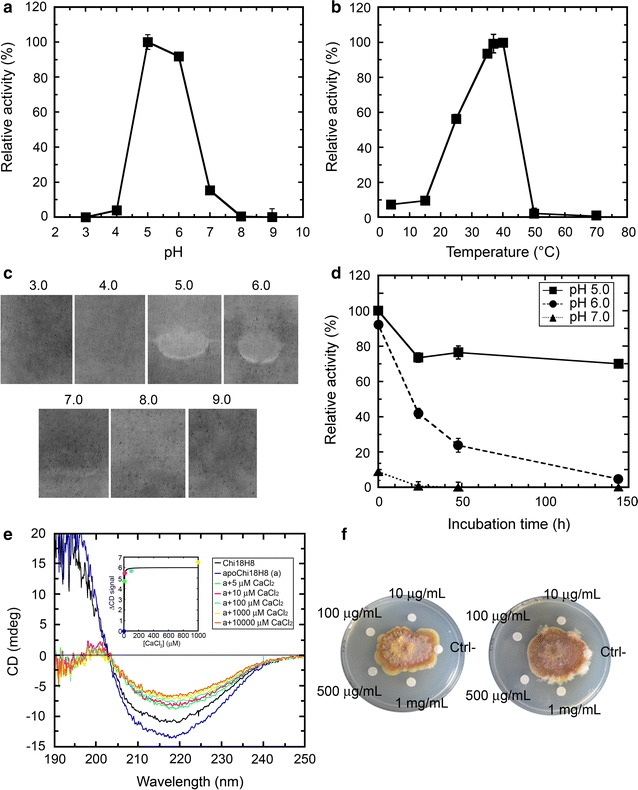
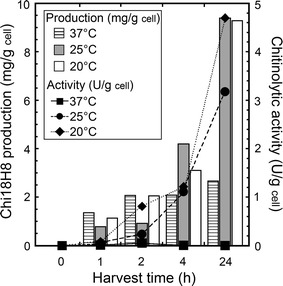
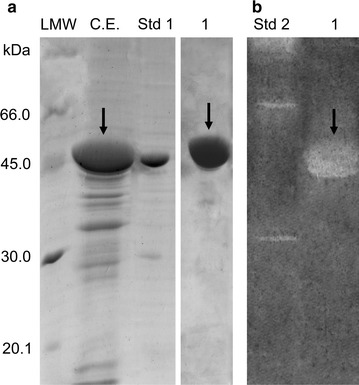
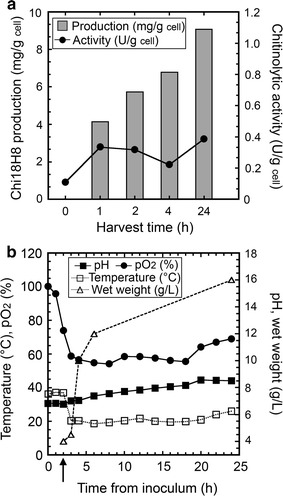
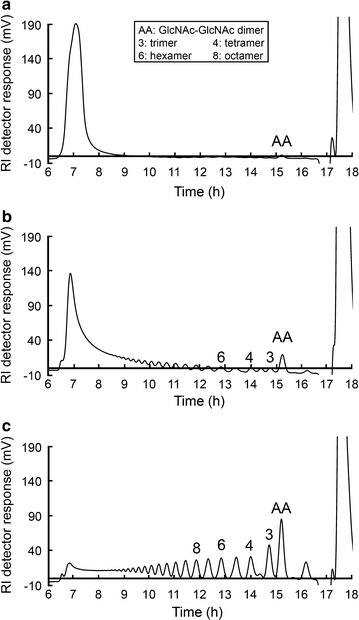
We report on how we succeeded in producing hundreds of milligrams of pure and biologically active Chi18H8 by developing and scaling up to a high-yielding, 30 L bioreactor process, based on a novel method of mild solubilization of E. coli inclusion bodies in lactic acid aqueous solution, coupled with a single step purification by hydrophobic interaction chromatography. Chi18H8 was characterized as a Ca-dependent mesophilic chitobiosidase, active on chitin substrates at acidic pHs and possessing interesting features, such as solvent tolerance, long-term stability in acidic environment and antifungal activity against the phytopathogens Fusarium graminearum and Rhizoctonia solani. Additionally, Chi18H8 was found to operate according to a non-processive endomode of action on a water-soluble chitin-like substrate.
Expression screening of a metagenomic library may allow access to the functional diversity of uncultivable microbiota and to the discovery of novel enzymes useful for biotechnological applications. A persisting bottleneck, however, is the lack of methods for large scale production of metagenome-sourced enzymes from genes of unknown origin in the commonly used microbial hosts. To our knowledge, this is the first report on a novel metagenome-sourced enzyme produced in hundreds-of-milligram amount by recovering the protein in the biologically active form from recombinant E. coli inclusion bodies.
通过对来源于抑病土壤宏基因组的 fosmid 文库进行功能筛选,先前发现了一种新型抗真菌几丁质酶,命名为 Chi18H8,属于家族 18 糖苷水解酶。最初从大肠杆菌细胞中重组生产和纯化 Chi18H8 的产量极低(21μg/g 细胞),限制了其特性的研究,从而阻止了对其生物技术潜力的进一步研究。
我们报告了如何通过开发和扩展到高产的 30L 生物反应器工艺,成功生产数百毫克纯的和具有生物活性的 Chi18H8,该工艺基于一种新型的在乳酸水溶液中温和溶解大肠杆菌包涵体的方法,结合疏水性相互作用色谱的单一纯化步骤。Chi18H8 被表征为一种 Ca 依赖性嗜温性壳二糖酶,在酸性 pH 值下对壳聚糖底物具有活性,并具有有趣的特性,如溶剂耐受性、在酸性环境中的长期稳定性和对植物病原菌禾谷镰刀菌和立枯丝核菌的抗真菌活性。此外,发现 Chi18H8在水溶性壳二糖样底物上遵循非连续的内模式作用。
宏基因组文库的表达筛选可能允许获得不可培养微生物群落的功能多样性,并发现用于生物技术应用的新型酶。然而,一个持续的瓶颈是缺乏从常用微生物宿主中未知来源的基因大规模生产宏基因组来源的酶的方法。据我们所知,这是第一个关于通过从重组大肠杆菌包涵体中以生物活性形式回收蛋白质,以数百毫克的量生产新型宏基因组来源酶的报道。