Wan Wenbin, Jin Lirong, Wang Zigao, Wang Lingyan, Fei Guoqiang, Ye Fanlong, Pan Xiaoli, Wang Changpeng, Zhong Chunjiu
Department of Neurology, Zhongshan Hospital, Fudan University , Shanghai , China.
Department of Neurology, Zhongshan Hospital, Fudan University, Shanghai, China; Department of Neurology, Jingshan Hospital, Fudan University, Shanghai, China.
Front Neurol. 2017 Jan 16;8:1. doi: 10.3389/fneur.2017.00001. eCollection 2017.
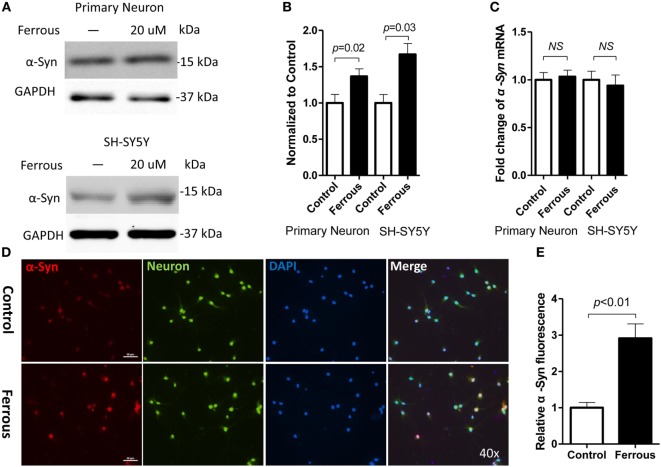
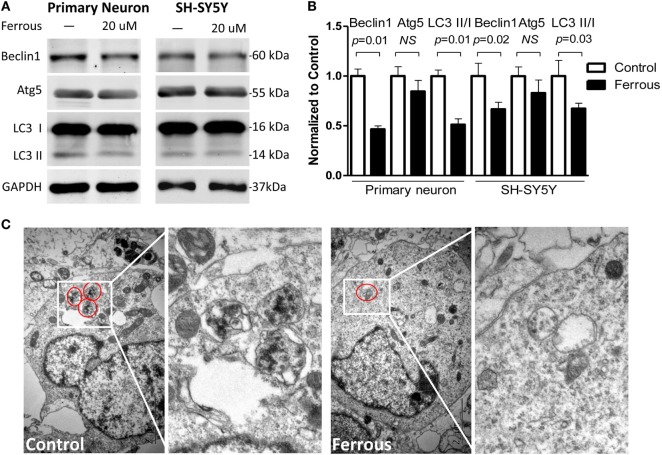
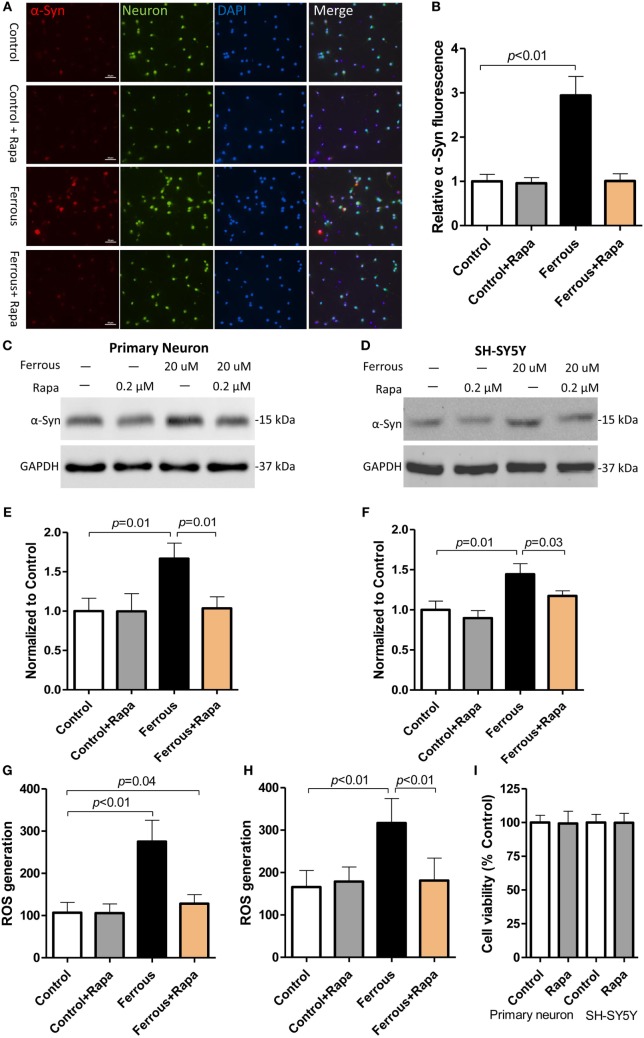
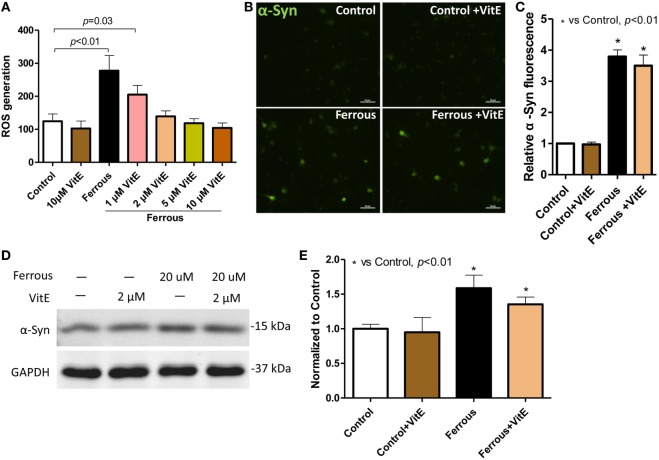
Growing evidence has indicated that iron deposition in the substantia nigra plays an important role in Parkinson's disease (PD). However, the underlying mechanism is still elusive. Using primary dopaminergic neurons and SH-SY5Y cells cultured , we observed that iron loading increased α-synuclein and reactive oxygen species (ROS) levels in these cells but did not affect the intracellular α-synuclein mRNA levels. Furthermore, iron loading significantly downregulated Beclin-1 levels and decreased the ratio of microtubule-associated protein 1 light chain 3 isoforms (LC3 II/LC3 I). However, a significant change in the levels of autophagy-related gene 5 (Atg5) was not observed in either neurons or SH-SY5Y cells after iron treatment. After treatment with rapamycin, the iron loading-induced increase in the α-synuclein level was significantly reversed and ROS generation was alleviated in both cultured neurons and SH-SY5Y cells. These results indicate that the inhibition of autophagy is critical for the pathological alterations in α-synuclein induced by iron loading. Moreover, treatment with vitamin E did not affect the increase in the α-synuclein levels but significantly eliminated the iron-induced ROS production. Together, our study shows that autophagy dysfunction contributes to iron-induced α-synuclein pathology.
越来越多的证据表明,黑质中的铁沉积在帕金森病(PD)中起重要作用。然而,其潜在机制仍不清楚。使用原代多巴胺能神经元和培养的SH-SY5Y细胞,我们观察到铁负荷增加了这些细胞中α-突触核蛋白和活性氧(ROS)水平,但不影响细胞内α-突触核蛋白mRNA水平。此外,铁负荷显著下调了Beclin-1水平,并降低了微管相关蛋白1轻链3亚型的比例(LC3 II/LC3 I)。然而,铁处理后,在神经元或SH-SY5Y细胞中均未观察到自噬相关基因5(Atg5)水平的显著变化。用雷帕霉素处理后,铁负荷诱导的α-突触核蛋白水平升高在培养的神经元和SH-SY5Y细胞中均得到显著逆转,ROS生成也得到缓解。这些结果表明,自噬的抑制对于铁负荷诱导的α-突触核蛋白病理改变至关重要。此外,维生素E处理不影响α-突触核蛋白水平的升高,但显著消除了铁诱导的ROS产生。总之,我们的研究表明自噬功能障碍促成了铁诱导的α-突触核蛋白病理变化。