Department of Bioengineering, Swanson School of Engineering, University of Pittsburgh, Pittsburgh, PA 15261, USA.
Department of Developmental Biology, School of Medicine, University of Pittsburgh, Pittsburgh, PA 15261, USA.
Sci Adv. 2016 Nov 18;2(11):e1600844. doi: 10.1126/sciadv.1600844. eCollection 2016 Nov.
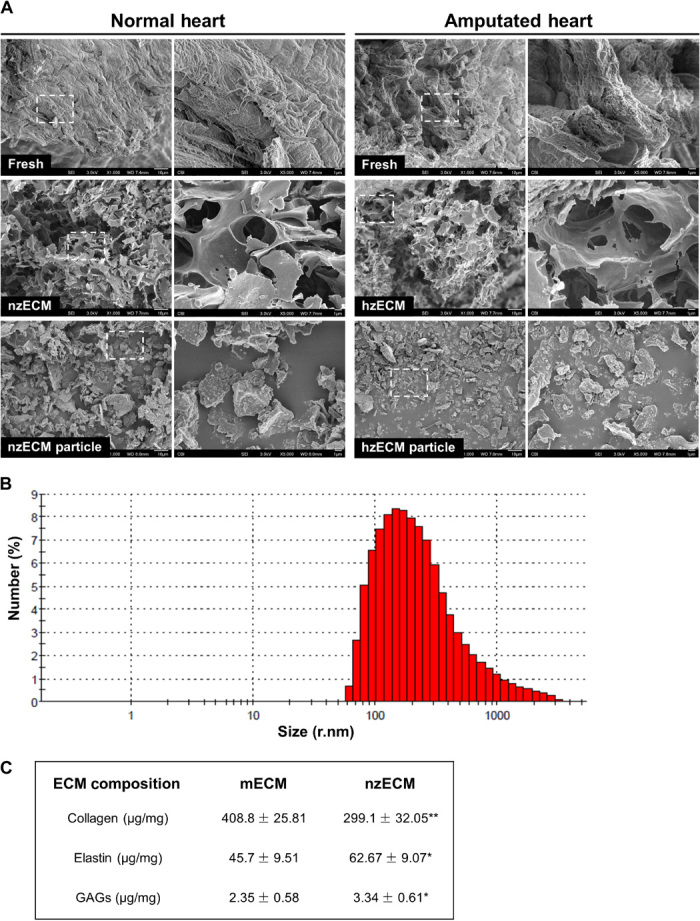
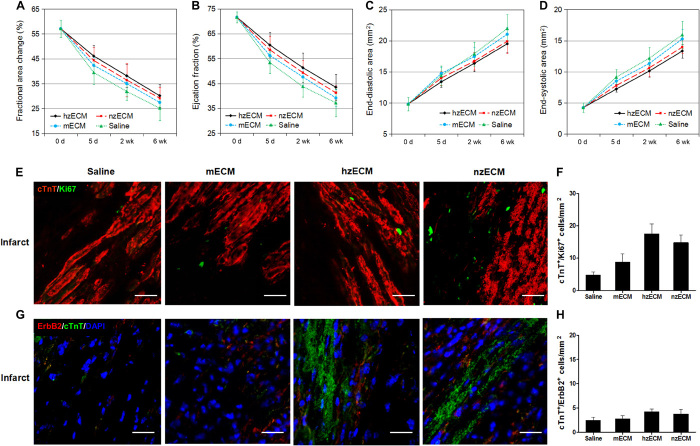
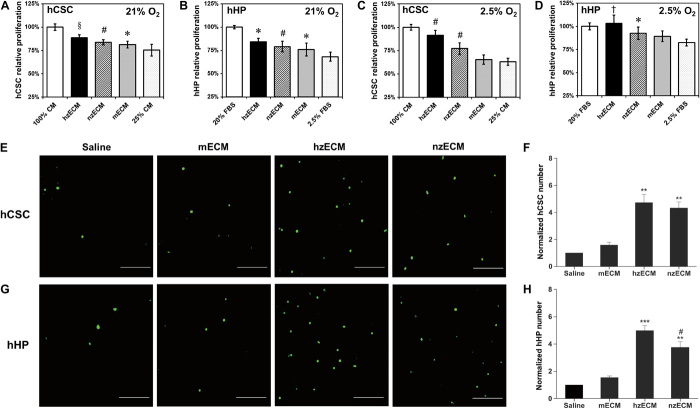
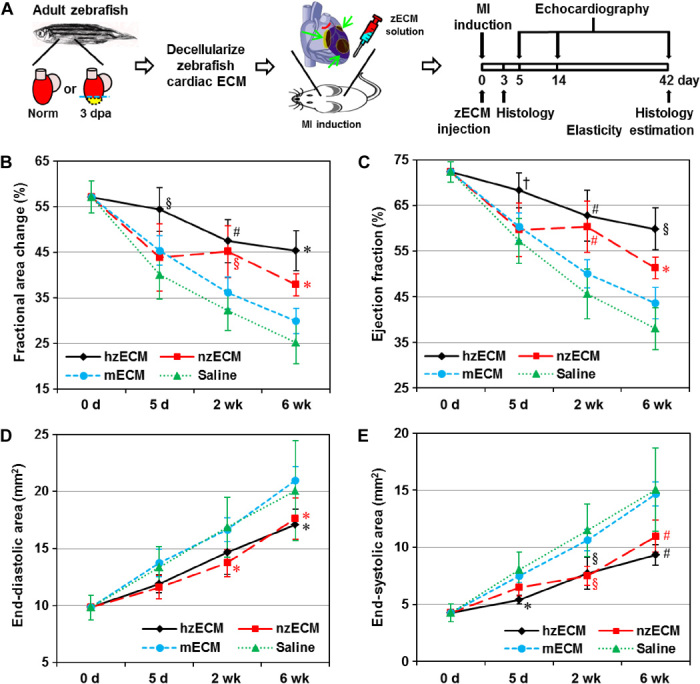
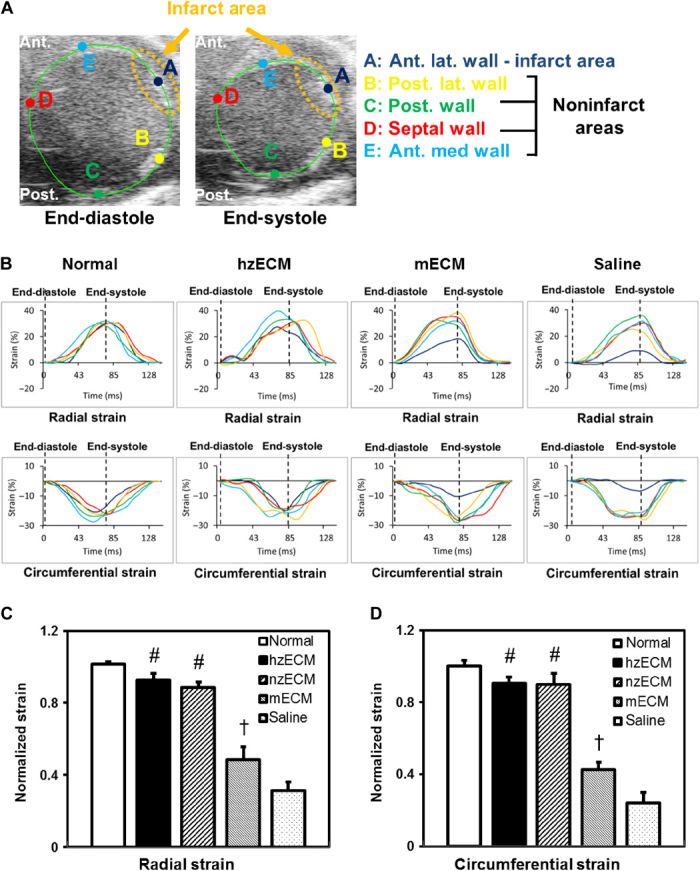
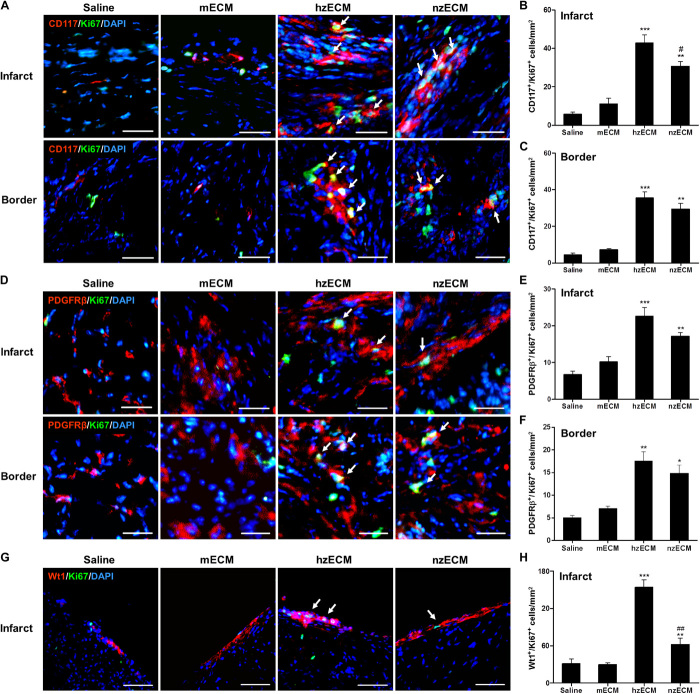
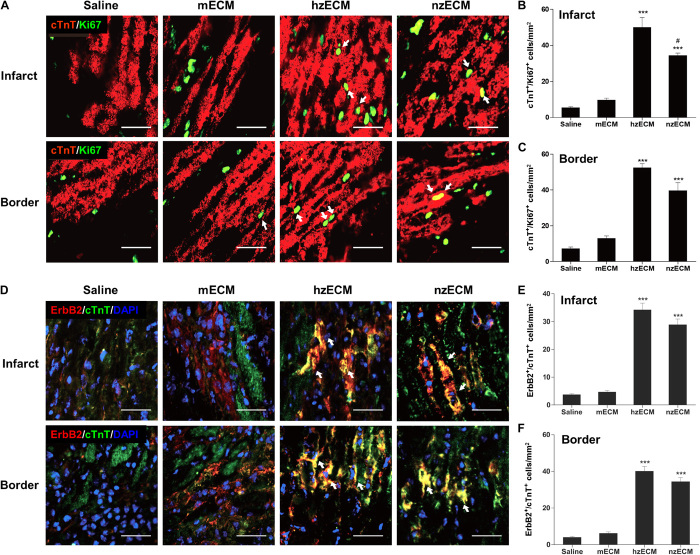
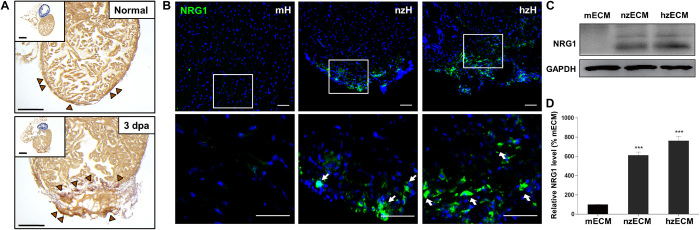
Heart attack is a global health problem that leads to significant morbidity, mortality, and health care burden. Adult human hearts have very limited regenerative capability after injury. However, evolutionarily primitive species generally have higher regenerative capacity than mammals. The extracellular matrix (ECM) may contribute to this difference. Mammalian cardiac ECM may not be optimally inductive for cardiac regeneration because of the fibrotic, instead of regenerative, responses in injured adult mammalian hearts. Given the high regenerative capacity of adult zebrafish hearts, we hypothesize that decellularized zebrafish cardiac ECM (zECM) made from normal or healing hearts can induce mammalian heart regeneration. Using zebrafish and mice as representative species of lower vertebrates and mammals, we show that a single administration of zECM, particularly the healing variety, enables cardiac functional recovery and regeneration of adult mouse heart tissues after acute myocardial infarction. zECM-treated groups exhibit proliferation of the remaining cardiomyocytes and multiple cardiac precursor cell populations and reactivation of ErbB2 expression in cardiomyocytes. Furthermore, zECM exhibits pro-proliferative and chemotactic effects on human cardiac precursor cell populations in vitro. These contribute to the structural preservation and correlate with significantly higher cardiac contractile function, notably less left ventricular dilatation, and substantially more elastic myocardium in zECM-treated hearts than control animals treated with saline or decellularized adult mouse cardiac ECM. Inhibition of ErbB2 activity abrogates beneficial effects of zECM administration, indicating the possible involvement of ErbB2 signaling in zECM-mediated regeneration. This study departs from conventional focuses on mammalian ECM and introduces a new approach for cardiac tissue regeneration.
心脏病发作是一个全球性的健康问题,导致了重大的发病率、死亡率和医疗保健负担。成人心脏在受伤后再生能力非常有限。然而,进化上较为原始的物种通常比哺乳动物具有更高的再生能力。细胞外基质 (ECM) 可能是造成这种差异的原因之一。哺乳动物的心脏 ECM 可能不能很好地诱导心脏再生,因为受伤的成年哺乳动物心脏会产生纤维化反应,而不是再生反应。鉴于成年斑马鱼心脏具有很高的再生能力,我们假设从正常或愈合心脏中制备的脱细胞斑马鱼心脏 ECM (zECM) 可以诱导哺乳动物心脏再生。我们使用斑马鱼和小鼠作为低等脊椎动物和哺乳动物的代表物种,证明单次给予 zECM,特别是愈合型 zECM,可使急性心肌梗死后的成年小鼠心脏组织的心脏功能得到恢复和再生。zECM 处理组表现出剩余心肌细胞的增殖和多种心脏前体细胞群,并重新激活心肌细胞中的 ErbB2 表达。此外,zECM 在体外对人心脏前体细胞群表现出促增殖和趋化作用。这些作用有助于结构的保存,并与 zECM 处理组的心脏比用生理盐水或脱细胞成年小鼠心脏 ECM 处理的对照组具有显著更高的心脏收缩功能相关,特别是左心室扩张更小,弹性心肌更多。抑制 ErbB2 活性会消除 zECM 给药的有益作用,表明 ErbB2 信号可能参与 zECM 介导的再生。这项研究偏离了传统的关注哺乳动物 ECM 的方法,为心脏组织再生引入了一种新方法。