Petta Salvatore
Sezione di Gastroenterologia, Dipartimento Biomedico di Medicina Interna e Specialistica, Piazza delle Cliniche, 2, 90127 Palermo, Italy.
J Adv Res. 2017 Mar;8(2):161-168. doi: 10.1016/j.jare.2016.06.001. Epub 2016 Jun 18.
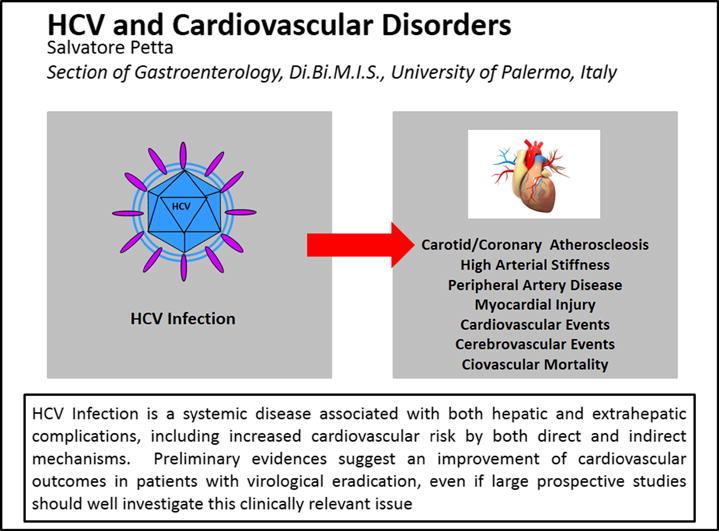
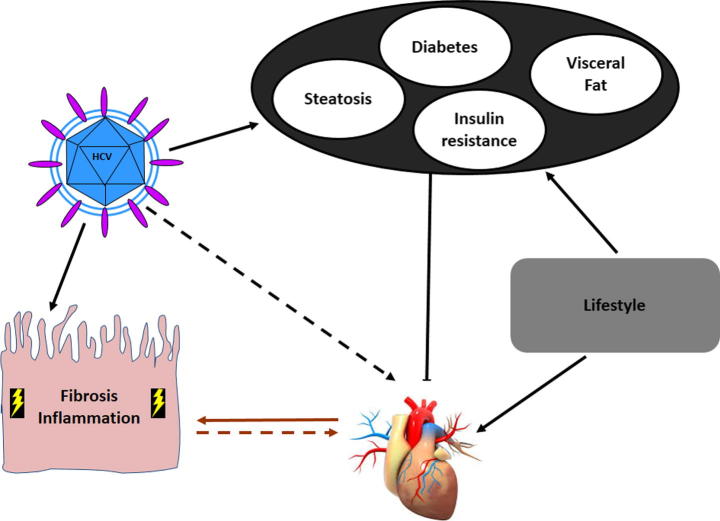
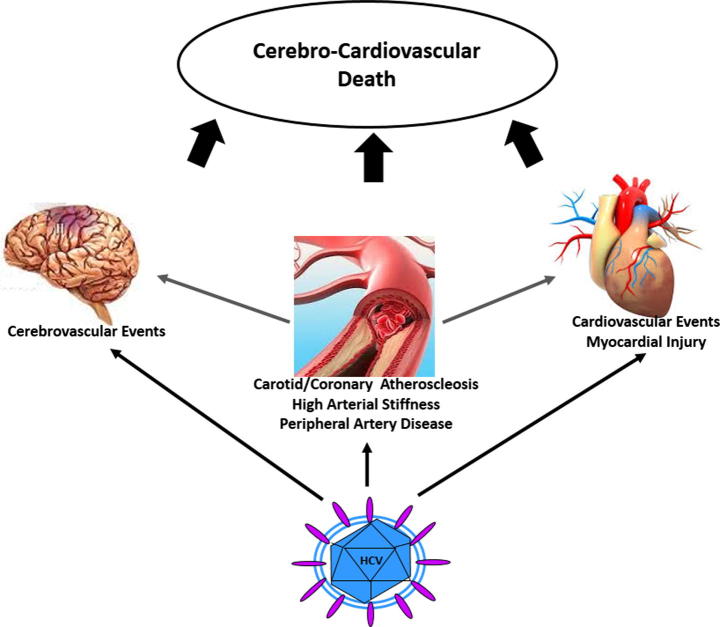
Chronic hepatitis C virus (HCV) infection is a systemic disease that leads to increased risks of cirrhosis and its complications, as well as extrahepatic disturbances, including immune-related disorders and metabolic alterations such as insulin resistance and steatosis. Recent accumulating evidence suggests that HCV infection can increase cardiovascular risk, and that viral eradication can improve cardiovascular outcomes in the clinical setting. These data are strengthened by evidence identifying potential mechanisms (in)directly linking HCV infection to vascular damage. However, the high prevalence of both HCV infection and cardiovascular alterations, as well as the presence of contrasting results not identifying any association between HCV infection and cardiovascular dysfunction, provides uncertainty about a direct association of HCV infection with cardiovascular risk. Further studies are needed to clarify definitively the role of HCV infection in cardiovascular alterations, as well as the impact of viral eradication on cardiovascular outcomes. These features are now more attractive, considering the availability of new, safe, and very effective interferon-free antiviral agents for the treatment of HCV infection. This review aims to discuss carefully available data on the relationship between HCV infection and cardiovascular risk.
慢性丙型肝炎病毒(HCV)感染是一种全身性疾病,会导致肝硬化及其并发症的风险增加,以及肝外紊乱,包括免疫相关疾病和代谢改变,如胰岛素抵抗和脂肪变性。最近越来越多的证据表明,HCV感染会增加心血管疾病风险,并且在临床环境中病毒根除可以改善心血管结局。确定将HCV感染与血管损伤(直接或间接)联系起来的潜在机制的证据进一步支持了这些数据。然而,HCV感染和心血管改变的高患病率,以及存在未发现HCV感染与心血管功能障碍之间存在任何关联的矛盾结果,使得HCV感染与心血管风险之间的直接关联存在不确定性。需要进一步的研究来明确HCV感染在心血管改变中的作用,以及病毒根除对心血管结局的影响。考虑到现在有用于治疗HCV感染的新型、安全且非常有效的无干扰素抗病毒药物,这些特点现在更具吸引力。本综述旨在仔细讨论关于HCV感染与心血管风险之间关系的现有数据。