Faculty of Physics, University of Vienna , Boltzmanngasse 5, A-1090 Vienna, Austria.
Dipartimento di Fisica, Sapienza-Università di Roma , Piazzale A. Moro 5, 00185 Roma, Italy.
ACS Nano. 2017 Feb 28;11(2):2094-2102. doi: 10.1021/acsnano.6b08287. Epub 2017 Feb 10.
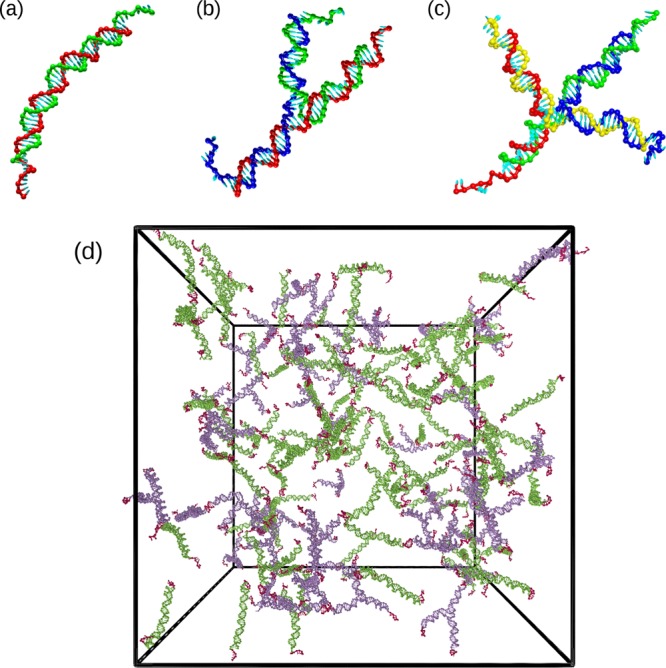
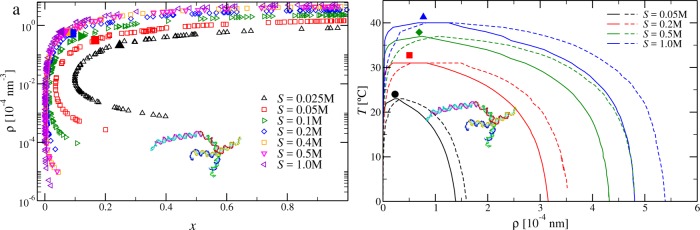
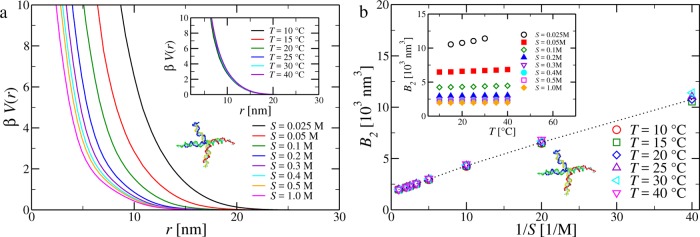
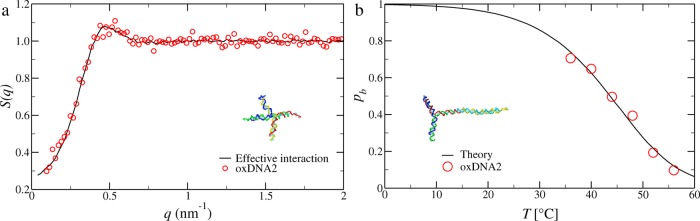
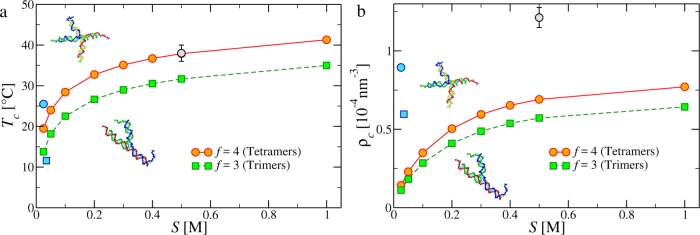
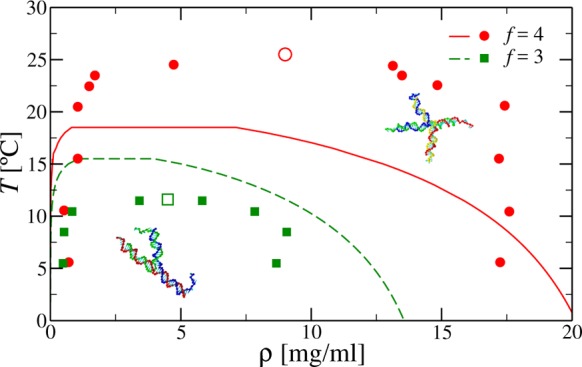
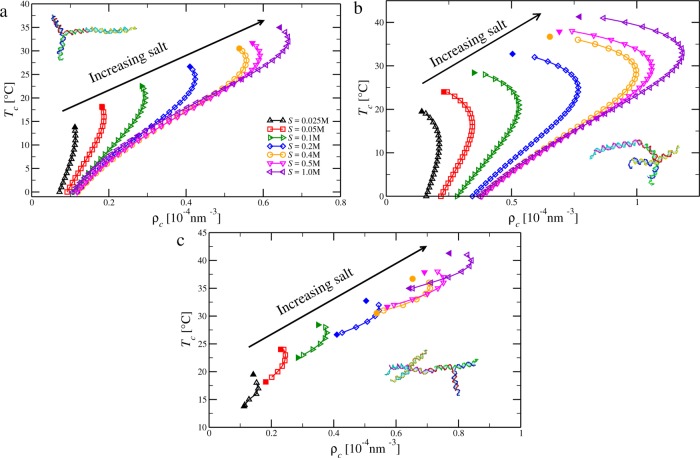
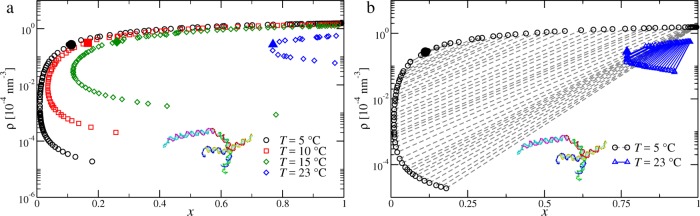
We present a numerical/theoretical approach to efficiently evaluate the phase diagram of self-assembling DNA nanostars. Combining input information based on a realistic coarse-grained DNA potential with the Wertheim association theory, we derive a parameter-free thermodynamic description of these systems. We apply this method to investigate the phase behavior of single components and mixtures of DNA nanostars with different numbers of sticky arms, elucidating the role of the system functionality and of salt concentration. Specifically, we evaluate the propensity to demix, the gas-liquid phase boundaries and the location of the critical points. The predicted critical parameters compare very well with existing experimental results for the available compositions. The approach developed here is very general, easily extensible to other all-DNA systems, and provides guidance for future experiments.
我们提出了一种数值/理论方法,可有效地评估自组装 DNA 纳米星的相图。通过将基于实际粗粒 DNA 势的输入信息与 Wertheim 缔合理论相结合,我们推导出了这些系统的无参数热力学描述。我们应用该方法研究了不同粘性臂数目的 DNA 纳米星的单组分和混合物的相行为,阐明了系统功能和盐浓度的作用。具体而言,我们评估了离析的倾向、气-液相界限和临界点的位置。预测的临界参数与现有实验结果对于可用组成非常吻合。这里开发的方法非常通用,易于扩展到其他全 DNA 系统,并为未来的实验提供了指导。