Mechanical and Aerospace Engineering, University of California at Los Angeles, Los Angeles, CA, 90095, USA.
Bioengineering, University of California at Los Angeles, Los Angeles, CA, 90095, USA.
Nat Commun. 2024 Mar 1;15(1):1915. doi: 10.1038/s41467-024-46266-z.
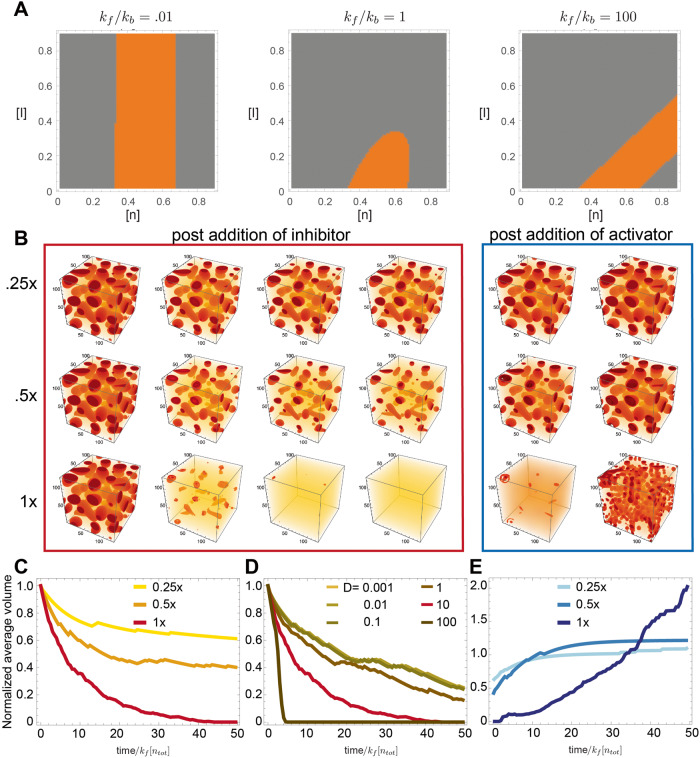
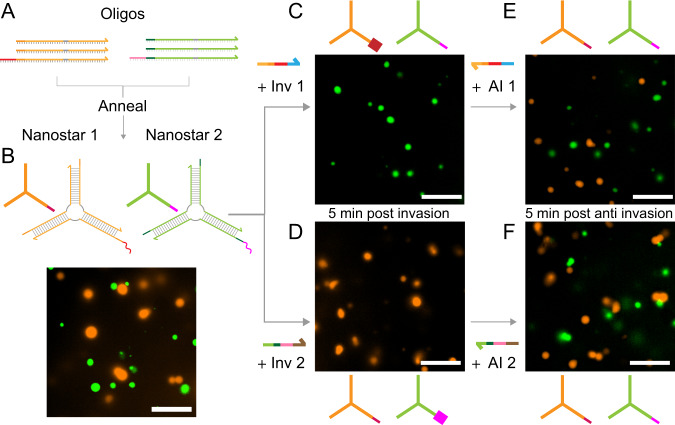
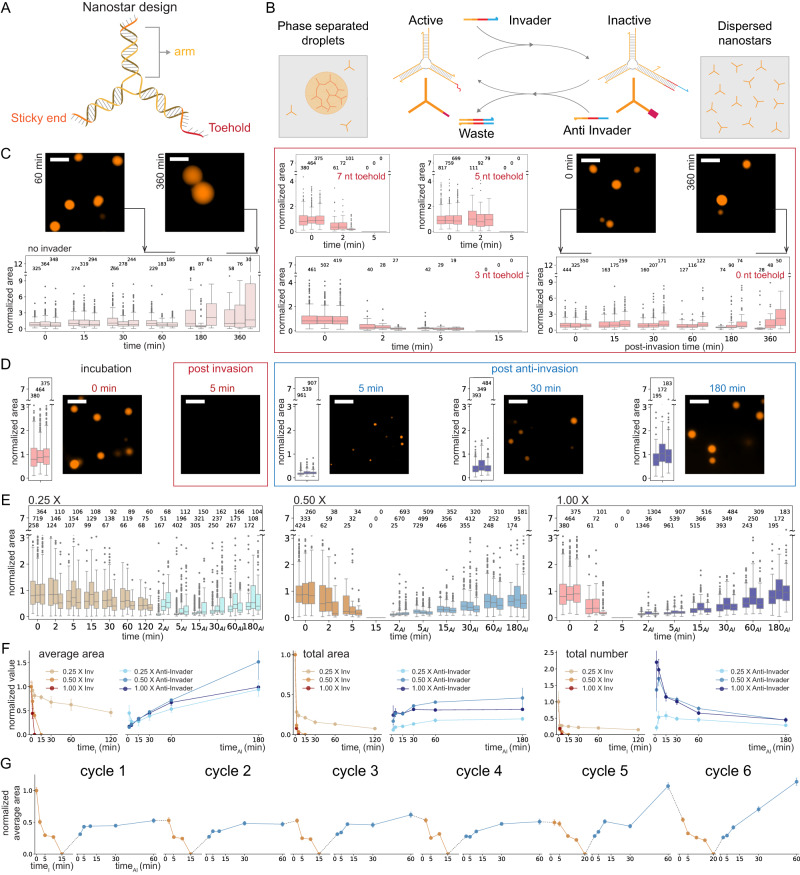
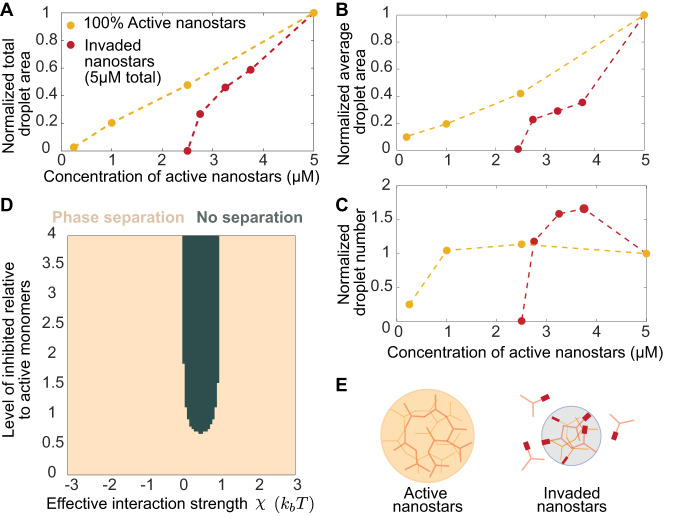
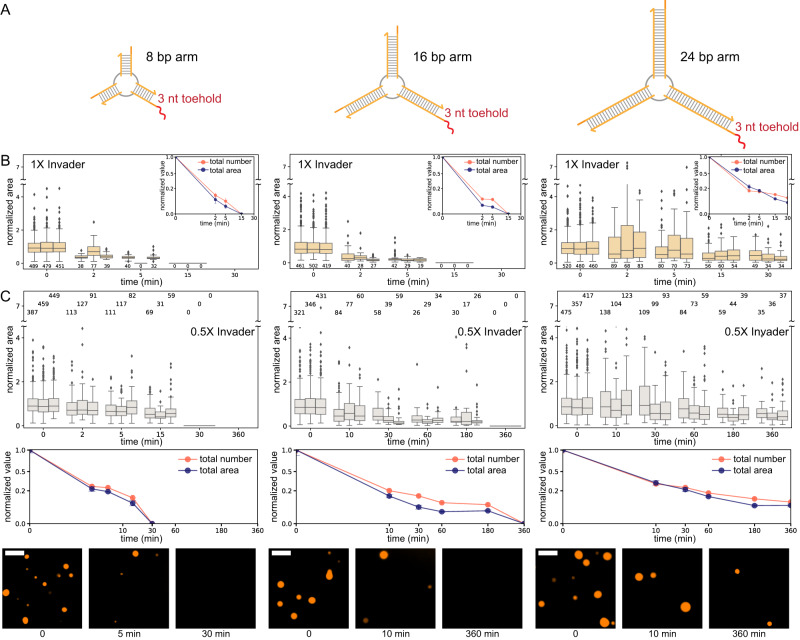
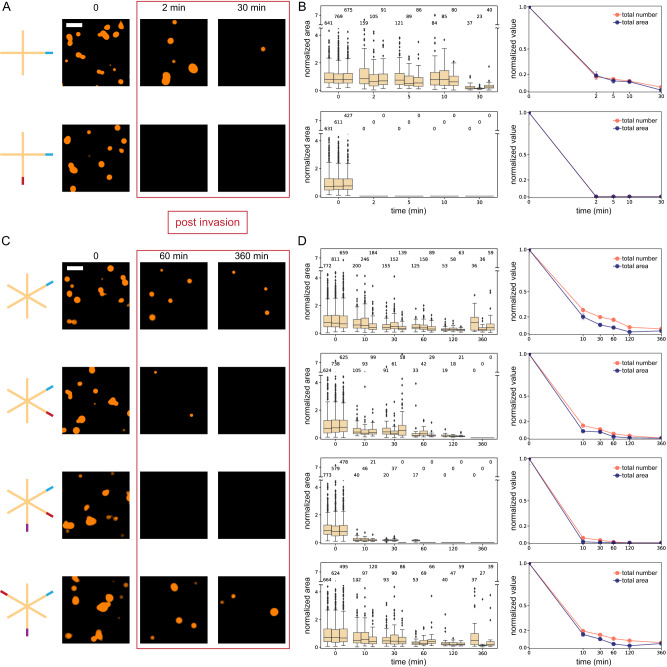
Artificial biomolecular condensates are emerging as a versatile approach to organize molecular targets and reactions without the need for lipid membranes. Here we ask whether the temporal response of artificial condensates can be controlled via designed chemical reactions. We address this general question by considering a model problem in which a phase separating component participates in reactions that dynamically activate or deactivate its ability to self-attract. Through a theoretical model we illustrate the transient and equilibrium effects of reactions, linking condensate response and reaction parameters. We experimentally realize our model problem using star-shaped DNA motifs known as nanostars to generate condensates, and we take advantage of strand invasion and displacement reactions to kinetically control the capacity of nanostars to interact. We demonstrate reversible dissolution and growth of DNA condensates in the presence of specific DNA inputs, and we characterize the role of toehold domains, nanostar size, and nanostar valency. Our results will support the development of artificial biomolecular condensates that can adapt to environmental changes with prescribed temporal dynamics.
人工生物分子凝聚物作为一种将分子靶标和反应组织起来的多功能方法正在出现,而无需使用脂质膜。在这里,我们询问是否可以通过设计化学反应来控制人工凝聚物的时间响应。我们通过考虑一个模型问题来解决这个一般性问题,其中相分离成分参与动态激活或失活其自我吸引能力的反应。通过理论模型,我们说明了反应的瞬态和平衡效应,将凝聚物响应与反应参数联系起来。我们使用称为纳米星的星形 DNA 基序来实现我们的模型问题,从而实验上实现了凝聚物的产生,并利用链入侵和置换反应来动态控制纳米星相互作用的能力。我们证明了在特定 DNA 输入存在下 DNA 凝聚物的可逆溶解和生长,并且我们表征了衔接子域、纳米星尺寸和纳米星价态的作用。我们的结果将支持开发能够以规定的时间动态适应环境变化的人工生物分子凝聚物。