Krezanoski Paul J, Campbell Jeffrey I, Santorino Data, Bangsberg David R
Department of Medicine, Zuckerberg San Francisco General Hospital, University of California, San Francisco, San Francisco, California, United States of America.
Department of Pediatrics, Zuckerberg San Francisco General Hospital, University of California, San Francisco, San Francisco, California, United States of America.
PLoS One. 2017 Feb 3;12(2):e0168116. doi: 10.1371/journal.pone.0168116. eCollection 2017.
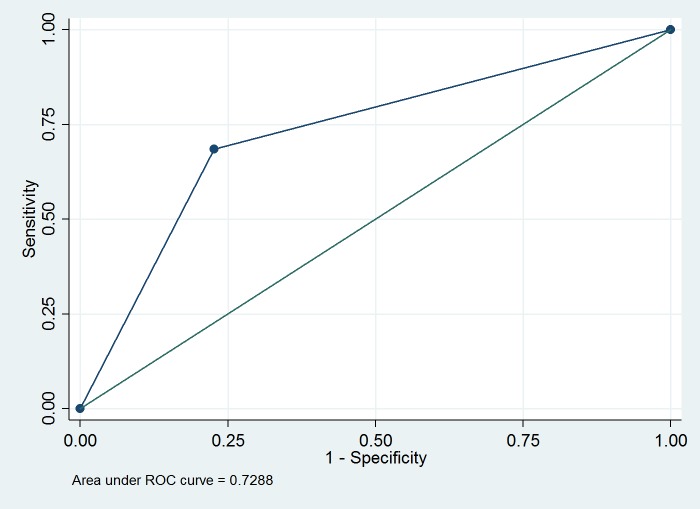
Malaria is a serious health concern for three billion people worldwide, killing nearly 600,000 people a year. Insecticide-treated bednets (ITNs) are an effective and valuable tool for preventing malaria and hundreds of millions of ITNs have been distributed throughout sub-Saharan Africa. Nevertheless, our current methods for measuring ITN use are inadequate to inform malaria prevention programs. The most common method, self-reported ITN use, is limited by 1) social desirability, 2) recall and 3) sampling bias. An acceptable objective and longitudinal method of assessing adherence to ITN use would improve our ability to better understand the determinants of ITN use and design more effective malaria prevention interventions. We describe the development and initial proof-of-concept validity testing of an ITN adherence monitoring tool called SmartNet. SmartNet uses conductive thread interwoven into an ITN and a microcontroller to detect the state of the ITN. We tested SmartNet among five volunteers using the device over their beds in Boston, USA for two weeks with the goal of evaluating device reliability, accuracy and acceptability to inform future device improvements. The device recorded data for 63.1% (35172/55711) of installed two-minute time intervals, with 97.3% (19990/20539) of the recording errors relating to battery failures. Overall, the device was 71.7% (25204/35172) accurate in determining the state of the ITN (whether it was folded up or unfurled) and performed significantly better at detecting an unfurled ITN than a folded ITN, 77.3% versus 68.4% (p<0.001). Participants noted no significant acceptability concerns and all participants felt SmartNet was easy or very easy to use. SmartNet is a novel approach to objectively measure ITN adherence over time. Our results suggest a variety of device improvements to both extend reliability and improve performance of SmartNet prior to deployment in a malaria-endemic setting.
疟疾是全球30亿人的严重健康问题,每年导致近60万人死亡。经杀虫剂处理的蚊帐(ITN)是预防疟疾的有效且有价值的工具,数亿顶ITN已在撒哈拉以南非洲地区分发。然而,我们目前测量ITN使用情况的方法不足以指导疟疾预防计划。最常见的方法,即自我报告的ITN使用情况,受到以下因素的限制:1)社会期望;2)回忆偏差;3)抽样偏差。一种可接受的客观且纵向的评估ITN使用依从性的方法将提高我们更好地理解ITN使用决定因素并设计更有效的疟疾预防干预措施的能力。我们描述了一种名为SmartNet的ITN依从性监测工具的开发及初步概念验证有效性测试。SmartNet使用编织在ITN中的导电丝和一个微控制器来检测ITN的状态。我们在美国波士顿让五名志愿者在他们的床上使用该设备两周,以测试SmartNet,目的是评估设备的可靠性、准确性和可接受性,为未来设备改进提供依据。该设备在安装的两分钟时间间隔中记录了63.1%(35172/55711)的数据,其中97.3%(19990/20539)的记录错误与电池故障有关。总体而言,该设备在确定ITN状态(是否折叠或展开)方面的准确率为71.7%(25204/35172),在检测展开的ITN方面的表现明显优于折叠的ITN,分别为77.3%和68.4%(p<0.001)。参与者没有提出重大的可接受性问题,所有参与者都认为SmartNet易于或非常易于使用。SmartNet是一种客观测量ITN随时间使用依从性的新方法。我们的结果表明,在部署到疟疾流行地区之前,对该设备进行各种改进以提高其可靠性和性能。