Seiler Jana, Breinig Marco, Caudron-Herger Maïwen, Polycarpou-Schwarz Maria, Boutros Michael, Diederichs Sven
Division of RNA Biology & Cancer, German Cancer Research Center (DKFZ), Heidelberg, Germany.
Division of Signaling and Functional Genomics, German Cancer Research Center (DKFZ), Heidelberg, Germany.
Nucleic Acids Res. 2017 May 19;45(9):5458-5469. doi: 10.1093/nar/gkx076.
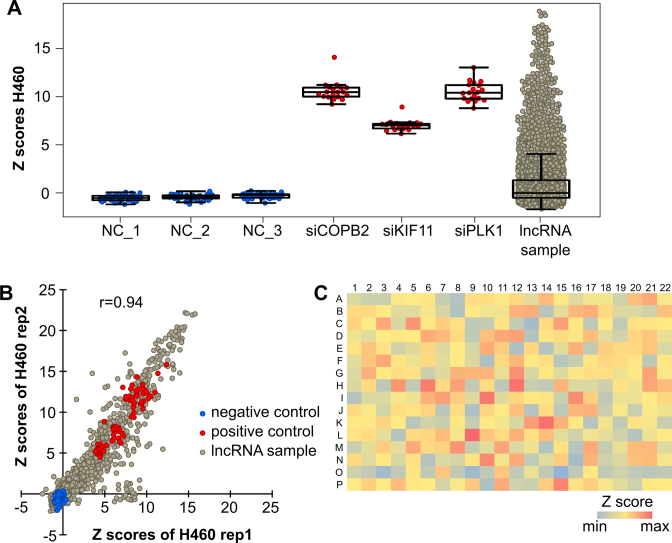
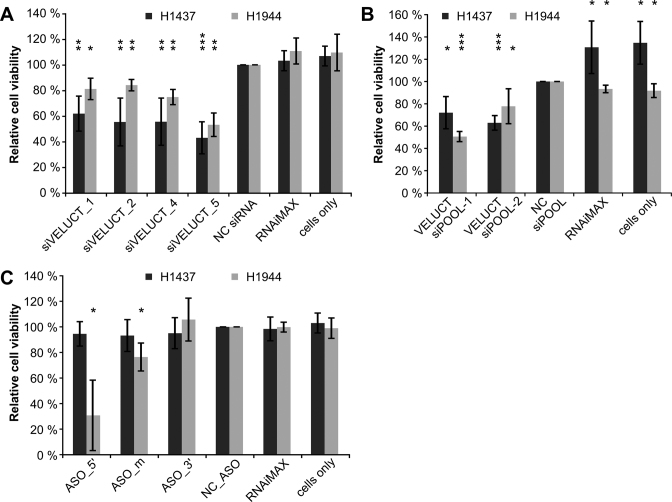
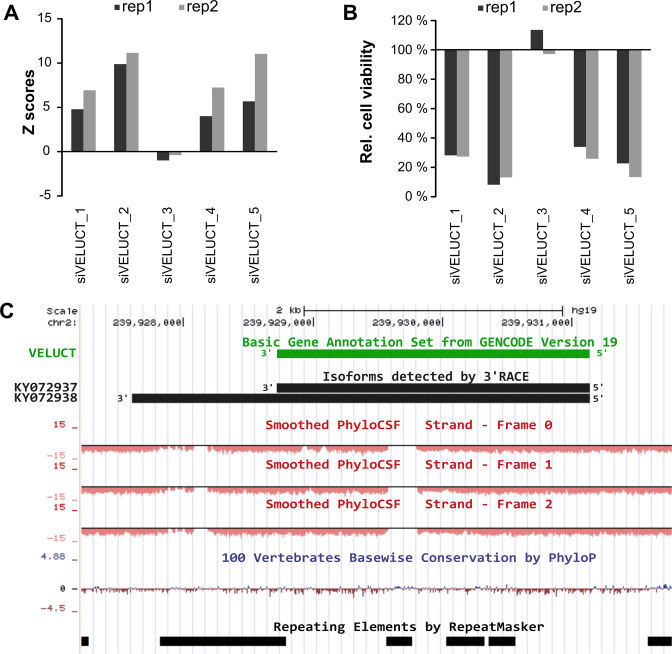
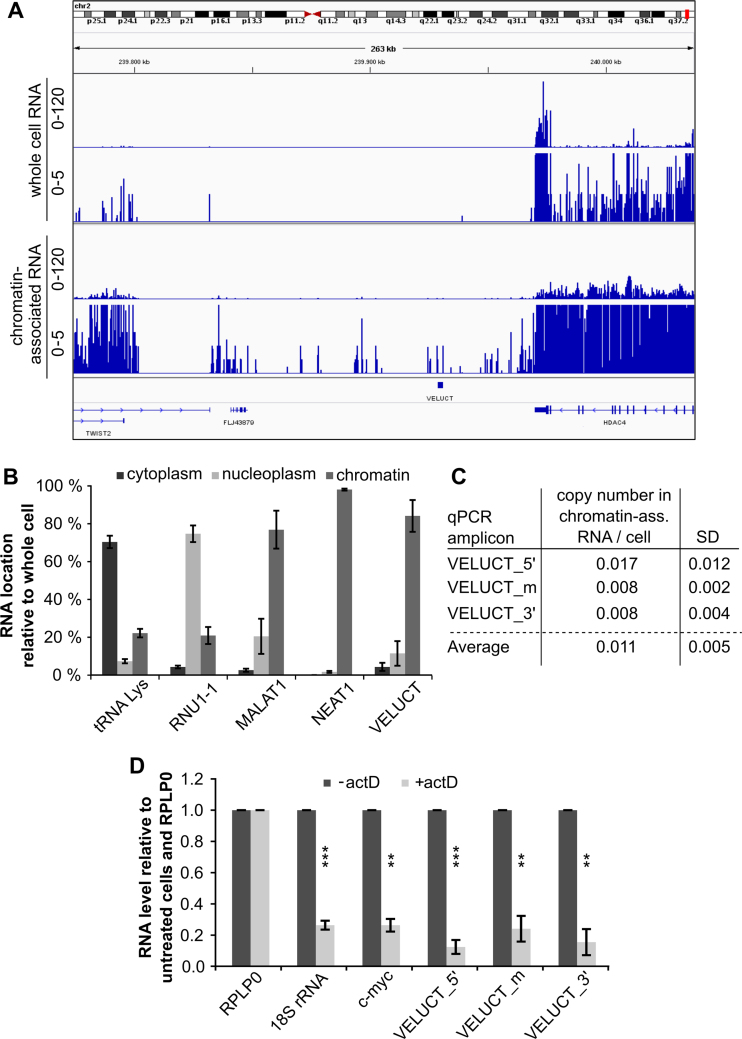
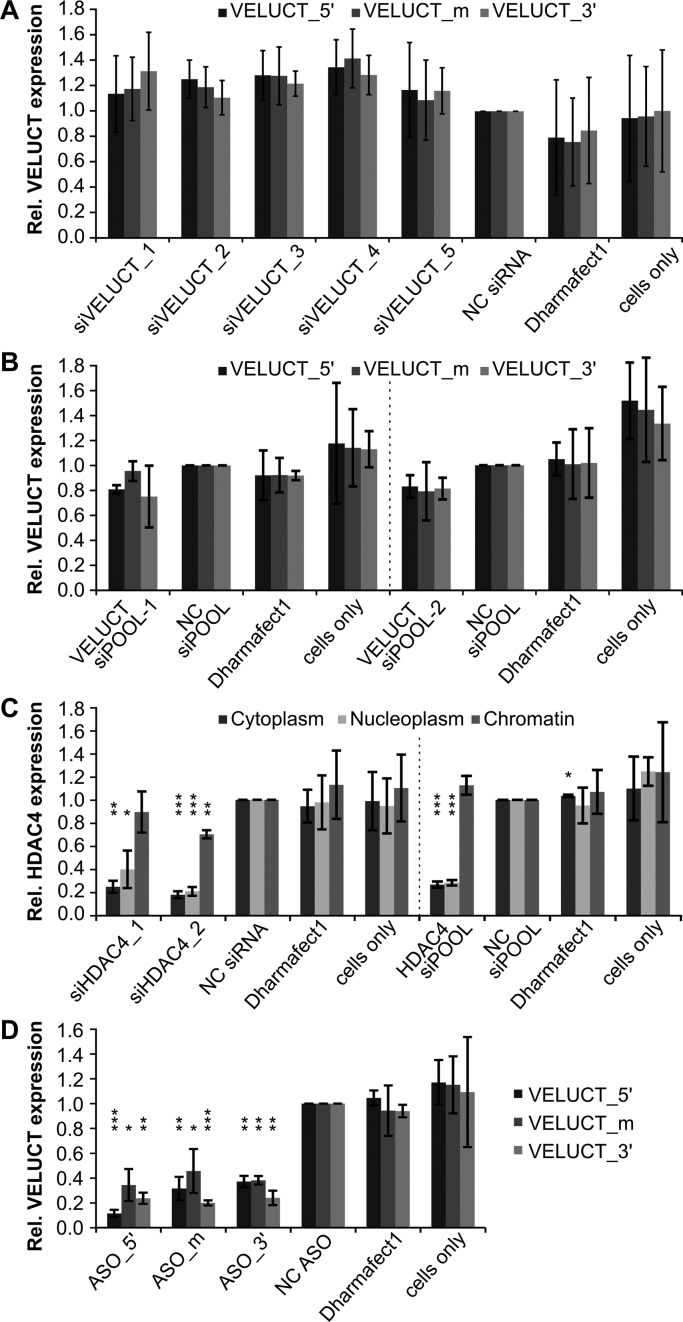
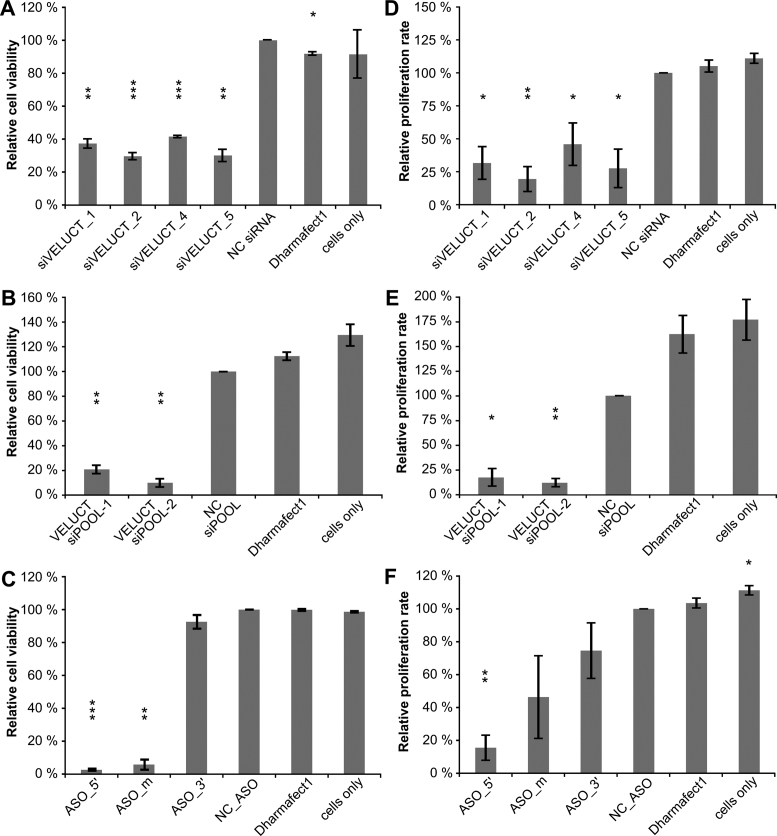
Little is known about the function of most non-coding RNAs (ncRNAs). The majority of long ncRNAs (lncRNAs) is expressed at very low levels and it is a matter of intense debate whether these can be of functional relevance. Here, we identified lncRNAs regulating the viability of lung cancer cells in a high-throughput RNA interference screen. Based on our previous expression profiling, we designed an siRNA library targeting 638 lncRNAs upregulated in human cancer. In a functional siRNA screen analyzing the viability of lung cancer cells, the most prominent hit was a novel lncRNA which we called Viability Enhancing LUng Cancer Transcript (VELUCT). In silico analyses confirmed the non-coding properties of the transcript. Surprisingly, VELUCT was below the detection limit in total RNA from NCI-H460 cells by RT-qPCR as well as RNA-Seq, but was robustly detected in the chromatin-associated RNA fraction. It is an extremely low abundant lncRNA with an RNA copy number of less than one copy per cell. Blocking transcription with actinomycin D revealed that VELUCT RNA was highly unstable which may partially explain its low steady-state concentration. Despite its extremely low abundance, loss-of-function of VELUCT with three independent experimental approaches in three different lung cancer cell lines led to a significant reduction of cell viability: Next to four individual siRNAs, also two complex siPOOLs as well as two antisense oligonucleotides confirmed the strong and specific phenotype. In summary, the extremely low abundant lncRNA VELUCT is essential for regulation of cell viability in several lung cancer cell lines. Hence, VELUCT is the first example for a lncRNA that is expressed at a very low level, but has a strong loss-of-function phenotype. Thus, our study proves that at least individual low-abundant lncRNAs can play an important functional role.
大多数非编码RNA(ncRNAs)的功能鲜为人知。大多数长链非编码RNA(lncRNAs)表达水平极低,其是否具有功能相关性仍存在激烈争论。在此,我们在高通量RNA干扰筛选中鉴定出调控肺癌细胞活力的lncRNAs。基于我们之前的表达谱分析,我们设计了一个针对在人类癌症中上调的638个lncRNAs的siRNA文库。在分析肺癌细胞活力的功能性siRNA筛选中,最显著的发现是一种新型lncRNA,我们将其命名为肺癌活力增强转录本(VELUCT)。计算机分析证实了该转录本的非编码特性。令人惊讶的是,通过RT-qPCR以及RNA测序,VELUCT在NCI-H460细胞的总RNA中低于检测限,但在与染色质相关的RNA组分中能被可靠检测到。它是一种极其低丰度的lncRNA,每个细胞的RNA拷贝数少于一个。用放线菌素D阻断转录表明VELUCT RNA高度不稳定这可能部分解释了其低稳态浓度。尽管其丰度极低,但在三种不同的肺癌细胞系中用三种独立的实验方法使VELUCT功能丧失导致细胞活力显著降低:除了四个单独的siRNA外,两个复合siPOOL以及两个反义寡核苷酸也证实了这种强烈且特异的表型。总之,极其低丰度的lncRNA VELUCT对于几种肺癌细胞系中细胞活力的调节至关重要。因此,VELUCT是第一个表达水平极低但具有强烈功能丧失表型的lncRNA实例。所以,我们的研究证明至少个别低丰度lncRNAs可以发挥重要的功能作用。