Jafari Abbas, Qanie Diyako, Andersen Thomas L, Zhang Yuxi, Chen Li, Postert Benno, Parsons Stuart, Ditzel Nicholas, Khosla Sundeep, Johansen Harald Thidemann, Kjærsgaard-Andersen Per, Delaisse Jean-Marie, Abdallah Basem M, Hesselson Daniel, Solberg Rigmor, Kassem Moustapha
Department of Cellular and Molecular Medicine, Danish Stem Cell Center (DanStem), University of Copenhagen, 2200 Copenhagen, Denmark; Molecular Endocrinology & Stem Cell Research Unit (KMEB), Department of Endocrinology and Metabolism, Odense University Hospital & University of Southern Denmark, J.B. Winsloewsvej 25, 1st Floor, 5000 Odense C, Denmark.
Molecular Endocrinology & Stem Cell Research Unit (KMEB), Department of Endocrinology and Metabolism, Odense University Hospital & University of Southern Denmark, J.B. Winsloewsvej 25, 1st Floor, 5000 Odense C, Denmark.
Stem Cell Reports. 2017 Feb 14;8(2):373-386. doi: 10.1016/j.stemcr.2017.01.003. Epub 2017 Feb 2.
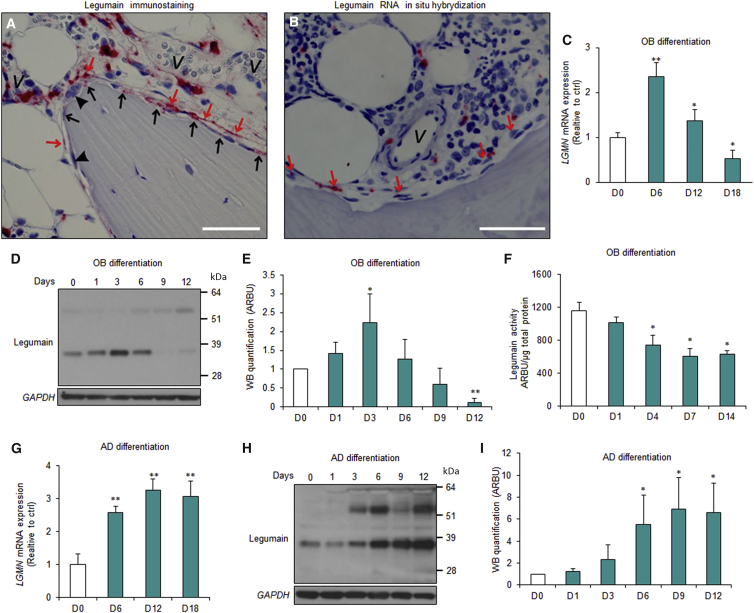
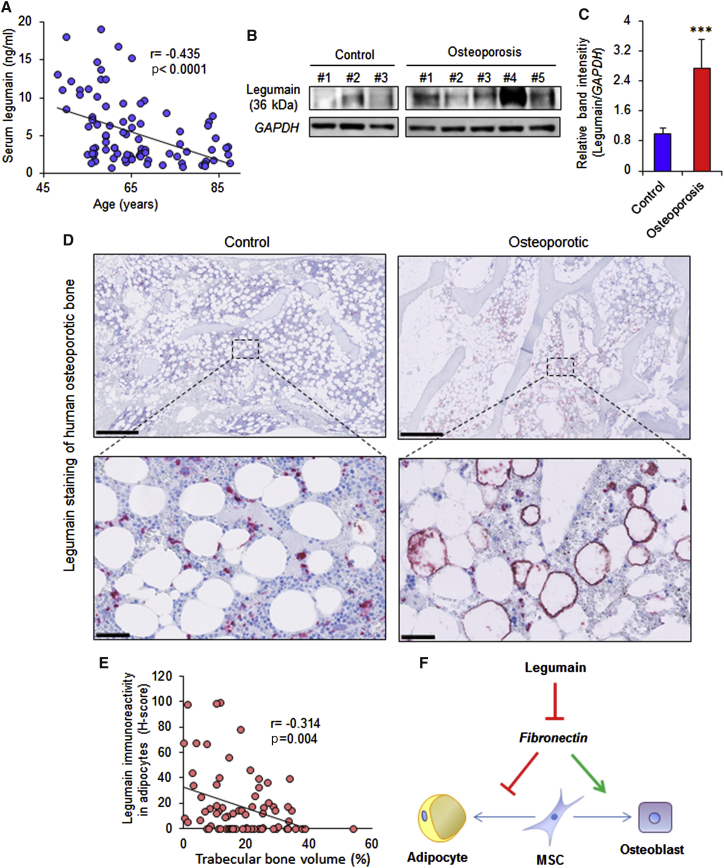
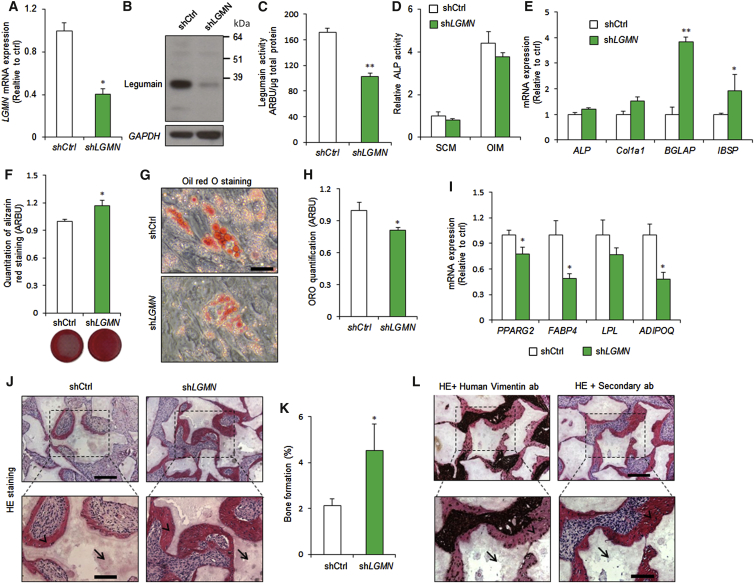
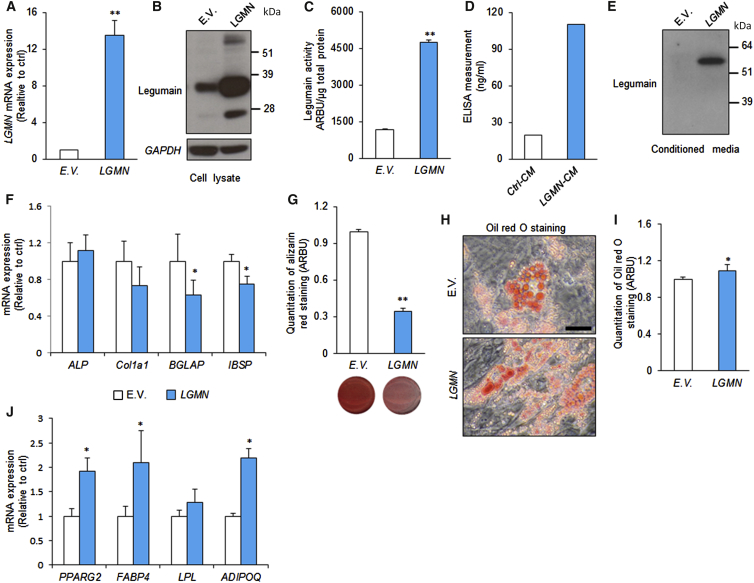
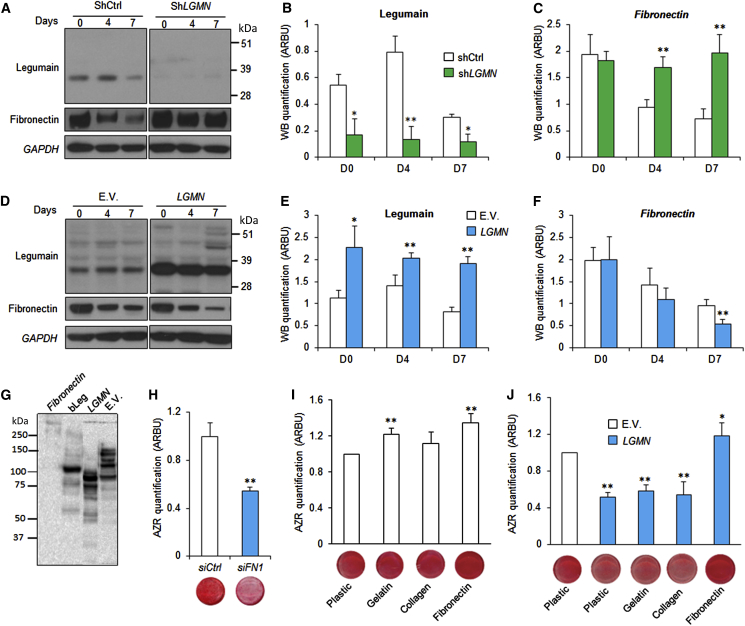
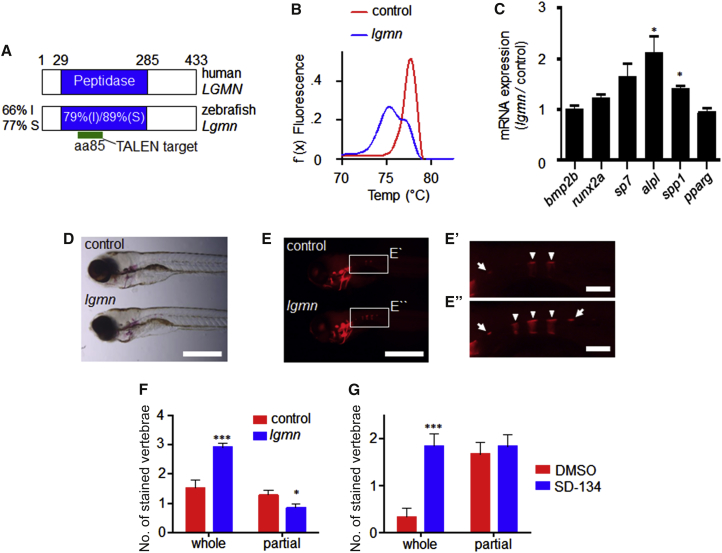
Secreted factors are a key component of stem cell niche and their dysregulation compromises stem cell function. Legumain is a secreted cysteine protease involved in diverse biological processes. Here, we demonstrate that legumain regulates lineage commitment of human bone marrow stromal cells and that its expression level and cellular localization are altered in postmenopausal osteoporotic patients. As shown by genetic and pharmacological manipulation, legumain inhibited osteoblast (OB) differentiation and in vivo bone formation through degradation of the bone matrix protein fibronectin. In addition, genetic ablation or pharmacological inhibition of legumain activity led to precocious OB differentiation and increased vertebral mineralization in zebrafish. Finally, we show that localized increased expression of legumain in bone marrow adipocytes was inversely correlated with adjacent trabecular bone mass in a cohort of patients with postmenopausal osteoporosis. Our data suggest that altered proteolytic activity of legumain in the bone microenvironment contributes to decreased bone mass in postmenopausal osteoporosis.
分泌因子是干细胞微环境的关键组成部分,其失调会损害干细胞功能。天冬酰胺酶是一种参与多种生物学过程的分泌型半胱氨酸蛋白酶。在这里,我们证明天冬酰胺酶调节人类骨髓基质细胞的谱系定向,并且其表达水平和细胞定位在绝经后骨质疏松症患者中发生改变。如基因和药理学操作所示,天冬酰胺酶通过降解骨基质蛋白纤连蛋白抑制成骨细胞(OB)分化和体内骨形成。此外,天冬酰胺酶活性的基因敲除或药理学抑制导致斑马鱼成骨细胞早熟分化并增加椎体矿化。最后,我们表明,在一组绝经后骨质疏松症患者中,骨髓脂肪细胞中天冬酰胺酶的局部表达增加与相邻小梁骨量呈负相关。我们的数据表明,骨微环境中天冬酰胺酶蛋白水解活性的改变导致绝经后骨质疏松症骨量减少。