Horns Felix, Petit Elsa, Hood Michael E
Department of Biology, Amherst College, Amherst, MA.
Genome Biol Evol. 2017 Feb 1;9(2):363-371. doi: 10.1093/gbe/evx011.
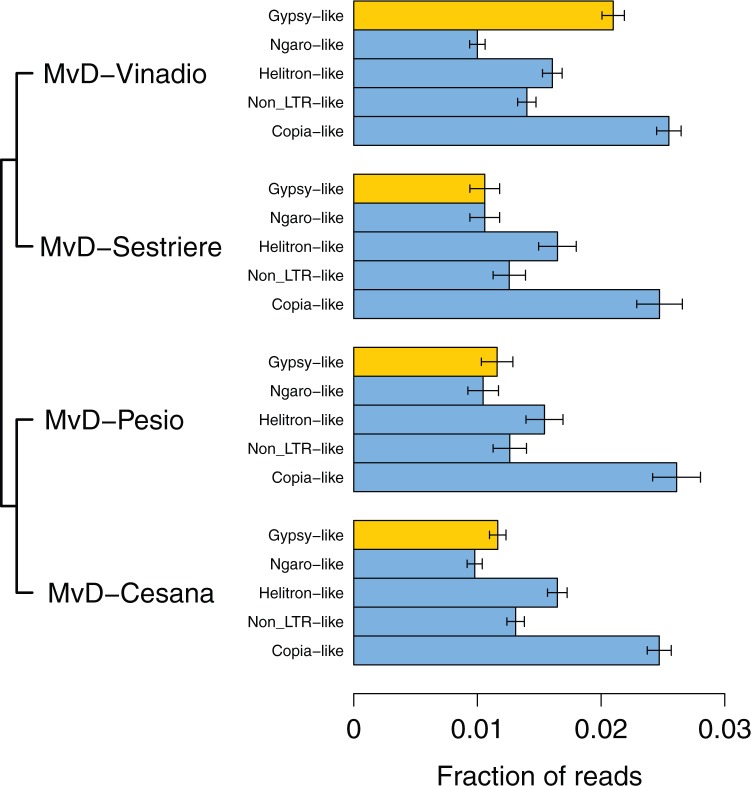
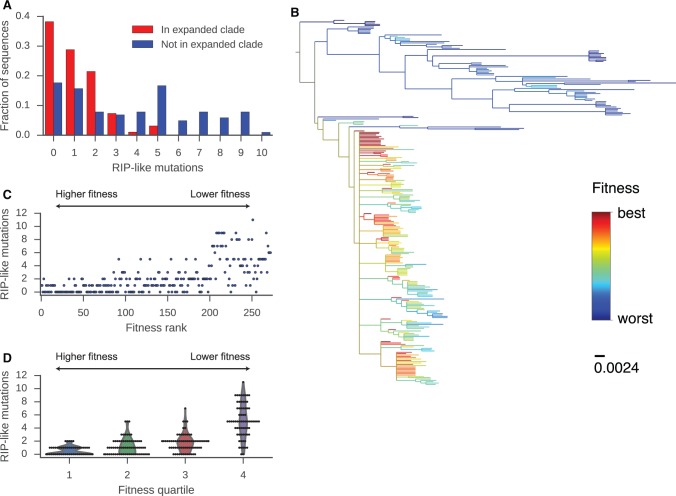
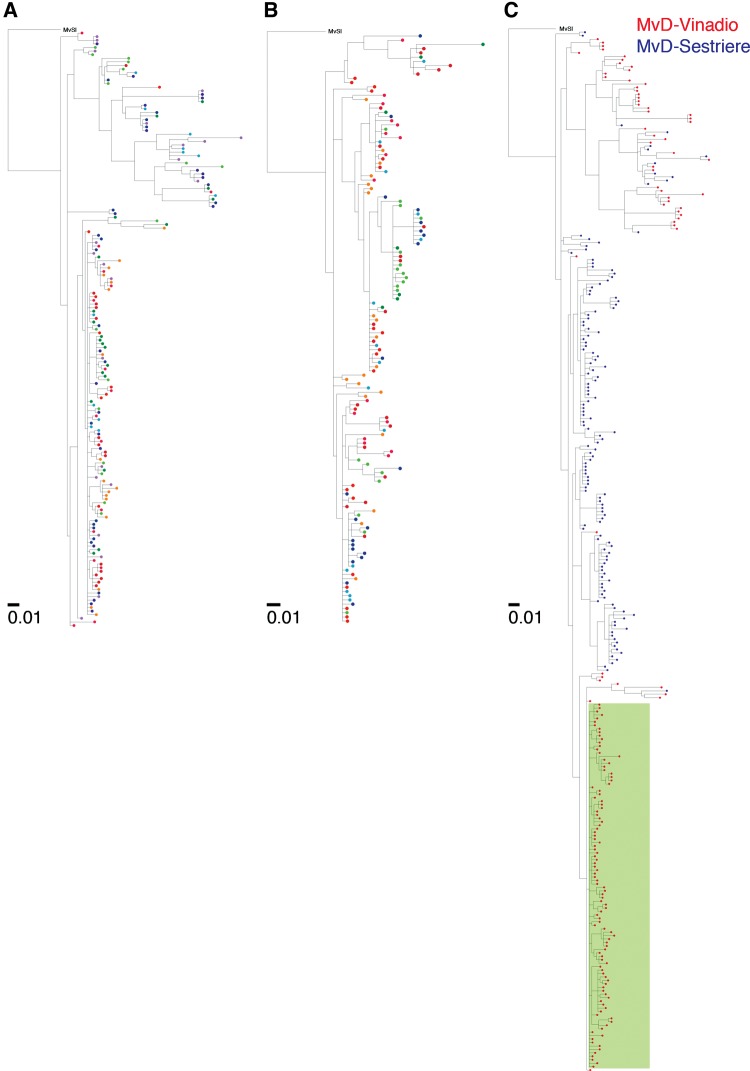
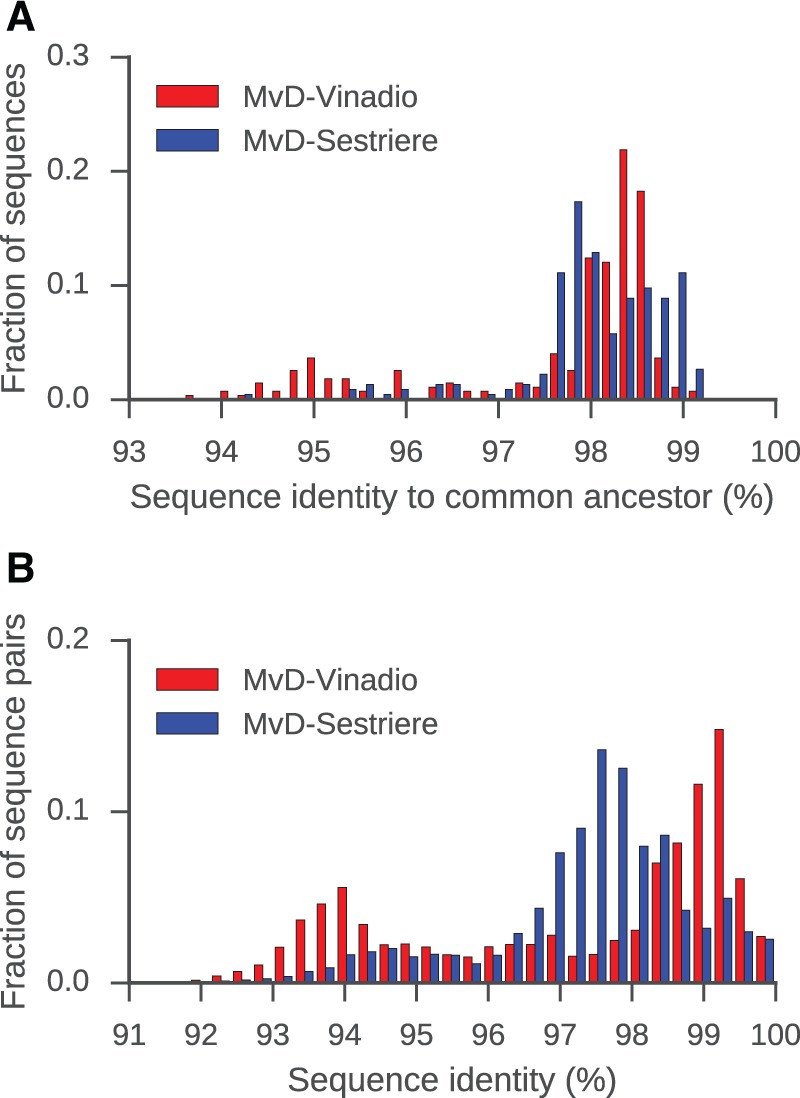
Transposable elements (TEs) are selfish, autonomously replicating DNA sequences that constitute a major component of eukaryotic genomes and contribute to genome evolution through their movement and amplification. Many fungal genomes, including the anther-smut fungi in the basidiomycete genus Microbotryum, have genome defense mechanisms, such as repeat-induced point mutation (RIP), which hypermutate repetitive DNA and limit TE activity. Little is known about how hypermutation affects the tempo of TE activity and their sequence evolution. Here we report the identification of a massive burst-like expansion of Gypsy-like retrotransposons in a strain of Microbotryum. This TE expansion evidently occurred in the face of RIP-like hypermutation activity. By examining the fitness of individual TE insertion variants, we found that RIP-like mutations impair TE fitness and limit proliferation. Our results provide evidence for a punctuated pattern of TE expansion in a fungal genome, similar to that observed in animals and plants. While targeted hypermutation is often thought of as an effective protection against mobile element activity, our findings suggest that active TEs can persist and undergo selection while they proliferate in genomes that have RIP-like defenses.
转座元件(TEs)是自私的、能自主复制的DNA序列,它们构成了真核生物基因组的主要成分,并通过移动和扩增促进基因组进化。许多真菌基因组,包括担子菌纲微座孢属的花药黑粉菌,都有基因组防御机制,如重复序列诱导点突变(RIP),该机制会使重复DNA发生超突变并限制转座元件的活性。关于超突变如何影响转座元件活性的节奏及其序列进化,人们了解甚少。在此,我们报告在一株微座孢属真菌中鉴定出大量类似反转录转座子“吉普赛”元件的爆发式扩张。这种转座元件的扩张显然是在类似RIP的超突变活性存在的情况下发生的。通过检测单个转座元件插入变体的适合度,我们发现类似RIP的突变会损害转座元件的适合度并限制其增殖。我们的结果为真菌基因组中转座元件扩张的间断模式提供了证据,这与在动物和植物中观察到的情况类似。虽然靶向超突变通常被认为是抵御移动元件活性的有效保护机制,但我们的研究结果表明,活跃的转座元件在具有类似RIP防御机制的基因组中增殖时,可以持续存在并接受选择。